Indigo Crystals: Meanings, Properties & Best Stones for Third Eye Activation
Indigo crystals sit at the threshold between seeing and knowing. While blue crystals help you speak truth and purple crystals connect you to the divine, indigo crystals do something more specific — they activate the third eye chakra and sharpen the kind of perception that has nothing to do with your physical eyes.
If you have ever had a gut feeling that turned out to be dead accurate, or a flash of insight that arrived fully formed with no logical explanation, you have already experienced what indigo crystals amplify. These stones don’t give you psychic abilities — they remove the static that prevents you from hearing what your intuition is already telling you.
This guide covers the most powerful indigo crystals, the science behind their deep blue-violet color, and practical ways to use them for energy work, meditation, and developing your inner vision. Whether you are drawn to the ancient royalty of lapis lazuli or the quiet intensity of sodalite, there is an indigo stone here for your practice.

Third Eye Chakra (Ajna)
Light, Wind
Jupiter, Neptune
Key Healing Properties
- Third eye activation and psychic insight
- Deepened meditation and spiritual awareness
- Enhanced intuition and inner knowing
- Mental clarity and focused concentration
- Dream recall and lucid dreaming support
- Pineal gland stimulation (traditional claims)
| Crystal | Color | Mohs Hardness | Chakra | Best For |
|---|---|---|---|---|
| Lapis Lazuli | Deep Celestial Blue | 5–6 | Third Eye, Throat | Truth, wisdom, psychic vision |
| Azurite | Intense Azure Blue | 3.5–4 | Third Eye | Deep meditation, mental fog |
| Sodalite | Blue with White Veins | 5.5–6 | Third Eye, Throat | Logic-intuition balance |
| Iolite | Blue-Violet, Pleochroic | 7–7.5 | Third Eye | Navigation, life transitions |
| Indigo Kyanite | Deep Blue, Bladed | 4.5–7 | All (alignment) | Chakra alignment, never needs cleansing |
The Best Indigo Crystals and Their Meanings
Lapis Lazuli — The Stone of Truth

Lapis lazuli has been humanity’s prestige indigo stone for over 6,500 years — and it earned that status. This is not a subtle crystal. Its deep celestial blue, flecked with golden pyrite like stars in a night sky, was ground into the pigment ultramarine for Renaissance masterworks. At its peak, lapis was worth more than gold by weight.


Lapis activates the third eye and throat chakras simultaneously, which is what makes it uniquely powerful: it helps you perceive truth and articulate it. This is the stone of seers, scholars, and anyone who needs to see through deception — including their own. Place it on your forehead during meditation to stimulate the pineal gland, or wear it as a pendant to keep its truth-telling energy close to your throat.
Historical note: Cleopatra used powdered lapis lazuli as eyeshadow. The ancient Sumerians believed lapis carried the souls of their gods and goddesses — Inanna herself carried lapis rods as symbols of divine authority. Tutankhamun’s death mask is inlaid with lapis lazuli, associating the stone with eternal life and the night sky.
💎 Premium Lapis Lazuli Collection
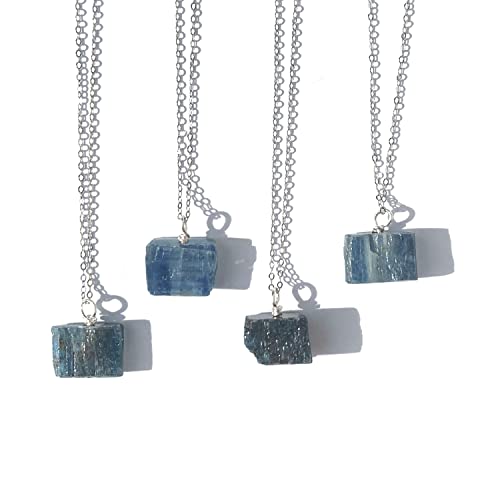
Natural Rocks by Kala — 925 Sterling Silver & Lapis Lazuli
Handcrafted sterling silver jewelry featuring genuine lapis lazuli


Azurite — The Stone of Heaven

If lapis lazuli is the diplomat of indigo crystals, azurite is the mystic. This deep blue copper carbonate mineral has been called the “Stone of Heaven” by cultures that had no contact with each other — which tells you something. Azurite’s energy is intensely focused on the third eye, and it does not mess around.
Azurite dissolves mental fog, outdated belief systems, and the kind of rigid thinking that blocks intuitive perception. It is particularly powerful for anyone transitioning from a purely logic-driven worldview to one that integrates intuition. Pair it with malachite (they naturally grow together) for combined insight and emotional transformation. Keep azurite on your desk during study or creative work — Edgar Cayce called it a stone of psychic development for good reason.
Historical note: Ancient Egyptians and Chinese civilizations independently used azurite as a blue pigment and a meditation stone. In ancient Greece, priests and priestesses used azurite to enhance prophetic visions. The name derives from the Persian word ‘lazhward’ meaning blue — the same root that gave us ‘azure’ and ‘lazuli.’


Sodalite — The Poet’s Stone

Sodalite is the thinking person’s indigo crystal. Where lapis dazzles and azurite mystifies, sodalite quietly bridges the gap between rational thought and intuitive knowing. It is sometimes called “The Poet’s Stone” because it helps translate abstract intuitive impressions into concrete language — a skill most crystals cannot touch.
This stone excels at balancing logic with intuition, making it ideal for writers, therapists, researchers, and anyone whose work requires both analytical rigor and creative leaps. Sodalite calms panic attacks and mental spirals by grounding racing thoughts without numbing your sensitivity. Keep it near your workspace or carry it during difficult conversations where you need both clarity and empathy.
Historical note: Sodalite was not widely known until 1891 when massive deposits were discovered in Ontario, Canada, during a royal visit by Princess Margaret of England. It became so popular in Canadian decorative arts that it earned the nickname ‘Princess Blue.’ The sodium content that gives sodalite its name also contributes to its deep blue color.


Iolite — The Viking Compass

Iolite earns its place among indigo crystals through sheer historical cool factor — and genuine optical science. Norse Vikings used thin slices of iolite as polarizing filters to locate the sun on overcast days, navigating the open Atlantic without a magnetic compass. The crystal’s strong pleochroism (showing different colors from different angles) made this possible.
In crystal healing, iolite carries that same navigational energy into the spiritual realm. It helps you find direction when you feel lost, make decisions when options feel equally weighted, and trust your own inner compass when external guidance fails. Iolite is particularly useful during major life transitions — career changes, relationship shifts, relocations — when the old maps no longer apply.
Historical note: The name ‘iolite’ comes from the Greek ‘ios’ meaning violet. Its mineral name is cordierite, after French geologist Pierre Louis Antoine Cordier. Viking navigators around 1000 AD used iolite’s pleochroism to determine the sun’s position through clouds and fog — rotating the stone until it showed its darkest blue-violet, which indicated the direction of the sun.


Indigo Kyanite — The Alignment Blade

Kyanite breaks one of the fundamental rules of crystal work: it never needs cleansing. Unlike virtually every other crystal, kyanite does not absorb negative energy — it transmits and channels it through itself without retaining any. That alone makes it remarkable. The fact that it also aligns all seven chakras simultaneously makes it exceptional.
Indigo kyanite’s blade-like crystal formation is not just aesthetic — it reflects how this stone’s energy works: cutting, direct, and linear. It slices through energy blockages, opens communication channels between chakras, and facilitates telepathic connection between people. Use it at the start of meditation to quickly align your energy field, or place it between any two crystals in a grid to enhance their connection.
Historical note: The name ‘kyanite’ comes from the Greek ‘kyanos’ meaning deep blue. Kyanite has a unique property called anisotropy — its hardness differs depending on the direction you measure it (4.5 along the crystal, 6.5-7 across it). This dual-hardness reflects its metaphysical role as a bridge between different energy states.

What Makes Crystals Indigo?
Indigo sits between blue and violet on the visible light spectrum, roughly 420-450 nanometers. The minerals that produce this specific deep blue-violet shade do so through surprisingly different chemical mechanisms — which is one reason different indigo crystals feel distinct despite sharing a color family.
In lapis lazuli, the intense blue comes from lazurite, a sulfur-containing mineral in the sodalite group. Specifically, S3- radical anions (trisulfur radical ions) trapped within the sodalite crystal framework absorb red-orange wavelengths of light, transmitting the deep blue we see. The golden flecks are pyrite (iron sulfide), and white patches are calcite.
In azurite, copper (Cu2+) in carbonate form creates the intense blue. Azurite is chemically related to malachite (both are copper carbonates), which is why they frequently grow together — azurite providing the blue, malachite the green. Over time, azurite can actually transform into malachite through a process called pseudomorphosis as it absorbs water.
In sodalite, the blue comes from the same sulfur-radical mechanism as lapis lazuli but without the pyrite and calcite inclusions. Iolite (cordierite) achieves its color through iron and magnesium in an orthorhombic crystal structure — and its famous pleochroism means it shows blue-violet, yellow-gray, or pale blue depending on viewing angle. Kyanite gets its blue from iron (Fe2+) and titanium charge-transfer within an aluminum silicate framework.
How to Use Indigo Crystals
Third eye meditation. Lie down and place lapis lazuli or azurite directly on your forehead between your eyebrows. Close your eyes and breathe deeply for 10-15 minutes. This is the most direct method for third eye activation. Do not force visions — simply observe whatever arises.
Intuition journaling. Keep sodalite on your desk while journaling. Write down impressions, hunches, and gut feelings without censoring or analyzing them. Review after a week to see which intuitive hits were accurate. This builds conscious trust in your inner knowing.
Dream work. Place iolite or lapis lazuli under your pillow or on your nightstand. Before sleep, set an intention to remember your dreams. Keep a notebook bedside to record dreams immediately upon waking. Indigo crystals are renowned for enhancing dream vividness and recall.
Decision-making clarity. Hold iolite during moments of indecision. Its navigational energy helps when you feel pulled in multiple directions. Rotate the stone slowly in your hand — the physical act of rotation mirrors the process of examining a situation from all angles.
Study and focus sessions. Place sodalite or kyanite on your desk during deep work. These stones enhance concentration and help you see patterns and connections that surface-level thinking misses. Particularly useful for research, writing, and strategic planning.
Chakra alignment. Use indigo kyanite as a “master key” at the start of any energy work. Run it along your body from crown to root (or vice versa) to align all chakras before working with other colored crystals on specific energy centers.
Shop Indigo Crystal Collection
✨ Curated Crystal Collection
Shop Indigo Crystal Collection


🛒 Also Available on Amazon
Shop Indigo Crystal Jewelry


Frequently Asked Questions
What is the difference between indigo and blue crystals?
Blue crystals (like blue lace agate and aquamarine) primarily activate the throat chakra and support communication and self-expression. Indigo crystals (like lapis lazuli, azurite, and sodalite) work specifically on the third eye chakra, enhancing intuition, psychic perception, and inner vision. Indigo sits between blue and violet on the spectrum — deeper and more internally focused than blue, but more grounded than purple.
Which indigo crystal is best for developing intuition?
Lapis lazuli is the most well-rounded choice for intuition development because it activates both the third eye (perception) and throat (articulation) chakras. Azurite is more intense and better for dedicated meditation practice. Sodalite is gentler and ideal for beginners who want to develop intuition without overwhelming psychic experiences. Start with sodalite or lapis and progress to azurite as your practice deepens.
Can indigo crystals help with meditation?
Yes — indigo crystals are among the most powerful meditation stones available. Place lapis lazuli or azurite on your third eye point (between your eyebrows) during meditation to deepen your practice, enhance visualization, and access higher states of awareness. Kyanite is excellent for quickly aligning your energy at the start of a session. Even holding any indigo stone during meditation can noticeably improve focus and inner stillness.
Are indigo crystals safe to use every day?
Sodalite, lapis lazuli, and iolite are gentle enough for daily wear and use. Azurite is more intense and may cause vivid dreams or surface buried emotions if used continuously — consider using it during dedicated practice sessions rather than all day. Kyanite is safe for daily use and has the added benefit of never needing to be cleansed.
How do I cleanse indigo crystals?
Moonlight is ideal for indigo crystals — their energy naturally resonates with lunar frequencies. Place them on a windowsill during the full moon overnight. Sound cleansing with singing bowls or tuning forks also works well. Avoid prolonged direct sunlight, especially for lapis lazuli and azurite, as UV light can fade their color over time. Kyanite is the exception — it never needs cleansing.
What does it mean if I am drawn to indigo crystals?
Being consistently drawn to indigo crystals often indicates your third eye chakra is calling for attention — either it needs activation or it is already opening and wants support. You may be entering a phase of heightened intuition, spiritual growth, or inner questioning. Many practitioners find they gravitate toward indigo during periods when they need to trust their instincts more than external advice.
Related Crystal Guides
Sources & References
- The Crystal Bible by Judy Hall. Walking Stick Press.
- The Encyclopedia of Crystals by Judy Hall. Fair Winds Press.
- The Book of Stones by Robert Simmons & Naisha Ahsian. North Atlantic Books.
- Crystal Muse by Heather Askinosie & Timmi Jandro. Hay House.
- Gemological Institute of America (GIA) — Gem Encyclopedia.
- Mindat.org — Mineral Database.
We may earn a commission from links on this page at no extra cost to you. This helps us keep CrystalsAlchemy running.
This article was originally published on