
Purple Crystals: 5 Powerful Stones for Intuition, Sleep & Spiritual Growth
Purple crystals sit at the threshold between the physical and the spiritual. They’re the stones of seers, meditators, and anyone who suspects there’s more going on than what the five senses report. Where black crystals protect and red crystals ignite, purple crystals elevate — lifting your awareness above the noise and into something quieter, deeper, and infinitely more interesting. Explore the full spectrum in our crystal color meanings guide.
These stones activate the third eye and crown chakras, the two energy centers responsible for intuition, spiritual connection, and the kind of knowing that doesn’t need logic to validate it. If you’ve ever had a gut feeling that turned out to be exactly right, purple crystals strengthen that channel.
This guide covers the most potent purple crystals, the fascinating science behind their violet hues, how each one works for intuition, sleep, and spiritual practice, and practical ways to bring their energy into daily life. New to crystals? Start with our crystals for beginners guide.

Third Eye Chakra (Ajna), Crown Chakra (Sahasrara)
Wind
Jupiter, Neptune
Key Healing Properties
- Enhances intuition, psychic awareness, and inner knowing
- Promotes restful sleep and meaningful, vivid dreams
- Calms anxiety, overthinking, and mental chatter
- Deepens meditation and spiritual practice
- Supports addiction recovery and breaking destructive patterns
- Stimulates creativity, imagination, and divine inspiration
Purple Crystal Comparison Chart
| Crystal | Hardness | Chakra | Best For | Price Range |
|---|---|---|---|---|
| Amethyst | 7 | Third Eye + Crown | Sleep, meditation, intuition | $ |
| Lepidolite | 2.5–3 | Heart + Third Eye | Anxiety relief, emotional balance | $ |
| Charoite | 5–6 | Third Eye + Crown | Transformation, spiritual growth | $$ |
| Sugilite | 6–6.5 | Third Eye + Crown | Healing, spiritual love | $$$ |
| Purple Fluorite | 4 | Third Eye | Focus, mental clarity | $ |
The Best Purple Crystals and Their Meanings
Amethyst — The Stone of Spiritual Wisdom
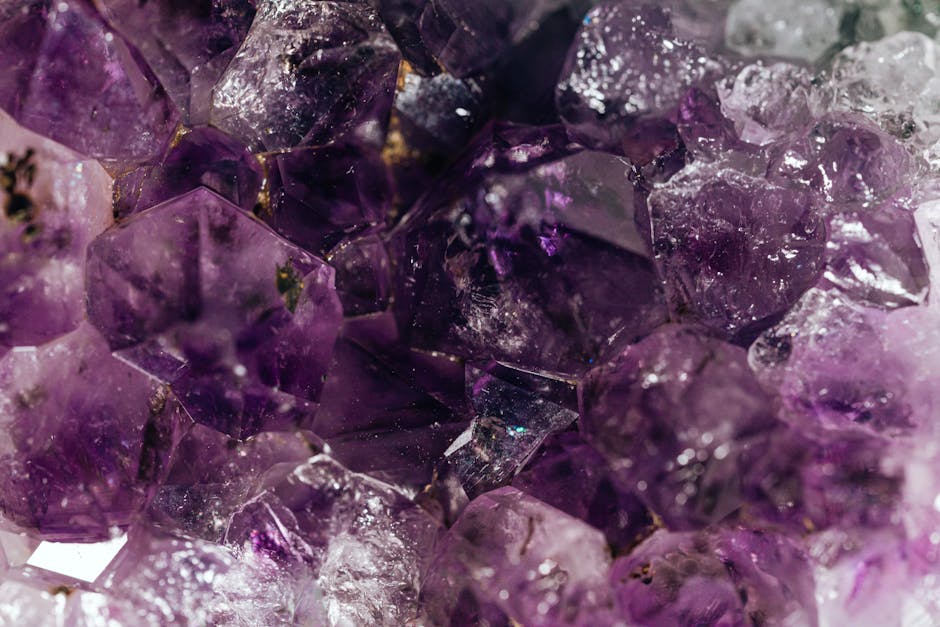
Amethyst appears on virtually every “starter crystal” list for good reason — it’s powerful enough for advanced practitioners but gentle enough that it won’t overwhelm beginners. It’s the Swiss Army knife of the spiritual toolkit: calming, clarifying, and quietly profound. If you own one purple crystal, this is it. It’s the primary Aquarius birthstone and one of the most revered crystals across civilizations.

Amethyst works on both the third eye and crown chakras, promoting peace, serenity, and the kind of mental clarity that comes from turning down the volume on anxious thoughts. It’s the go-to crystal for sleep support, meditation enhancement, and developing intuition without forcing anything. Place it on your nightstand for better sleep, hold it during meditation for deeper states, or carry it daily as a calm-in-your-pocket. For an easy way to carry amethyst energy daily, try the Crazy Lace Agate Amethyst Bracelet from Energy Muse.
Historical note: The word “amethyst” comes from Greek amethystos meaning “not drunk” — Greeks and Romans drank wine from amethyst goblets, convinced it prevented intoxication. Catholic bishops still wear amethyst rings to symbolize spiritual purity. In Tibet, amethyst is sacred to Buddha and used in prayer beads. Before large Brazilian deposits crashed the market in the 19th century, amethyst was valued alongside diamonds and rubies.


💎 Premium Amethyst Collection
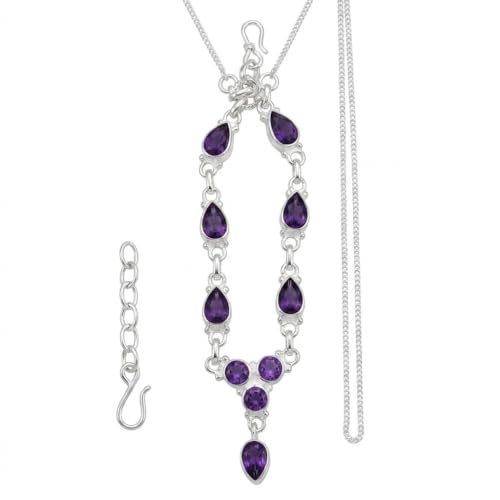
Natural Rocks by Kala — Sterling Silver & Amethyst
Handcrafted 925 sterling silver jewelry with genuine amethyst


Lepidolite — Nature’s Anti-Anxiety Stone

Here’s something most crystal guides won’t tell you: lepidolite naturally contains lithium — the same element used in prescription mood stabilizers and anti-anxiety medication. That’s not a metaphysical claim; it’s geology. Whether the lithium content directly contributes to the calming effects practitioners report is debated, but the correlation is hard to ignore. If anxiety is your primary concern, see our full crystals for anxiety guide.
Lepidolite is the crystal you reach for during transitions, upheaval, and those 3 AM anxiety spirals that won’t quit. Its energy is soft and deeply soothing — like an energetic weighted blanket. It promotes emotional balance without numbing you, which is an important distinction. Lepidolite doesn’t shut down your feelings; it helps you process them at a pace your nervous system can handle.
Historical note: Lepidolite was first discovered in the 18th century and originally called “lilalite” for its lavender color. Its name comes from Greek lepidos (scale), referring to its flaky, layered texture. The lithium content that gives lepidolite its distinctive shimmer also made it an industrial source of lithium before more concentrated deposits were found.


Charoite — The Stone of Transformation

Charoite is found in exactly one place on Earth: along the Chara River in Siberia, Russia. That geological rarity translates to an energy that feels singular — intense, purposeful, and not interested in small talk. This is the crystal for facing deep-seated fears, overcoming resistance to change, and breaking through spiritual stagnation.
Where amethyst gently opens the door to spiritual awareness, charoite kicks it open. It stimulates inner vision, accelerates spiritual growth, and helps you process past-life or ancestral patterns that keep repeating in your current experience. Charoite is not a beginner’s stone — it works fast and deep. Pair it with black tourmaline for grounding if its energy feels too intense, or combine it with protective crystals for deeper shadow work.
Historical note: Charoite wasn’t discovered until the 1940s and wasn’t described scientifically until 1978. When Russian geologists first sent samples to international labs, the reaction was disbelief — its swirling purple patterns looked too extraordinary to be natural. Its relative newness in the crystal world means it carries no ancient cultural baggage, which some practitioners consider a strength.


Sugilite — The Healer’s Stone

Sugilite radiates an energy that practitioners consistently describe as “spiritual love” — not romantic love, not self-love, but something larger and less personal. It’s the crystal equivalent of feeling held by something bigger than yourself. For healers, therapists, and anyone in a caregiving role, sugilite helps channel healing energy without depleting your own reserves.
This deep purple stone protects against negativity while simultaneously opening the crown chakra to higher guidance. It’s particularly valued for its ability to help people find meaning in suffering — not by bypassing the pain but by placing it in a larger context. Sugilite is used in grief work, serious illness support, and any situation where someone needs to access hope without ignoring reality. Pair it with protective stones for energy-intensive healing sessions.
Historical note: Sugilite was first discovered in 1944 by Japanese petrologist Ken-ichi Sugi, but gem-quality deposits weren’t found until 1979 in the Kalahari manganese fields of South Africa. It rapidly gained a devoted following among crystal healers, earning the nickname “The Healer’s Stone.” High-quality sugilite remains rare and commands premium prices.


Purple Fluorite — The Focus Stone

Purple fluorite is the most mentally precise purple crystal — where amethyst calms and charoite transforms, fluorite organizes. It brings order to mental chaos, sharpens focus, and helps you think clearly when your mind is full of competing priorities. Students and knowledge workers often report it’s the crystal that actually helps them sit down and concentrate. It works specifically on the third eye chakra, sharpening perception and inner vision.
Fluorite’s secret is its perfect cubic crystal structure — at the molecular level, it’s one of the most orderly arrangements in nature. That structural clarity seems to translate energetically into mental clarity. Use purple fluorite during study sessions, complex problem-solving, or any task requiring sustained intellectual focus. It’s also excellent for decision-making when you’re paralyzed by too many options.
Historical note: The word “fluorescence” literally comes from fluorite — in 1852, physicist George Stokes coined the term after observing that fluorite glows blue-violet under ultraviolet light. This was one of the first scientifically documented optical phenomena in minerals. Fluorite has been used since ancient Roman times; the Romans carved it into ornamental vases called “murrhine” vessels, which were valued above gold.


What Makes Crystals Purple?
Purple is one of the most scientifically fascinating colors in the crystal world. The mechanism behind amethyst’s violet hue involves a combination of chemistry and nuclear physics that took scientists decades to fully understand.
In amethyst, the purple comes from iron (Fe³⁺/Fe⁴⁺) impurities within the quartz lattice combined with natural gamma radiation from surrounding rocks. The iron substitutes for silicon atoms, and radiation creates “color centers” that absorb yellow-green light, making the crystal appear purple. Heat this above 420-440°C and those color centers collapse — turning amethyst yellow (citrine) or green (prasiolite). This is why most commercial citrine is actually baked amethyst.
In fluorite, the purple comes from a completely different mechanism: radiation damage creates “F-centers” (from German Farbe, meaning color) where electrons are trapped in vacancies in the crystal lattice. These trapped electrons absorb specific wavelengths, producing purple. Fluorite is also the mineral that gave us the word “fluorescence” — it glows blue-violet under UV light due to electron transitions in rare earth element impurities.
In charoite and sugilite, manganese (Mn) is the key coloring agent. Manganese in different oxidation states produces colors ranging from pink to deep purple. Charoite’s swirling patterns come from its complex fibrous crystal structure containing potassium, calcium, and silicon — a mineral so unusual it was initially suspected of being fake when first submitted to labs.
How to Use Purple Crystals
Sleep enhancement. Place amethyst on your nightstand or under your pillow. It promotes restful sleep and can increase dream vividness and recall. If dreams become too intense, move the stone farther from your bed rather than removing it entirely.
Meditation deepening. Hold amethyst or charoite at your third eye point (between the eyebrows) during meditation. Purple crystals help quiet mental chatter and access deeper states more quickly. Even five minutes with a purple crystal can noticeably shift your meditation quality. Pair this with a crystal meditation practice for deeper results.
Anxiety relief. Carry lepidolite as a pocket stone or wear it as a bracelet during high-stress periods. Its lithium-containing composition makes it the most soothing purple crystal for acute anxiety. Hold it and take slow breaths — the combination is remarkably effective.
Study and focus. Place purple fluorite on your desk during study sessions, writing, or complex problem-solving. Its orderly crystal structure translates into mental organization. Pair it with a clear intention about what you need to accomplish.
Intuition development. Wear amethyst as a pendant near the throat or third eye, or place it on your forehead during lying-down meditation. Over time, regular amethyst use strengthens the “intuition muscle” — that knowing that arrives before logic catches up. A crystal healing bracelet is another easy way to maintain consistent contact.
Energy cleansing. Amethyst naturally transmutes negative energy into positive, making it excellent for cleansing spaces. Place a cluster in common areas to maintain a calm, elevated atmosphere. Unlike black crystals that absorb negativity, amethyst transforms it.
Shop Purple Crystal Jewelry
✨ Curated Crystal Collection
Purple Crystal Essentials from Energy Muse


🛒 Also Available on Amazon
Shop Purple Crystal Essentials
Frequently Asked Questions
What is the best purple crystal for beginners?
Amethyst is the definitive beginner purple crystal. It appears on virtually every starter crystal list because it is powerful enough for advanced work but gentle enough that it won’t overwhelm newcomers. It calms anxiety, improves sleep, and develops intuition gradually. Start with our crystals for beginners guide for more tips, or pick up an amethyst cluster for your nightstand or a tumbled stone for your pocket.
Can purple crystals help with sleep?
Yes — amethyst is one of the most recommended crystals for sleep. Place it on your nightstand or under your pillow to promote restful sleep, reduce insomnia, and encourage vivid dreams. Lepidolite is also excellent for sleep, especially if anxiety or racing thoughts keep you awake — try the A-grade Lepidolite Touchstone for a soothing bedside companion. Its natural lithium content has a profoundly calming effect on an overactive mind.
What is the difference between amethyst and lepidolite?
Amethyst is quartz (silicon dioxide) colored by irradiated iron. It works on the third eye and crown chakras for spiritual awareness, meditation, and intuition — learn more in our amethyst meaning guide. Lepidolite is a lithium-bearing mica that works primarily on emotional regulation, anxiety relief, and calming the nervous system. Think of amethyst as the spiritual elevator and lepidolite as the emotional stabilizer — they complement each other perfectly.
Does amethyst fade in sunlight?
Yes. Prolonged UV exposure gradually disrupts the iron color centers that create amethyst’s purple hue, causing it to fade over time. Avoid leaving amethyst on windowsills or in direct sunlight for extended periods. Brief exposure is fine, but for display, choose a spot with indirect light. Moonlight cleansing is the safest method for amethyst.
Is heat-treated amethyst the same as citrine?
Not exactly. Approximately 95% of commercial citrine is actually heat-treated amethyst — heated above 440°C to destroy the purple color centers and produce yellow tones. Natural citrine is pale, smoky yellow and quite rare — learn more in our yellow crystals guide. The crystal community is divided on whether heated amethyst carries the same properties as natural citrine. The base mineral is genuine quartz either way, but purists insist the formation energy differs.
What chakra do purple crystals activate?
Purple crystals primarily activate the third eye chakra (Ajna) for intuition, psychic awareness, and inner vision, and the crown chakra (Sahasrara) for spiritual connection and higher consciousness. Lighter lavender stones tend to work more gently on the crown, while deeper purple stones concentrate energy on the third eye. Both chakras benefit from regular purple crystal work during meditation.

Related Crystal Guides
- Crystal Color Meanings: Complete Guide →
- Amethyst Meaning & Properties →
- Crystals for Sleep →
- Crystals for Anxiety →
- Third Eye Chakra Stones →
- How to Cleanse Crystals →
- Aquarius Birthstone: Amethyst →
- Pisces Birthstone →
- Zodiac Crystals →
- Best Crystals for Meditation →
- Crystals for Protection →
- Indigo Crystals →
- Black Crystals →
- Red Crystals →
- Best Crystal Healing Bracelets →
Sources & References
- The Crystal Bible by Judy Hall. Walking Stick Press.
- The Encyclopedia of Crystals by Judy Hall. Fair Winds Press.
- The Book of Stones by Robert Simmons & Naisha Ahsian. North Atlantic Books.
- Crystal Muse by Heather Askinosie & Timmi Jandro. Hay House.
- Gemological Institute of America (GIA) — Gem Encyclopedia.
- Mindat.org — Mineral Database.
Last update on 2026-10-16 / Affiliate links / Images from Amazon Product Advertising API
We may earn a commission from links on this page at no extra cost to you. This helps us keep CrystalsAlchemy running.
This article was originally published on


