Best Crystal Singing Bowls for Meditation and Healing
Not all crystal products are created equal. After testing dozens of options, these are the ones that actually deliver on quality, energy, and value. This guide covers exactly what to look for and which ones are worth your investment.
The Science and History Behind Crystal Singing Bowls

Long before modern sound therapy clinics existed, ancient cultures recognized the healing power of resonant sound. Tibetan monks have used metal singing bowls for over 2,000 years in ritual and meditation — but the crystal singing bowl as we know it today has a surprisingly modern origin. In the 1970s and 1980s, the semiconductor industry began producing high-purity quartz crucibles to grow silicon crystals for computer chips. Craftspeople soon discovered that these vessels, made from 99.9% pure silicon dioxide, produced extraordinarily pure, sustained tones with powerful resonant properties unlike anything the world of sound healing had encountered before.
The scientific community has begun to catch up with what practitioners have known intuitively for decades. A landmark observational study published in the Journal of Evidence-Based Complementary & Alternative Medicine found that sound meditation with singing bowls significantly reduced tension, anxiety, and physical pain while improving spiritual well-being across participants of a wide age range (Goldsby et al., 2017). Today, crystal singing bowls for healing are used by sound therapists, yoga instructors, energy healers, and meditation practitioners worldwide. Whether you are brand new to sound healing or deepening an established practice, understanding what makes these instruments unique — and how to choose the right one — can genuinely transform your sessions. Pair your bowl work with the right crystals for meditation and you have one of the most potent wellness rituals available.
What Is a Crystal Singing Bowl?
A crystal singing bowl is both a musical instrument and a wellness tool, made from highly purified quartz crystal — typically crushed quartz sand fused at extreme temperatures into a smooth bowl form. The result is a vessel that vibrates at specific, measurable frequencies when struck or played with a mallet, emitting tones that are simultaneously heard with the ears and felt throughout the body. According to the Gemological Institute of America (GIA), quartz is composed of silicon dioxide (SiO2) and is one of the most abundant minerals on Earth, found on every continent. The majority of quartz used in premium crystal singing bowls for healing is sourced from the crystal-rich deposits of Arkansas, USA — long recognized as one of the world’s premier sources of high-clarity quartz — as well as Brazil and Madagascar, both of which yield quartz of exceptional purity.
The vibrational frequency of a quartz singing bowl is not merely audible; it is physically palpable. When the bowl sings, it creates both sound waves and tactile vibrations that practitioners believe interact with the body’s biofield, or subtle energy field. While the metaphysical dimensions of this interaction remain a subject of ongoing research, the measurable acoustic properties of crystalline quartz are well-documented in materials science and mineralogy.
How a Crystal Singing Bowl Produces Sound
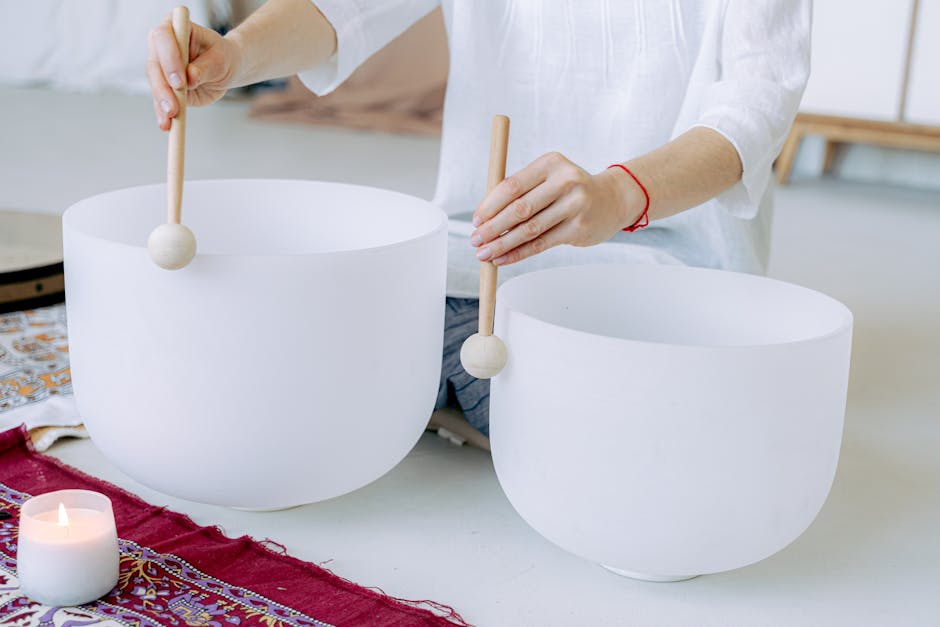
Playing a crystal singing bowl involves either striking the rim gently with a padded mallet or drawing the mallet around the outer rim in a slow, continuous circular motion — a technique known as rimming. The friction or impact sets the bowl’s walls into vibration, producing a sustained, singing tone that can last for many seconds after the mallet is removed. The pitch produced depends directly on the size of the bowl: larger bowls vibrate more slowly and produce deep, bass-register notes, while smaller bowls vibrate faster and produce high, bright tones. The purity of the quartz is equally important — the higher the silicon dioxide purity (ideally 99.9%), the cleaner, more sustained, and more penetrating the resulting sound.
Many practitioners also attribute part of the bowl’s healing efficacy to the piezoelectric property of quartz — its documented ability to generate an electric charge under mechanical stress. This property is well-catalogued in mineralogical literature, including the mineral databases maintained by Mindat.org. Under this model, every strike of the mallet does not merely produce a sound but generates a subtle energetic pulse that propagates through the vibrational field of the bowl.
Types of Crystal Singing Bowls
Not all crystal singing bowls are created equal. Here are the main varieties you will encounter when building your sound healing practice:
- Frosted Quartz Singing Bowls: Made from crushed and fused quartz powder, these opaque white bowls have a warm, full, sustaining tone with excellent projection. They are typically the most affordable and most durable option, making them ideal for beginners and group sound bath facilitators. Available in sizes from 6 to 24 inches.
- Clear Quartz Singing Bowls: Made from optically clear quartz, these bowls produce a brighter, more penetrating tone with exceptional sustain. They are significantly more expensive and more fragile than frosted bowls, and are favored by professional sound therapists and advanced practitioners who desire maximum tonal precision.
- Gemstone or Alchemy Crystal Singing Bowls: These premium bowls infuse additional minerals directly into the quartz during manufacturing — rose quartz, amethyst, citrine, moldavite, or precious metals such as gold, platinum, and silver. Each mineral addition is believed to carry its own healing signature alongside the base quartz resonance. These are the most energetically complex and most expensive category.
- Handle Singing Bowls: Smaller bowls fitted with an attached handle, designed to be held in one hand while played with the other. This makes them ideal for practitioners who move the bowl around the body during individual healing sessions rather than placing it stationary on a surface.
For those beginning their journey, a frosted quartz singing bowl in the note C or F makes an excellent entry point. You can also explore a range of complementary tools in our roundup of the best crystal healing gift sets for every level of practitioner.
Crystal Picks from Energy Muse
Hand-selected crystals chosen for quality and energetic potency — each one sourced with care.


Crystal Singing Bowls for Chakra Healing

One of the most celebrated applications of crystal singing bowls for healing is chakra balancing. In yogic and Ayurvedic traditions, the human body contains seven primary energy centers called chakras, each associated with specific physical, emotional, and spiritual functions. Practitioners match the musical note of a crystal singing bowl to a corresponding chakra, using the sustained resonance to clear energetic blockages, restore healthy flow, and promote systemic balance. The growing body of peer-reviewed research on sound meditation lends increasing physiological credibility to this practice: measurable reductions in cortisol, lowered heart rate, and improved mood have all been recorded in controlled sound bath settings.
Crystal bowls are particularly well-suited to chakra work because they are manufactured to produce precise, single-note tones — unlike traditional Tibetan metal bowls, which produce complex multi-harmonic overtones. This note specificity allows a practitioner to directly target a single chakra center with accuracy. Pair your sound work with physically resonant stones for even deeper results; placing heart chakra stones on the chest while playing an F-note bowl, for example, creates a powerful synergistic healing experience.
Guided Sound Healing Meditations
Pair your crystal singing bowl practice with expert-guided sound healing meditations, chakra balancing sessions, and deep relaxation audiobooks on Audible.
Free trial includes 1 audiobook + access to the Plus catalog. Cancel anytime. As an Amazon Associate we earn from qualifying purchases.
Best Crystal Singing Bowls for Sound Healing
Premium quartz crystal bowls chosen for tonal purity, resonance quality, and healing frequency.

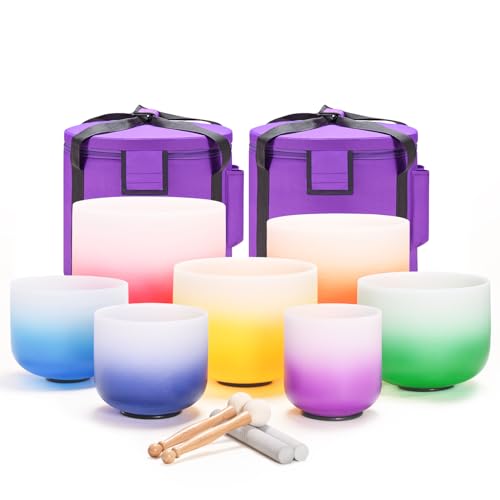

The Seven Chakras and Their Corresponding Bowl Notes
The following is the traditional Western chakra-to-musical-note mapping used by the majority of crystal singing bowl practitioners and sound therapists today:

A standout rose quartz piece from Energy Muse — hand-selected for its energetic quality and connection to love & happiness. This is the kind of piece that anchors a collection and deepens your daily practice.
Shop at Energy Muse →- Root Chakra (Muladhara) — Note C: Located at the base of the spine. Associated with grounding, physical safety, and primal vitality. A C-note bowl supports feelings of stability, security, and rootedness in the body.
- Sacral Chakra (Svadhisthana) — Note D: Located below the navel. Associated with creativity, sensuality, and emotional flow. A D-note bowl encourages creative expression and helps release stored emotional tension.
- Solar Plexus Chakra (Manipura) — Note E: Located at the solar plexus. Associated with personal power, confidence, and digestive fire. Combining an E-note bowl session with healing crystals for motivation and energy creates a particularly effective confidence-building ritual.
- Heart Chakra (Anahata) — Note F: Located at the heart center. Associated with love, compassion, and interpersonal connection. An F-note bowl is among the most emotionally opening and widely used bowls in healing practice.
- Throat Chakra (Vishuddha) — Note G: Located at the throat. Associated with authentic self-expression, communication, and truth. A G-note bowl can help dissolve creative and communicative blocks.
- Third Eye Chakra (Ajna) — Note A: Located between the eyebrows. Associated with intuition, insight, and inner vision. An A-note bowl deepens meditative states and opens the inner perceptive faculties.
- Crown Chakra (Sahasrara) — Note B: Located at the crown of the head. Associated with spiritual connection, universal consciousness, and enlightened awareness. A B-note bowl supports the deepest meditative states and facilitates experiences of expanded awareness.
Crystal Singing Bowls vs. Tibetan Singing Bowls
When people begin exploring sound healing, one of the first questions that arises is: what is the difference between a crystal singing bowl and a traditional Tibetan singing bowl? Both instruments produce resonant, meditative sound, but they differ substantially in material, tone character, geographic origin, intended application, and price point. The comparison table below summarizes the key distinctions to help you choose the right instrument for your practice — or determine whether you eventually want both.
| Feature | Crystal Singing Bowl | Tibetan Singing Bowl |
|---|---|---|
| Material | 99.9% pure quartz silicon dioxide | Multi-metal alloy (traditionally seven metals including copper, tin, and iron) |
| Sound Character | Pure, bright, sustained single-note clarity | Rich, complex, layered multi-harmonic overtones |
| Pitch Accuracy | Precisely tuned to specific musical notes | Less precise; produces multiple simultaneous overtones |
| Chakra Targeting | Each bowl keyed to one specific chakra note | General energy balancing; less note-specific |
| Geographic Origin | Modern manufacture; USA, Germany, China | Nepal, Tibet, northern India |
| Durability | Fragile; can crack or chip if dropped | Very durable; resilient metal construction |
| Weight | Lighter (especially frosted); varies by size | Heavier relative to size |
| Price Range | $40–$600+ depending on type and size | $30–$400+ for quality hand-hammered pieces |
| Best For | Chakra-specific work, sound baths, energy healing | General meditation, shamanic ritual, portability |
The choice between the two often comes down to personal resonance and healing intention. Many advanced practitioners own both and deploy them for different purposes. If you are already integrating crystals into your wellness routine — working with stones as described in our guide to the best crystals for meditation — a crystal singing bowl creates a natural energetic synergy that amplifies your existing practice.
Healing Tools & Jewelry
Wearable crystal energy and healing tools — designed to keep your intentions close throughout the day.


How to Choose the Best Crystal Singing Bowl for Your Practice
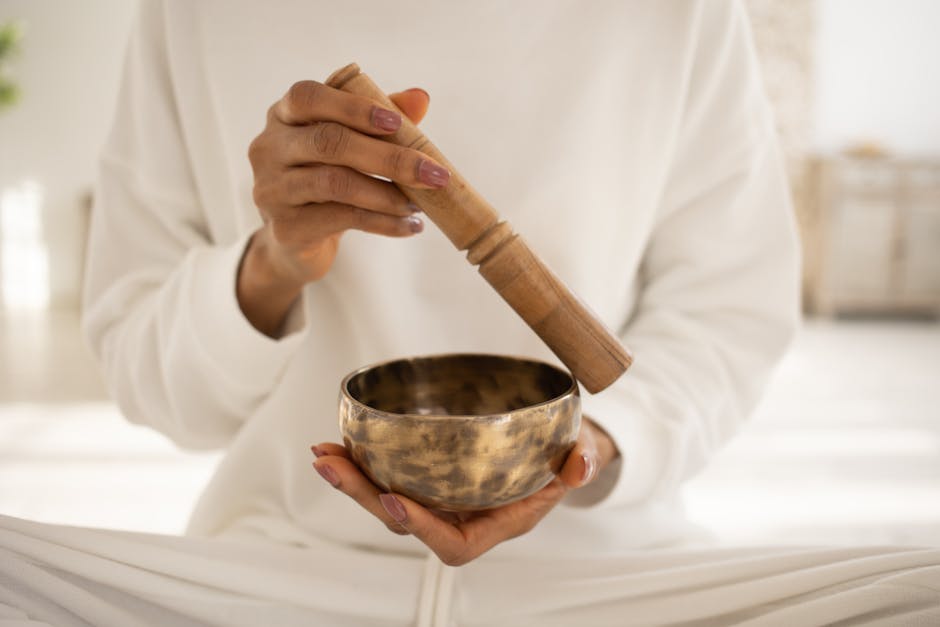
Choosing the right crystal singing bowl can feel overwhelming given the sheer variety of sizes, materials, notes, and price points on the market. The good news is that there is no universally correct answer — only the bowl that is right for your specific intentions, budget, and stage of practice. The following considerations will help you navigate the decision with clarity.
Size, Pitch, and Intended Use
Bowl size and musical pitch are directly related: larger bowls produce lower, more grounding tones, while smaller bowls produce higher, more clarifying tones. As a practical guide:
- 6–8 inch bowls: High notes (A, B); excellent for crown and third eye chakra work, mental clarity, and focused one-on-one sessions. More portable but require slightly more technique to play steadily and evenly.
- 10–12 inch bowls: Mid-range notes (E, F, G); the most versatile size for most beginners and intermediate practitioners. Excellent for heart and solar plexus chakra work and personal daily meditation practice.
- 14–24 inch bowls: Low, deep notes (C, D); powerful for grounding, group sound baths, and filling large spaces with immersive vibration. More physically imposing and harder to handle, but deeply transformative in use.
If you are purchasing your very first crystal singing bowl for healing, the majority of experienced sound therapy educators recommend a 10-inch frosted quartz bowl in the note C (root chakra) or F (heart chakra). These notes tend to produce the most immediately felt physical resonance in the body, making results accessible even to beginners.
Also consider your primary use case carefully. Solo home practitioners often benefit most from a single high-quality bowl played daily. Group sound bath facilitators may eventually build toward a full seven-bowl chakra set. And a beautiful crystal singing bowl in a protective case makes a meaningful and thoughtful crystal healing gift for practitioners at any stage of their journey.
Frosted vs. Clear Quartz Singing Bowls
The choice between frosted and clear quartz singing bowls goes well beyond aesthetics and affects both the sound you will work with and the maintenance your bowl will require. Here is a practical breakdown:
- Frosted bowls are made from crushed and fused quartz powder. They are opaque, milky white in appearance, and produce a warm, mellow, full-bodied tone with excellent sustain and room-filling projection. They are the most affordable option (typically $40–$150 for common sizes), more resistant to minor handling stress, and the recommended choice for beginners and group facilitators. The large exterior surface area also makes them easier to rim smoothly.
- Clear bowls are crafted from optically transparent quartz and emit a brighter, more penetrating, and higher-frequency sound with exceptional sustain. They are significantly more expensive ($200–$500+) and more fragile, requiring careful handling and storage. They are favored by professional sound therapists for their precision, luminous appearance, and the sharp energetic intensity of their tone.
- Alchemy or gemstone-infused bowls represent the premium tier of the market. A bowl infused with rose quartz carries the combined resonance of quartz sound healing and rose quartz’s heart-opening energetic signature; one infused with amethyst or moldavite adds its own distinct vibrational quality. These bowls typically range from $300 to well over $1,000 and are best purchased once you have clarity about your specific healing intentions and some experience with plainer bowls.
Whatever type you choose, always assess a bowl’s individual resonance before purchasing — either in person or through audio recordings provided by the seller. The tone should feel right to you both acoustically and intuitively. Trust the physical response in your body as much as the technical specifications on the label.

A standout rose quartz piece from Energy Muse — hand-selected for its energetic quality and connection to healing. This is the kind of piece that anchors a collection and deepens your daily practice.
Shop at Energy Muse →How to Use a Crystal Singing Bowl for Meditation and Healing
Learning to play a crystal singing bowl well requires a little patience and practice, but the fundamentals are genuinely accessible to anyone. The key is a light touch, a relaxed grip, and consistent, unhurried technique. Once the basics are internalized, the act of playing the bowl becomes as meditative as the sound it produces — a living, participatory form of mindfulness in itself.
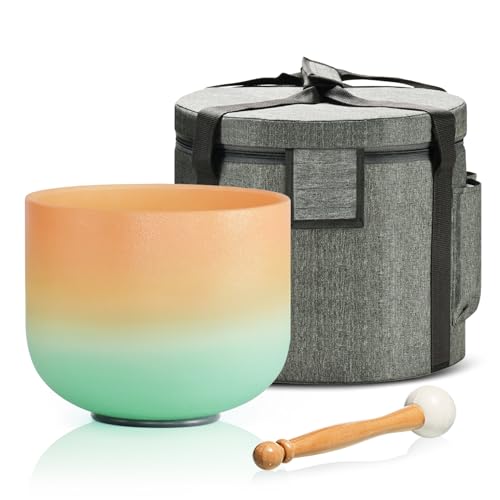
Crystal Bowl Sets & Accessories
Complete singing bowl kits with mallets, carrying cases, and multi-bowl sets for full chakra work.


Basic Playing Technique
Follow these foundational steps to begin working with your crystal singing bowl:
- Set the bowl on a stable, padded surface. Place the bowl on a rubber O-ring, a dedicated singing bowl cushion, or a folded cotton cloth on a flat, stable surface. Never place it directly on a hard surface without padding, as this dampens vibration and risks chipping the base.
- Hold the mallet correctly. Grip the mallet lightly with your dominant hand using your fingertips rather than a full fist. A relaxed, fluid grip is essential — tension in the hand transfers directly to the mallet and almost always causes the bowl to squeal or skip rather than sing.
- Activate the sound with a gentle strike. Tap the outer wall of the bowl gently with the padded end of the mallet to produce an initial tone. Allow it to ring and observe the quality of the sound before beginning to rim.
- Rim the bowl in smooth, even circles. Press the mallet lightly against the outer rim and draw it slowly and continuously around the bowl’s circumference. Maintain even pressure and a consistent pace — not too fast, not too slow. The bowl will gradually build into a full, sustained singing tone.
- Breathe, receive, and adjust. If the tone wavers or produces harsh overtones, slow your rimming pace slightly and reduce mallet pressure. If the bowl goes silent, increase speed and contact slightly. As the tone stabilizes, close your eyes, breathe deeply, and allow the vibration to move through the body.
Sound healing works beautifully as part of a broader integrative wellness practice. If you notice tension headaches arising from long seated meditation sessions, you may benefit from exploring crystals for headache relief alongside your regular bowl practice.
Running a Sound Bath at Home
A sound bath is an immersive healing experience in which one or more crystal singing bowls for healing are played continuously while a participant rests in a comfortable reclined position, typically lying flat on their back in savasana. Here is how to create an effective home sound bath ritual from scratch:
- Prepare the space. Dim the lights, switch off all devices, and arrange a yoga mat, blanket, and pillow for comfort. Place any crystals you wish to work with on or around your body during the session.
- Set a clear intention. Before you begin, close your eyes and articulate your intention for the session — stress relief, chakra clearing, emotional release, deep rest, or spiritual opening. Hold this intention lightly throughout.
- Open with a grounding strike. Strike the bowl once with deliberate gentleness to mark the beginning of the session. Allow the full tone to decay into silence before beginning to build the sustained rim tone.
- Play continuously for 20–45 minutes. Allow the tones to weave without interruption, shifting between multiple bowls if you have them. Follow your intuition about which notes the session calls for, rather than adhering to a rigid sequence.
- Close with silence and stillness. End the session with a final gentle strike and allow the sound to fade completely into silence. Remain reclined for at least five minutes before slowly returning to waking awareness, drinking water, and grounding gently.
Cleansing and Caring for Your Crystal Singing Bowl
Your crystal singing bowl is both a precision instrument and a sacred tool, and caring for it properly ensures it continues to perform beautifully and hold its energetic integrity for years — even decades — to come. Despite the hardness of quartz (7 on the Mohs hardness scale), singing bowls are surprisingly fragile due to their thin walls and smooth surfaces. Small impacts that would leave metal bowls unscathed can crack or chip quartz. Treat your bowl with the same mindful respect you extend to any sacred object in your practice.
Physical Care for Your Quartz Singing Bowl
Follow these practical guidelines to keep your quartz singing bowl in excellent physical condition:
- Always handle with two hands: Support both the rim and the base simultaneously when lifting or moving the bowl. Never pick it up by the rim alone, as this creates uneven stress on the walls.
- Store safely and securely: Keep the bowl in its padded carrying case, a protective foam sleeve, or wrapped in a soft cloth when not in use. Store it away from table edges and busy areas of the room where it could be knocked over.
- Clean gently with distilled water: Wipe the interior and exterior with a soft, lint-free cloth lightly dampened with distilled water. Avoid all harsh cleaning chemicals, abrasive cloths, scouring pads, and ultrasonic cleaners, any of which can damage the surface finish and alter the bowl’s resonance.
- Protect from thermal shock: Avoid moving the bowl abruptly between extreme temperatures — for example, from a cold car trunk to a warm heated room. Sudden thermal gradients can cause quartz to develop invisible stress fractures that compromise structural integrity over time.
Energetic Cleansing Methods
Many practitioners regularly cleanse the energetic field of their crystal singing bowl to clear absorbed energies from healing sessions — particularly after working with clients in one-on-one settings where emotional material may have been released into the space. Common and effective methods include:
- Moonlight bathing: Place the bowl in a window or safe outdoor location to receive indirect moonlight overnight, ideally around the full moon, to refresh its energetic field and amplify its resonance.
- Self-clearing through play: Simply play the bowl for several minutes with a clear intention to release any energies it has absorbed. This is among the most elegant cleansing methods available — the bowl essentially clears itself through its own vibration.
- Smudging: Pass the smoke of sustainably harvested sage, palo santo, or cedar slowly around and over the bowl while silently or verbally stating a cleansing intention. Allow the smoke to move freely around the rim and base.
- Sound clearing with a bell or chime: Strike a high-pitched Tibetan bell or tingsha near the bowl three times with the intention of clearing stagnant energy and resetting its vibrational field.
Approached with care and consistency, your crystal singing bowl for healing will serve as a cornerstone of your practice — deepening in resonance and personal significance with every session you share with it.
Gift Sets & Accessories
Perfect for gifting or completing your collection.


More from Energy Muse
Additional healing crystals and tools to deepen your practice — each piece hand-selected for quality and intention.


Frequently Asked Questions
What note crystal singing bowl is best for beginners?
For most beginners, a C-note (root chakra) or F-note (heart chakra) crystal singing bowl is the ideal starting point. These notes produce the most immediately felt physical resonance in the body and are the most commonly used in both personal meditation and group sound healing settings.
A 10-inch frosted quartz bowl in either of these notes offers a warm, forgiving tone that is easy to learn on, versatile enough to support a wide range of healing intentions, and well-suited to both daily personal practice and shared sound bath experiences.
How do I stop my crystal singing bowl from making a harsh or squealing sound?
A squealing or unstable tone from a crystal singing bowl is almost always caused by moving the mallet too quickly around the rim or applying too much pressure against the bowl’s wall. Slow your rimming pace significantly and reduce mallet contact to the lightest touch that still maintains friction — the bowl responds to gentleness, not force.
Also ensure your hands are clean and slightly dry before playing; natural skin oils transferred to the mallet can affect the quality of contact with the rim. With patient, consistent practice, a clear, sustained singing tone will come naturally within a few sessions.
Are crystal singing bowls scientifically proven to support healing?
A growing body of peer-reviewed research supports measurable wellness benefits from singing bowl sound meditation. A notable 2017 observational study published in the Journal of Evidence-Based Complementary & Alternative Medicine found that singing bowl sessions significantly reduced participants’ self-reported tension, anxiety, and physical pain while improving spiritual well-being (Goldsby et al., 2017).
While large-scale randomized clinical trials are still needed, existing studies document real physiological responses including reduced cortisol, lowered heart rate, and improved mood — all consistent with a deep, sustained relaxation response produced by sustained harmonic resonance.
Can I use a crystal singing bowl if I am pregnant?
Many experienced sound therapists advise pregnant individuals to exercise caution with crystal singing bowls, particularly large, low-frequency bowls played in close proximity to the abdomen. The intensity of the vibration may be too stimulating, especially during the first trimester when the body is in an especially sensitive phase of change.
Always consult your obstetric healthcare provider before integrating any new wellness practice during pregnancy. Smaller bowls played at a comfortable distance, or simply listening to professionally recorded sound baths at a moderate volume, may be a more appropriate alternative during this time.
Where can I buy a quality crystal singing bowl?
Quality crystal singing bowls are available through specialist sound healing retailers, established yoga and wellness studios, holistic health fairs, and reputable online shops focused specifically on sound therapy instruments. When purchasing online, prioritize sellers who provide individual audio recordings of each specific bowl so you can assess the tone, sustain, and clarity before committing to a purchase.
Whenever possible, attending a live sound bath event or visiting a brick-and-mortar wellness shop to hear and feel a bowl’s vibration in person is the best way to find the instrument that resonates most deeply with you — both acoustically and intuitively.
We may earn a commission from links on this page at no extra cost to you. This helps us keep CrystalsAlchemy running.
This article was originally published on