Saturn Crystals: 7 Stones for Discipline, Structure & Inner Strength
Saturn is the planet of time, structure, limits, and discipline. In astrology, Saturn is the teacher. Not the fun one. The one whose lessons you’re still grateful for twenty years later. Every meaningful structure in your life, your career, your commitments, your sense of personal authority, bears Saturn’s fingerprint somewhere.
When Saturn works well in your chart or your life, you have backbone. You follow through. You build things that last and you don’t crumble when the weight comes down. When Saturn is blocked or overactive, the picture changes: you’re either rigid and joyless (Saturn turned prison warden) or you can’t commit to anything at all (Saturn absent from the building entirely). The crystals in this guide work both sides. They help you build the structure Saturn demands while releasing the pressure that makes that structure feel like a cage.
In This Guide:
What Saturn Rules in Astrology
Saturn rules discipline, structure, time, limits, authority, karma, and everything you have to build the hard way. It governs Capricorn as its domicile, shares traditional rulership of Aquarius, and reaches exaltation in Libra. In any birth chart, Saturn’s placement tells you where life will demand the most effort, and where the most durable rewards live once you’ve done that work.
When Saturn is well-placed and well-aspected, you see backbone. The ability to keep promises to yourself, to follow through on commitments that lost their excitement months ago. Saturn builds slowly and well. Authority sits comfortably on someone with strong Saturn energy because they’ve earned it through time and consistent effort, not through charm or luck.
Saturn’s shadow side is where things get heavy. Depression, rigidity, chronic self-criticism, workaholism that substitutes productivity for actual living. The fear of failure that’s so intense it prevents starting. Joylessness as a lifestyle. On the other end of the spectrum, a weak or blocked Saturn shows up as no structure at all: dropped commitments, time anxiety, chronic underachievement, the inability to build anything that lasts past the first burst of enthusiasm.
The Saturn return at ages 28-30 (and again at 57-59) is the classic life-restructuring transit. Saturn comes back to the exact position it held when you were born, and everything you’ve built gets tested. Structures that hold get reinforced. Structures that don’t collapse. It’s the transit that turns twenty-somethings into actual adults, and it’s one of the most important periods to have Saturn crystals working with you.
How Saturn Crystals Work
Saturn crystals run dark. Black, gray, deep brown. Dense, heavy, grounding. They don’t sparkle or seduce the way Jupiter crystals do. They don’t promise expansion or abundance. They promise foundations. They build the structures that everything else sits on, set the boundaries that protect what matters, absorb the pressure without cracking, and keep you standing when the weight comes down.
These stones work slowly, and they demand consistent practice. That’s Saturn’s whole lesson. You don’t carry a black tourmaline once and expect transformation. You carry it every day for six months and realize you’ve built a boundary that used to be impossible. The timeline is Saturn’s favorite tool.
Chakra resonance: Root chakra (primary, for grounding and stability), Third Eye (secondary, for Saturn’s long-term strategic vision). Color signature: black, dark gray, deep brown, indigo. Elemental quality: Earth. These stones orient you downward and inward. They compress rather than expand. They teach you that limitations aren’t obstacles; they’re the walls that define the room you’re building.
| Crystal | Saturn Quality | Chakra | Color | Best for |
|---|---|---|---|---|
| Black Tourmaline | Boundaries & structure | Root | Black | Daily energetic protection |
| Smoky Quartz | Pressure release | Root | Brown-black | Releasing heavy energy |
| Black Obsidian | Truth & shadow work | Root | Black (glassy) | Saturn return altar work |
| Shungite | Ancient endurance | Root | Black (matte) | Long-haul transits |
| Garnet | Earned reward | Root | Deep wine red | Post-transit vitality |
| Onyx | Stoic discipline | Root | Solid black | Habit formation & endurance |
| Blue Sapphire | Mastery & authority | Third Eye | Deep blue | Leadership & wisdom |
The 7 Best Saturn Crystals
1. Black Tourmaline: The Boundary Maker

If there’s one crystal that IS Saturn, it’s black tourmaline. Black, striated (the ridges look like they were built to catch things), and pyroelectric (it generates an electrical charge under pressure, which is literally Saturn’s operating principle). Black tourmaline creates firm energetic boundaries. It absorbs and deflects without attacking. Think of it as the energetic equivalent of a good fence: clear, solid, and entirely non-negotiable. “This is my space. That is yours.”
The protection black tourmaline offers isn’t aggressive. It’s structural. Where some crystals fight energy, tourmaline simply organizes it. Heavy or chaotic energy hits the boundary and either gets absorbed or redirected. The stone does the work; you don’t have to.
Carry black tourmaline daily during Saturn transits, especially through your Saturn return. Place one at your front door. Keep one between you and any authority figure or demanding person who tends to drain your field. Cleanse it weekly, because this stone absorbs aggressively and will saturate if you don’t clear it regularly. Root chakra, earth element, pure Saturn frequency.
✨ Featured Pick from Energy Muse

Raw black tourmaline on the wrist. Wear it daily through any Saturn transit. It does the structural work of keeping your field intact while Saturn restructures everything else.
Shop at Energy Muse →2. Smoky Quartz: The Pressure Release

Smoky quartz is Saturn’s pressure valve. Translucent brown-to-black, this variety of quartz does something black tourmaline doesn’t: it releases what’s built up behind the boundary. Where tourmaline holds the line, smoky quartz transmutes the heavy energy that’s already inside you, converting it into neutral earth energy that drains through your root chakra and into the ground.
This is the Saturn crystal for when the weight is genuinely crushing and you need to let some of it go without losing structure entirely. Saturn demands endurance, but it doesn’t demand that you carry every ounce of pressure without relief. Smoky quartz is also historically recognized as an antidepressant stone in the crystal tradition, and Saturn rules depression. The two are paired for a reason.
Hold it when you feel overwhelmed. Use it in root chakra meditation, placed directly on your lower belly or between your feet. Keep one on your desk during high-pressure work periods. Pair it with black tourmaline for the full Saturn combination: boundary plus release.
✨ Featured Pick from Energy Muse

A smoky quartz protection hanger programmed with intention. Hang it where Saturn pressure accumulates: your office doorway, your bedroom, your workspace entrance.
Shop at Energy Muse →3. Black Obsidian: The Truth Mirror
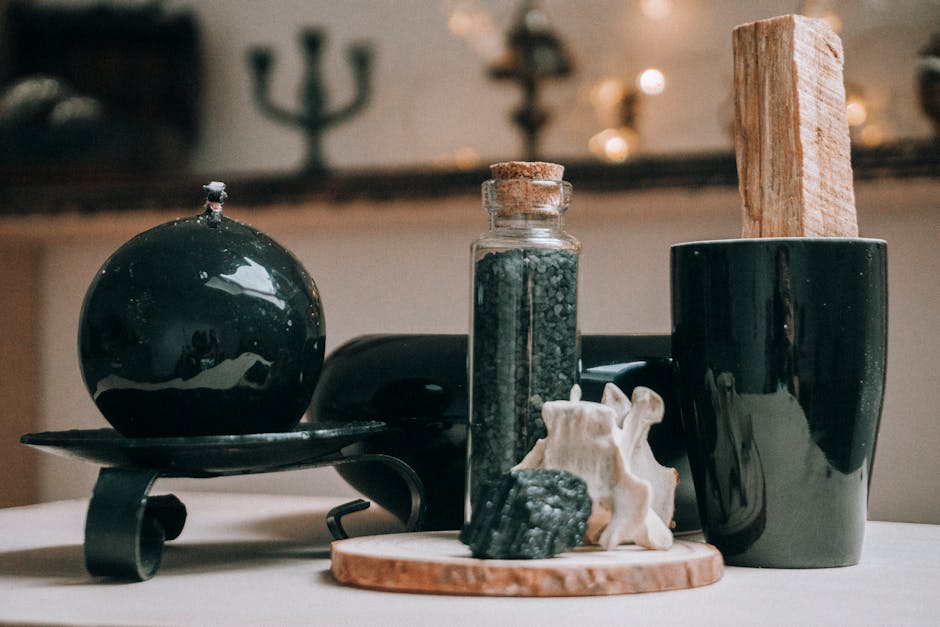
Volcanic glass with a razor-sharp fracture line. Black obsidian is what happens when Saturn meets Pluto: the stone that forces honesty about what you’ve built and what needs to come down. Saturn asks, “Is this structure serving you?” Black obsidian won’t let you lie about the answer. It cuts through rationalization, denial, and comfortable self-deception with surgical precision.
For Saturn return work specifically, obsidian is the tool for tearing down what you built in your twenties that doesn’t fit your thirties. It’s not gentle. It’s not supposed to be. Saturn’s greatest gift is the willingness to demolish what isn’t working so you can build what actually will.
Use black obsidian for Saturn return altar work and journaling sessions about career and life structure. This is NOT a daily-wear stone; it’s too intense for sustained use. Work with it in defined sessions (20-30 minutes), with clear intention, and cleanse it immediately after. Think of it as a power tool rather than an everyday carry.
✨ Featured Pick from Energy Muse

A black obsidian wand for cord-cutting during Saturn transits. When Saturn says something has to go, this is the tool that makes the cut clean.
Shop at Energy Muse →4. Shungite: The Ancient Shield

Black, non-crystalline carbon mineraloid, approximately two billion years old. That’s not a typo. Shungite is the oldest stone you can hold in your hand, and that age IS Saturn. Saturn rules time, and shungite has more of it than anything else in your collection.
Shungite is famous for EMF protection claims (the science is debated, but the tradition is strong and persistent). More practically, shungite is the Saturn crystal for endurance through deep time. It’s the stone for people going through multi-year transits and wondering if the pressure will ever end. It will. Shungite has been here for two billion years. It can hold the timeline for you.
Keep shungite near electronics (the EMF tradition). Carry it during long-haul Saturn transits when you need a reminder that you can outlast the difficulty. Shungite water is a traditional practice for grounding and purification. If you go this route, use only elite (noble) shungite rather than regular grade, and do your own research on preparation and safety before drinking it.
✨ Featured Pick from Energy Muse

Shungite paired with copper in a wearable necklace. Two ancient materials, both associated with time and endurance. The Saturn transit survival piece.
Shop at Energy Muse →5. Garnet: The Earned Reward

Deep wine red, glowing with internal fire. Garnet is Saturn’s reward stone. It represents what you GET for doing Saturn’s work: earned success, hard-won vitality, passion that survived the test. Capricorn claims garnet as its birthstone for exactly this reason. Garnet isn’t given freely. It’s earned. And it revitalizes when Saturn’s demands have drained you dry.
Where the other Saturn crystals help you endure the transit, garnet reminds you that discipline has a payoff. It keeps the fire alive under the ice. Saturn without garnet can become grim duty; garnet gives Saturn a reason to keep building. It’s the difference between surviving a hard year and actually coming out the other side with something to show for it.
Wear garnet during the second half of a Saturn transit, when the lesson is landing and you’re ready to harvest what you’ve planted. Place it on your root chakra for vitality work. Carry it when you need to remember why you’re doing the hard thing in the first place.
✨ Featured Pick from Energy Muse

A premium AA-grade almandine garnet. The deep-fire reward stone for the far side of Saturn transits. Carry it when the work is done and you need to feel the payoff.
Shop at Energy Muse →6. Onyx: The Stoic

Solid black, dense, opaque. Onyx is Saturn’s stoic companion. It doesn’t transform energy or transmute it like obsidian does. It just endures. Onyx is the Saturn crystal for people who need to keep going when everything in them wants to quit. It strengthens self-discipline without adding heat. No drama, no intensity, just quiet, relentless forward motion.
Onyx is particularly good for addiction recovery, habit formation, and any situation where “just keep going” is the entire strategy. It’s the stone equivalent of putting one foot in front of the other when you can’t see the end of the road. Saturn rewards consistency above everything else, and onyx delivers that frequency in its purest form.
This is a daily-wear stone. Ring, bracelet, pendant, whatever form keeps it on your body consistently. Onyx is less intense than obsidian and more sustainable than tourmaline for long-term wear. Saturn demands consistency, and onyx matches that demand without burning you out. Black onyx is widely available and affordable. Look for natural onyx rather than dyed agate (which is common in the market). True onyx has even, deep black coloring without visible banding.
7. Blue Sapphire: The Master’s Stone
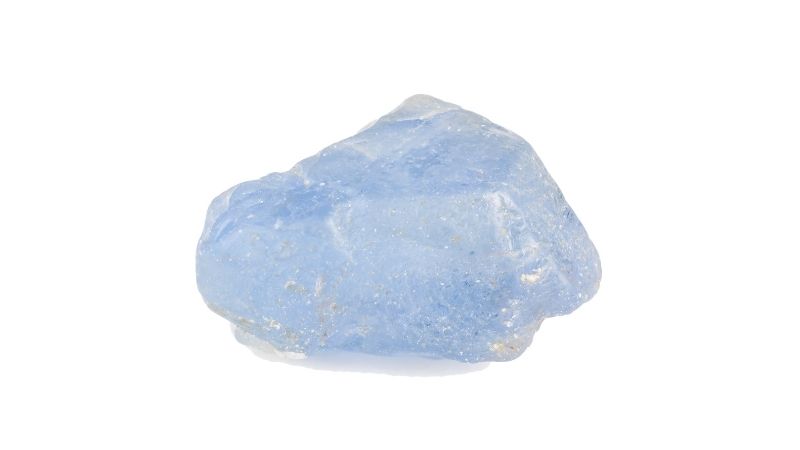
The most precious Saturn stone. Deep blue, the color of authority and wisdom earned through decades of effort rather than moments of insight. In Vedic astrology (Jyotish), blue sapphire (Neelam) is THE Saturn gemstone, specifically prescribed for Saturn-related challenges and blessings. Western tradition connects it to royalty, fidelity, and truth. Saturn at its highest expression: mastery, authority that serves rather than dominates, wisdom that took a lifetime to build.
Blue sapphire bridges Saturn’s root chakra grounding with third eye chakra vision. It’s the stone of the architect who can see the finished building before the foundation is even poured. Where other Saturn stones help you endure the present, sapphire connects you to the long game. It helps you build with the end in mind.
Traditionally, sapphire is worn as a ring on the middle finger (Saturn’s finger in palmistry). In crystal healing practice, even small raw sapphire chips carry the frequency. Use sapphire during your Saturn return for dignified passage through the restructuring. Gem-quality sapphire is expensive, but raw sapphire crystals are accessible and carry the same energetic signature.
✨ Featured Pick from Energy Muse

Sapphire crystal hoop earrings that keep Saturn wisdom close to the mind. Wear them during decision-making seasons and authority-facing moments.
Shop at Energy Muse →How to Use Saturn Crystals
Saturn crystals work best with structure and consistency (naturally). Here are five practical approaches that align with Saturn’s frequency:
1. The Saturn return kit. Combine black tourmaline (boundaries), smoky quartz (pressure release), and garnet (earned vitality) in a small pouch or on your bedside table. Carry the tourmaline daily for the full 2.5-year transit. Rotate smoky quartz in when the pressure spikes and garnet in when you need to remember what you’re building toward.
2. Boundary-setting ritual. Place a piece of black tourmaline at each of the four corners of your bedroom or workspace. Set the intention once (out loud works best): “This space is mine. What enters here enters on my terms.” Leave them in place. Cleanse monthly. Saturn loves rituals that you set once and maintain through consistency rather than repeated dramatic gestures.
3. Saturday practice. Saturn rules Saturday. Dedicate Saturday mornings to Saturn crystal work and life-structure review. Hold your preferred Saturn stone while journaling about commitments, boundaries, and progress on long-term goals. Review what you built during the week. Adjust what isn’t working. This weekly rhythm IS Saturn practice, and the crystals amplify the focus.
4. Career altar. Place onyx, garnet, and blue sapphire together on your desk or workspace. Onyx for daily discipline, garnet for motivation that outlasts the initial excitement, sapphire for the strategic long view. This combination supports disciplined professional growth without the burnout that Saturn can trigger when the work feels endless.
5. Pair with Sun crystals for balance. Saturn provides structure; the Sun provides warmth and joy. Without the Sun, Saturn becomes grim duty. Pair your Saturn stones with sunstone, citrine, or carnelian to build with joy instead of building with clenched teeth. The combination means you get the discipline without losing the spark that makes the work worth doing.
The Saturn Return: A Crystal Survival Guide
The Saturn return happens when Saturn completes its 29.5-year orbit and returns to the exact zodiac position it held when you were born. The first return hits between ages 28 and 30. The second between 57 and 59. These are the great restructuring periods. Everything you’ve built, your career, your relationships, your sense of identity, gets tested. What holds up is reinforced and becomes permanent foundation. What doesn’t hold collapses, and Saturn will not let you rebuild it the same way.
The crystal protocol for a Saturn return is straightforward. Black tourmaline daily for boundary protection (the return shakes loose people and patterns that no longer fit, and you need clear boundaries during the sorting process). Smoky quartz for pressure release when the demolition phase gets overwhelming. Garnet for vitality and motivation, because the return is exhausting and you need to remember that you’re building something better, not just losing what you had. Black obsidian for the honest assessment sessions: what needs to go, what deserves to stay, and what you’ve been pretending works when it clearly doesn’t.
The reframe that changes everything: Saturn return isn’t punishment. It’s graduation. Saturn has spent 29 years teaching you, and the return is the exam. The crystals don’t prevent the restructuring. Nothing does, and you wouldn’t actually want to prevent it even if you could. The crystals support you through the passage. They keep you grounded while the structures shift, honest while the hard truths surface, and alive with fire while the old patterns burn away.
When Saturn Is Ill-Aspected
Saturn square or opposite the Sun: Your identity feels crushed by duty. You can’t shine. You feel invisible, buried under responsibilities that leave no room for self-expression. The remedy is warmth stones: citrine and sunstone. They don’t dissolve Saturn’s demands, but they reignite the warmth underneath the duty so you remember who you are outside of what you’re obligated to do.
Saturn square or opposite the Moon: Emotions get suppressed or controlled. You can’t feel, or feelings arrive only as depression. The emotional body goes numb under Saturn’s weight. Moonstone and rose quartz work this aspect by softening the emotional armor Saturn has built. They don’t remove it entirely (you still need some structure around your emotional life), but they make the armor breathable.
Saturn square or opposite Mars: Fire gets blocked. The result is either chronic procrastination (Mars can’t move) or explosive frustration (Mars breaks through in bursts rather than sustained action). Carnelian and garnet are the antidote. They reignite Mars energy in a way Saturn can accept: sustained heat rather than wild fire. Action that’s disciplined rather than chaotic.
The general principle for counterbalancing Saturn: when Saturn is overactive (depression, isolation, joylessness, rigidity), add warmth. Sunstone, carnelian, and citrine bring solar fire into the picture. When Saturn is blocked (no structure, can’t commit, time anxiety, chronic underachievement), use black tourmaline and onyx with a strict daily practice. Saturn responds to consistency above all else. Show up every day and Saturn will meet you there.
Frequently Asked Questions
What is the best crystal for Saturn?
Black tourmaline is the most widely recognized Saturn crystal in both Western and modern crystal healing traditions. It matches Saturn’s core themes of boundaries, structure, and protection. For Vedic astrology specifically, blue sapphire (Neelam) is the traditional Saturn gemstone. The best choice depends on which Saturn theme you’re working with: tourmaline for boundaries, smoky quartz for pressure release, garnet for earned vitality, or sapphire for mastery and authority.
What crystals help during a Saturn return?
The core Saturn return kit includes black tourmaline for daily boundary protection, smoky quartz for releasing pressure when the restructuring gets heavy, garnet for vitality and motivation, and black obsidian for honest self-assessment sessions. Carry the tourmaline consistently through the full 2.5-year transit and rotate the others based on what each phase demands.
What zodiac signs benefit most from Saturn crystals?
Capricorn and Aquarius benefit most directly because Saturn rules both signs. Libra benefits because Saturn is exalted there. However, every sign experiences Saturn transits, and anyone going through a Saturn return, Saturn conjunct a personal planet, or a major Saturn square will benefit from working with Saturn crystals during that period.
Can Saturn crystals help with depression?
Saturn rules depression in astrological tradition, and smoky quartz in particular is recognized as an antidepressant stone in the crystal healing lineage. It works by transmuting heavy, stagnant energy into neutral earth energy. However, crystal work is a complementary practice. If you’re experiencing persistent depression, work with a qualified professional alongside any energetic practice.
Is black tourmaline the same as obsidian?
No. Black tourmaline is a crystalline boron silicate mineral with visible striations (ridges) and a matte to slightly glossy surface. Obsidian is volcanic glass with a smooth, glassy appearance and sharp conchoidal fracture. They work differently too: tourmaline creates and holds boundaries while obsidian forces truth and cuts through what no longer serves you. Tourmaline is for daily protection; obsidian is for focused shadow work sessions.
What’s the difference between Saturn crystals and root chakra crystals?
Most Saturn crystals resonate with the root chakra, but the categories are not identical. Root chakra crystals focus broadly on grounding, safety, and physical vitality. Saturn crystals focus specifically on discipline, structure, boundaries, time, and earned authority. A stone like red jasper is strongly root chakra but not particularly Saturn-aligned. Blue sapphire is a Saturn stone that resonates primarily with the third eye chakra rather than the root. The overlap is significant but not complete.
The Bottom Line
Saturn builds; it doesn’t punish. The difference is real. When Saturn pressure is landing on your chart, the first instinct is to resist. Don’t. Saturn crystals aren’t armor against the lesson. They’re support for doing the work the lesson is asking for.
If you want a starting point and you haven’t decided yet, start with Black Tourmaline. It’s the right first stone because it creates boundaries during Saturn transits while you do the structural work of rebuilding. Work with it for a full lunar cycle, and let the rest of this list wait until a specific situation calls for something else.
Saturn visits your chart for years at a time, and what it asks for changes who you become. For the full picture of how saturn fits with everything else moving through your chart, see our complete guide to planet crystals.
Sources & References
- Hall, Judy. “Crystals for Energy Healing.” Fair Winds Press, www.amazon.com.
- Greene, Liz. “Saturn: A New Look at an Old Devil.” Weiser Books, 2011.
- “Tourmaline Group.” Mindat.org, www.mindat.org.
- “Sapphire Description.” Gemological Institute of America, www.gia.edu.
- “Shungite.” Mindat.org, www.mindat.org.
Last Updated on April 19, 2026
We may earn a commission from links on this page at no extra cost to you. This helps us keep CrystalsAlchemy running.
This article was originally published on