Best Crystal Trees for Healing, Wealth & Home Decor (2026)
Crystal trees sit at an uncommon intersection. They’re decor. They earn their place on the prettiest shelves on Pinterest. They’re also real practitioner energy work. Most posts treat one or the other. The truth is that practitioners and gift-shoppers want both, and the right crystal tree delivers both at once.
This guide covers what a crystal tree actually is (and what it isn’t), the crystal tree meaning rooted in the Tree of Life and Chinese feng shui money tree traditions, the eight best crystal trees for different intentions, the feng shui crystal tree placement system that works in real homes, how to use one daily, how to cleanse the chip-form construction without damaging it, and a gift guide structured by budget tier and recipient.
Start with the basics.
Editor’s Pick: Premium Crystal Tree Flagship

The Kalifano Large Tree of Life is the most-recognized premium crystal-tree flagship on the market: 1,251 hand-set natural gemstone chips representing all seven chakras, on a substantial weighted base. The chakra-blend variety makes this the practitioner-tradition gift answer when you want a single tree that covers full-body energy work or fits any bagua direction. The size and presentation also make it the altar centerpiece or living-room statement piece most decor-forward homeowners want.
View on Amazon →In This Guide
- What Is a Crystal Tree?
- Crystal Tree Meaning & Symbolism
- How Crystal Trees Actually Work: Ambient vs Focused Energy
- The 8 Best Crystal Trees & What Each One Does
- Feng Shui Crystal Tree Placement: The Bagua Map
- Best Crystal Tree by Intention
- How to Use a Crystal Tree (Practitioner Methods)
- How to Cleanse & Care for Your Crystal Tree
- How to Choose: Size, Quality & Real-vs-Decor
- Crystal Tree Gift Guide: Tiers & Best for Recipient
- Frequently Asked Questions
- Sources & References
What Is a Crystal Tree?
Visual Reference: What a Crystal Tree Looks Like

A Kalifano Natural Tree of Life with 360 chakra-color gemstone chips on copper-wire branches and a stone-pattern base. The mid-size, multi-color chakra-mix construction is the visual reference point for “what a crystal tree actually is”: real chip-form gemstones on wire branches, designed to live tabletop. A good first crystal-tree pick for the practitioner who is still figuring out which single-crystal variety to commit to next.
View on Amazon →
Before going deeper: this guide covers decorative gemstone crystal trees. The kind made from real gemstone chips wired to a small bonsai-shaped figurine for energy work, feng shui, and home decor. Not the salt or borax crystal-growing science experiment for kids. Not Christmas trees decorated with crystal ornaments. Not the game item from RuneScape.
So what is a crystal tree? It’s a small decorative figurine shaped like a miniature bonsai, with chip-form gemstone leaves wired to copper-wire branches and a resin or stone trunk base. The leaves are real gemstone fragments (amethyst, citrine, rose quartz, tigers eye, and others depending on type), typically 2 to 6 mm in size.
The shape draws on two distinct traditions. First, the Tree of Life symbol that recurs in Norse, Kabbalistic, Egyptian, Mayan, and Hindu cosmologies. Second, the Chinese feng shui money tree (摇钱树, yáo qián shù) tradition where prosperity stones grow on a coin-bearing tree.
Most crystal trees are tabletop pieces between 6 and 16 inches tall, designed to live on a desk, altar, nightstand, shelf, or entryway table. The chip-form construction is intentional. Many small crystals create what practitioners call an ambient energy field. A slow constant influence over a space, rather than the focused punch of a single large stone.
The construction is also the reason many readers ask whether crystal trees are ‘real.’ Here’s what most posts won’t tell you straight: the chip leaves are real gemstones, the trunk is resin (or carved stone for premium pieces), and the branches are copper wire. That’s the standard trade construction. Reputable sellers will tell you whether the chips are natural, dyed, or lab-created.
Crystal Tree Meaning & Symbolism
Symbolism Pick: Carnelian Tree on Rose Quartz Base

Carnelian carries solar plexus drive and creative-action symbolism. Paired here with a carved natural rose quartz base for heart-grounded action work. The combination demonstrates the layered symbolism principle this section covers: the tree shape plus the chip-form gemstone plus the base material all stack into a single object. A practitioner pick for momentum work, creative projects, and starting things that have stalled.
View on Amazon →
The crystal tree meaning blends three traditions that all converge on the same idea: small things, gathered together, grow into something abundant.
The first is the Tree of Life. The tree is a pan-cultural symbol of growth, life-force energy, and the connection between earth, body, and spirit. Norse mythology has Yggdrasil. Kabbalah has Etz Chaim. Egyptian tradition has the acacia of Iusaaset. Hindu tradition has Kalpavriksha, the wish-fulfilling tree. The crystal tree borrows that symbol shape and adds the energetic signature of the gemstone leaves.
The second is the Chinese feng shui money tree (摇钱树, yáo qián shù), a prosperity object with coin-bearing branches placed in the wealth corner of a home or business. The crystal tree adopts this placement tradition, often paired with citrine as the wealth gemstone of choice.
The third is the individual energetic meaning of each gemstone variety. Amethyst trees carry the calming, intuitive frequency of amethyst. Citrine trees carry citrine’s solar energy. Rose quartz trees carry the heart-chakra resonance of rose quartz. The crystal tree symbolism stacks the tree-shape symbol with the specific stone’s metaphysical properties.
Practitioners often describe the chip-form crystal tree as an ambient amplifier. The tree shape concentrates the energetic signature of many small crystals into a single visual object that acts like a slow-release version of the parent stone. Tradition holds that this ambient field works best when the tree is placed somewhere you spend hours daily (workspace, bedroom, altar, living area) rather than rotated through ritual moments.
The crystal tree meaning summed in one line: ongoing influence, not peak-moment work. The tree shape and the stone meaning together signal the kind of slow, sustained energetic practice that lives in your space rather than in your hand.
How Crystal Trees Actually Work: Ambient vs Focused Energy
Practitioner Pick: Citrine Tree for Ambient Wealth Work

The exact tree most practitioners reach for when this section’s framing lands: ambient citrine chips for daily wealth-corner work, on a carved natural rose quartz base for heart-grounded prosperity. A 414-chip premium build at the accessible price point. Place in the southeast corner of your workspace and let the ambient field do the work over weeks, not minutes.
View on Amazon →Most posts treat all crystal use as the same thing. Practitioners distinguish two modes that work very differently.
A single crystal point or palm stone is a focused tool. You hold it in meditation. You place it on a chakra during energy work. You carry it in a pocket for a specific decision. The energy is concentrated, deliberate, and present in the moment. That’s what a single stone is for.
A crystal tree is an ambient tool. It lives in a space. It isn’t held or carried. The chip-form construction creates a slow, distributed energetic field that influences the area around it through the hours you spend nearby. That’s what a tree is for.
These are different tools, not better and worse versions of the same thing. The reach-for question is what you want energy work to do in this moment.
For peak-moment practice (meditation, ritual, a hard decision, a healing session), reach for a single stone. The focus matters. A citrine point, an amethyst cluster, or a rose quartz heart in the hand for ten minutes will outwork a citrine tree across the room.
For sustained ambient practice (workspace through the day, bedroom through the night, living room as a baseline), reach for a tree. The slow constant influence over hours does something a single stone cannot.
I keep a citrine tree in the southeast corner of my workspace, the wealth corner. The chip-form citrine doesn’t carry the same focused punch as a single citrine point on the desk, but the ambient field through the day does something a single stone can’t. When I have a money decision to make, I reach for the point. The rest of the time, the tree does the work in the background.
Practitioners who use both at once tend to feel the difference fastest. Tree in the corner, single stone in the hand or pocket. Two tools, same intention, different time scales.
The 8 Best Crystal Trees & What Each One Does
Crystal trees come in dozens of varieties. These eight cover the practitioner-tradition standard plus the most-asked-for types in the gift market. Each tree below carries the energetic signature of its parent stone, applied as an ambient field rather than a focused tool. Match the tree to the intention. Place it where the intention needs to live.
Here’s the at-a-glance comparison before going deeper into each.
| Crystal Tree | Best For | Chakra | Bagua Placement |
|---|---|---|---|
| Amethyst | Peace, sleep, dream work | Crown, third eye | North, center, bedroom |
| Citrine | Wealth, motivation, manifestation | Solar plexus | Southeast (wealth corner) |
| Rose Quartz | Love, self-acceptance, partnership | Heart | Southwest (love corner) |
| Tigers Eye | Protection, courage, confidence | Solar plexus, root | Front entryway, work desk |
| Clear Quartz | Cleansing, amplification, master | Crown (all 7) | Center, any direction |
| Green Aventurine | Luck, opportunity, gentle abundance | Heart, solar plexus | East, Southeast |
| Black Tourmaline | EMF protection, grounding | Root | Near tech, front door |
| 7 Chakra | Full alignment, gift flagship | All 7 balanced | Center, meditation altar |
Amethyst Tree: Peace, Intuition, Sleep
Featured Pick: Premium Amethyst Crystal Tree

A Kalifano Large Amethyst tree with 1,251 hand-set natural amethyst chips. The pale-to-deep purple field is the strongest ambient calming influence in the crystal-tree lineup, ideal for the bedroom, meditation altar, or any space that needs the racing mind to settle. The size and chip density make this the upgrade pick from a tabletop tree to a real altar piece for serious practitioners.
View on Amazon →Stress-driven spaces are where the amethyst tree starts to earn its keep. Pale-to-deep purple chips carry the calming, third-eye-opening frequency that amethyst is known for, applied as ambient influence over a room.
Best for: stress reduction, sleep support, dream work, meditation practice, anxiety in the room. Tradition holds that amethyst settles the racing mind without flattening attention.
Chakra: crown (Sahasrara) primary, with third eye (Ajna) secondary. The amethyst tree pairs naturally with crown-chakra meditation work and dream journaling.
Placement: bedroom nightstand, meditation altar, north or center of a room. Many practitioners place an amethyst tree by the bed for nighttime amplification of dream and intuition work. Avoid prolonged direct sunlight, which fades amethyst chips over time.
The amethyst tree is also the most common ‘starter’ crystal tree on the gift market for a reason: the calming frequency works for almost everyone.
Citrine Tree: Wealth, Success, Manifestation
Featured Pick: Premium Citrine Money Tree

A Kalifano Large Citrine tree, the classic feng shui money tree (摇钱树) translated to a 1,251-chip premium build. Yellow-to-golden citrine throughout, on a weighted wood-pattern base. Place in the southeast corner of your office or living room and leave it. The premium chip density makes the wealth-corner placement visible and intentional, not subtle: this is a tree that does the prosperity work and shows you are doing the prosperity work.
View on Amazon →Wealth practice is where the citrine tree lives. It’s the feng shui money tree (摇钱树) translated into modern crystal-tree form. Yellow-to-golden citrine chips carry citrine’s solar plexus frequency: confidence, drive, abundance, and personal power.
Best for: prosperity work, business growth, motivation when energy is flat, financial decision-making, manifestation practice for material goals. The feng shui citrine tradition is one of the oldest crystal-tree placements still actively practiced.
Chakra: solar plexus (Manipura). Citrine activates the will-and-personal-power center, the seat of doing rather than being.
Placement: southeast corner of a workspace or home (the wealth bagua zone). Office desk corner. Front of a small business. The SE corner placement is the standard practitioner-tradition recommendation, though some traditions also accept doorway-direction placement.
A tree gives you ambient energy through the day. A single stone gives you focused energy in the moment. They are different tools. The citrine tree is for the months-long money work, not the decision moment.
Rose Quartz Tree: Love, Self-Acceptance, Partnership
Featured Pick: Premium Rose Quartz Crystal Tree

A Kalifano Large Rose Quartz tree with 1,251 hand-set natural rose quartz chips. The pale-pink field is the heart-chakra ambient amplifier most practitioners reach for in the bedroom, family room, or southwest love corner. The size and presentation make this the wedding-gift or anniversary-gift standard at the premium tier, where the practitioner energy work and the Pinterest-pinnable decor both land at once.
View on Amazon →For relationship work, the rose quartz tree is the heart-chakra ambient amplifier most practitioners reach for first. Pale pink rose quartz chips carry the unconditional-love frequency that rose quartz is famous for, with particular emphasis on self-acceptance and faithful partnership.
Best for: relationship work, self-love practice, fertility and family-building intentions, healing after heartbreak, opening to new partnership.
Chakra: heart (Anahata). Rose quartz is one of the foundational heart-chakra stones. The tree form distributes that energy through a space rather than concentrating it in a single hand.
Placement: southwest corner of the home (love and relationships bagua zone), bedroom (especially shared), family room, or near a desk where heavy emotional work happens. Pair with a single rose quartz heart held in the hand for moments when the work needs to focus.
The rose quartz tree is also a common Mother’s Day, anniversary, and bridal shower gift in the wellness gift market.
Tigers Eye Tree: Protection, Courage, Confidence
Pressure environments are the tigers eye tree’s job. The golden-brown chatoyant chips have a slight shimmer that catches light, which is part of why this tree doubles as one of the strongest decor pieces in the lineup.
Best for: protection from negative people, confidence under pressure, decision-making in stressful environments, exam-day support, courage when speaking up.
Chakra: solar plexus (Manipura) primary, with root (Muladhara) secondary. Tigers eye stacks confidence with grounding, which is what makes it the practitioner’s pick for high-pressure environments.
Placement: front entryway (protection at the threshold), work desk for exam or interview prep, on or near a front door. Many practitioners pair a tigers eye tree at the entrance with a black tourmaline tree near the WiFi router for a layered protection field.
The tigers eye tree is the gift for friends starting new jobs, taking exams, or navigating difficult workplaces.
Clear Quartz Tree: Cleansing, Amplification, Master
The clear quartz tree is the master crystal in tree form. Practitioners call clear quartz a programmable amplifier because it takes on the intention you set with it and amplifies the energy of other crystals nearby.
Best for: master crystal work, cleansing a space, amplifying the field of other crystals, programming with a specific intention, clearing stagnant energy in a room.
Chakra: crown (Sahasrara) primary, but clear quartz works with all seven chakras and is the most flexible single crystal in any practice.
Placement: center of a room, altar centerpiece, near other crystals to amplify them. Clear quartz can also sit in any bagua direction since the tree takes on the intention you set with it.
Place a clear quartz tree next to your other crystals once a month for a passive amplification cleanse. The clear quartz tree is also the practitioner’s pick when you don’t know which other tree is right yet.
Green Aventurine Tree: Luck, Abundance, Opportunity
Featured Pick: Premium Green Aventurine Crystal Tree

A Kalifano Natural Aventurine tree with 1,251 hand-set green aventurine chips. The gentle green field carries the heart-chakra-with-prosperity-overlap frequency that makes green aventurine the practitioner pick for opportunity-attraction and family abundance work. Pair with a citrine tree in the southeast corner for compounded wealth practice, or use solo in the east corner for family-and-luck work.
View on Amazon →Think of the green aventurine tree as the citrine tree’s quieter cousin. Green chips carry the heart-chakra-with-prosperity-overlap frequency that makes green aventurine the stone of opportunity-attraction and gentle luck.
Best for: opportunity-attraction, new ventures, gambling and risk-taking work, attracting unexpected income, family abundance work.
Chakra: heart (Anahata) with solar-plexus prosperity overlap. Green aventurine is one of the few crystals that works in the heart-prosperity intersection.
Placement: southeast corner alongside or instead of a citrine tree (compounds the abundance work), business front, on a desk where new project decisions happen. Some practitioners stack green aventurine with citrine in the SE corner for a doubled wealth field.
The green aventurine tree is the practitioner pick for someone who finds citrine too aggressive or too on-the-nose for their wealth practice. The energy is gentler. More opportunity-oriented. Less driven.
Black Tourmaline Tree: EMF Protection, Grounding
If your home has a heavy tech footprint, this is the tree to know about. The black tourmaline tree is the modern protection stone with a job most other crystals don’t take on: technology and electromagnetic field protection. Black tourmaline tradition pairs grounding with absorption of negative or scattered energy.
Best for: tech-heavy spaces (computer desks, WiFi router areas, gaming setups), anxiety from over-stimulation, grounding scattered energy, EMF-sensitive practitioners, blocking absorbed negative energy.
Chakra: root (Muladhara). Black tourmaline is one of the foundational root-chakra grounding stones.
Placement: near the WiFi router or computer desk, by the front door (intercepting negative energy at the threshold), in tech-heavy bedrooms.
Note on the chips: black tourmaline tree chips can crack or fade over time because the stone holds a lot of electrical-energy load. Many practitioners replace tourmaline chips every two to three years if the tree lives in a heavy-tech environment. That’s a feature of the work, not a flaw of the tree.
7 Chakra Tree: Full Alignment, Gift Flagship
If you only buy one crystal tree, this is usually the one. The seven-chakra tree carries chip leaves in seven colors, one per chakra: red jasper or garnet for root, carnelian for sacral, citrine for solar plexus, green aventurine or jade for heart, blue lace agate or sodalite for throat, amethyst for third eye, clear quartz or amethyst for crown.
Best for: chakra-balancing meditation, full-body energy work, alignment practice when you don’t know which single chakra needs the work, beginner crystal-tree practice.
Chakra: all seven, balanced. The seven-chakra tree is one of the few crystal objects designed to address the full chakra system at once.
Placement: meditation altar (center), main living area, bedroom for a balanced sleep-and-wake field. Avoid placing it in a single bagua direction since the energy is full-spectrum.
The seven-chakra tree is the practitioner-tradition gift. If you want a single crystal-tree gift that ‘works for everyone,’ that’s the answer. The variety covers anyone you don’t know well enough to pick a single-crystal tree for.
Feng Shui Crystal Tree Placement: The Bagua Map
Placement is where the feng shui crystal tree does its heaviest lifting. The bagua map divides a home or room into eight directional zones plus a center, each zone correlated with a life area: wealth in the southeast, love in the southwest, career in the north, family in the east, and so on. The practitioner’s question is which crystal tree goes in which corner. Tradition holds that compass-direction or doorway-direction both work, as long as the practitioner is consistent. Below are the five most-used placements in actual practice.
Southeast: Wealth & Abundance (Citrine Tree)
The southeast corner of your home, room, or office is the wealth bagua zone. A citrine tree placed here is the standard practitioner recommendation, drawing on the Chinese feng shui money tree tradition (摇钱树) directly. The SE corner is where I tell every client to start with a feng shui citrine tree. It’s the easiest practice to actually keep up with: place the tree, set a wealth intention, leave it. Pair with a green aventurine tree for compounded abundance work, especially for new business ventures or career income growth.
Southwest: Love & Relationships (Rose Quartz Tree)
Now flip to the opposite corner. Southwest is the love and relationships zone. A rose quartz feng shui crystal tree in the SW corner of the bedroom, family room, or shared living space is the standard placement. The energy supports faithful partnership, family bonding, and self-love practice. Pair with a single rose quartz heart held in meditation for moments when the relationship work needs focus. The SW corner placement is most powerful in spaces where you spend intentional time with the person or relationship the work supports.
North: Career & Path in Life (Clear Quartz Tree)
For career work, head north. The north zone is career and life-direction. A clear quartz tree (master amplifier) or amethyst tree (intuition for path) in the north corner of the home office or near the front door career-side supports clarity about what you’re meant to do. Clear quartz lets the intention be specific to the season. Amethyst supports the gut sense when the rational answer is unclear. Most practitioners default to clear quartz here so the tree adapts as the career intention shifts.
East: Family & Health (Green Aventurine or Amethyst Tree)
The east zone covers family bonds and health, two intentions that often stack in the same space. A green aventurine feng shui crystal tree in the east corner supports family abundance and shared luck. An amethyst tree supports health, restoration, and the calming of family stress. Both work. The choice depends on whether your family work is more about prosperity-and-bonding or about health-and-rest. Some practitioners stack both, with green aventurine on a side table and amethyst on a shelf above. The east placement is most common in the family living room.
Office Desk: Practical Daily Placement (Citrine, Tigers Eye, or Clear Quartz)
If you can’t make the bagua corner work, the office desk is the practical placement that crosses bagua directions and practical reach. Citrine for money work and motivation. Tigers eye for confidence and decision-making. Clear quartz for clear thinking and amplification of whatever else you have on the desk. This is where most practitioners actually live with their feng shui crystal tree day to day, regardless of whether it’s technically in the SE corner of the room. The tree on the desk does the ambient work for the hours you’re sitting there. Bagua and practical reach can both be honored if the desk happens to sit in the right corner.
Best Crystal Tree by Intention
Skip the bagua if you’d rather match the tree to the intention directly. The four most common crystal-tree intentions and the practitioner-tradition pick for each:
| Intention | Tree | Practitioner Notes |
|---|---|---|
| Wealth & Money | Citrine + Green Aventurine pair | Place both in the SE corner. Citrine drives manifestation, green aventurine attracts opportunity. The standard practitioner stack for new business launches, salary negotiations, and major financial transitions. |
| Love & Relationships | Rose Quartz | Heart-chakra resonance, ambient through the bedroom or shared family space. Pair with a single rose quartz heart for focused partnership conversations. Common as wedding, anniversary, or housewarming gift. |
| Protection | Tigers Eye + Black Tourmaline pair | Tigers eye at the front entryway or work desk for human-interaction protection. Black tourmaline near the WiFi router or computer for EMF and grounding. Together they cover the practitioner’s full protection field. |
| Peace & Calm | Amethyst | Crown chakra resonance, calming the racing mind without flattening attention. Best in the bedroom or on the meditation altar. The most common gift-tree for friends going through high-stress life transitions. |
That’s the practitioner shortlist. For deeper context on each tree’s chakra signature and bagua placement, see the variety section above.
How to Use a Crystal Tree (Practitioner Methods)
✨ Featured Pick from Energy Muse

A hand-painted aventurine Lakshmi statue from Energy Muse, the practitioner-tradition altar companion to a citrine or green aventurine crystal tree. Aventurine carries the heart-prosperity overlap, which makes it the natural pairing for the Lakshmi (Hindu goddess of prosperity) statue many feng shui practitioners place beside their wealth-corner tree. The two together turn a single decor object into a working abundance altar.
Shop at Energy Muse →
How to use a crystal tree depends on how active the practice is. Five practitioner-tradition methods, ranging from passive ambient placement to active daily ritual.
- Daily intention setting. Touch the tree morning and evening with one clear intention spoken aloud or held in mind. Thirty seconds, twice a day. The repetition is what matters; the words can be simple. (“Today I work with focus.” “Tonight I rest deeply.”) The tree holds the intention through the hours between.
- Workspace ambient. Place the tree in the bagua corner that matches your work intention (citrine in SE for income work, clear quartz in N for career direction). No daily ritual required. The tree does the work through the hours you’re sitting there.
- Altar or crystal grid centerpiece. Use the tree as the central piece of a grid, with surrounding stones placed in cardinal-direction supporting roles. The tree amplifies the grid’s overall field. Run the grid for a moon cycle and journal what shifts.
- Bedroom or nightstand placement. For sleep, dream work, faithful-partnership work, or restorative practice. Amethyst is the standard sleep tree, rose quartz the relationship tree, clear quartz for general dream amplification.
- Gift activation. Before giving a crystal tree as a gift, cleanse it (sound, smoke, or a selenite plate underneath, never water) and program it with an intention for the recipient. The activated tree carries the giver’s intention forward into the recipient’s space.
The practitioner-tradition rule across all five methods is consistency. Whatever method you pick, use it daily for one moon cycle (about 28 days) before deciding if it works for you. Crystal-tree work is slow ambient practice, not peak-moment magic. The tree shows what it does over weeks, not minutes.
How to Cleanse & Care for Your Crystal Tree
Care for a crystal tree differs from care for a single solid stone. The chip-form construction, copper wire, glue, and resin trunk make some standard cleansing methods actively damaging. Here’s what works and what doesn’t.
What to Avoid
- Water soaking. The trunk plus glue plus copper wire assembly is not water-safe. Even chips that are individually water-safe can rust the wire and dissolve the glue at the branch attach points. How to cleanse a crystal tree does not include water.
- Ultrasonic cleaners. The vibration loosens chip attachments.
- Steam. Same problem as water and ultrasonic.
- Salt. Rusts the wire over time. Skip salt-bowl cleansing entirely for trees.
- Prolonged direct sun. Fades amethyst, citrine, rose quartz, fluorite, and aquamarine chips. Skip the sun-charging method that works for some single stones.
What to DO
- Selenite plate underneath. The most passive option. Place the tree on a selenite slab and let the slab cleanse the tree continuously.
- Sound. Singing bowl, bell, or chime rung near the tree for a few minutes. Sound vibrations cleanse without water.
- Smoke. Sage, palo santo, or cedar smoke waved gently around the tree.
- Moonlight. Overnight, especially full moon. Safe for all chip varieties.
- Dry brush for dust. Soft watercolor brush or makeup brush sweeps dust without disturbing chips.
Re-charging frequency
Monthly is enough for most ambient placements. After heavy emotional work or grief, cleanse immediately. Don’t soak a crystal tree. Cleanse with sound, smoke, or a selenite plate underneath. Ask me how I learned that the trunk plus glue assembly doesn’t survive a singing-bowl water bath.
How to Choose: Size, Quality & Real-vs-Decor
Premium Decor Companion: Citrine Sphere
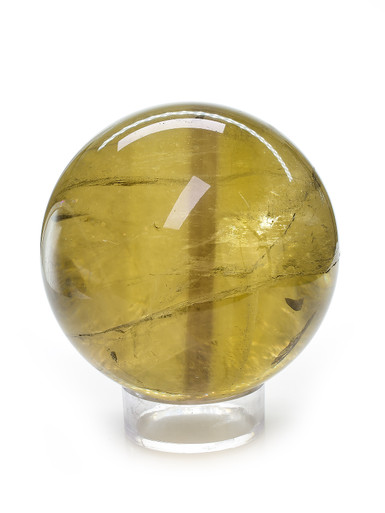
A premium 2.5-inch-plus citrine sphere from Exquisite Crystals, the visual counterpoint that turns a citrine crystal tree into a complete wealth-corner altar. Where the tree distributes ambient citrine energy across many small chips, the sphere concentrates focused citrine energy in a single solid form. Together they cover both the ambient and focused modes the post describes. Statement-tier decor on its own; collector-tier when paired with a Kalifano tree of the same variety.
Shop at Exquisite Crystals →
Three factors decide which crystal tree fits the space you’re putting it in: size, quality of the chips and assembly, and whether you want real natural chips or are open to lab-created or dyed alternatives.
Size
Tabletop trees (6 to 10 inches) fit a desk corner, small altar, nightstand, or bookshelf. Most practitioners start here. A tabletop tree is the simplest way to introduce ambient crystal energy into a space without committing to a statement piece.
Mid-size trees (12 to 16 inches) work best on entryway side tables, room corners, or larger altars. The size lets the tree act as a visual focal point while still doing the ambient field work.
Statement trees (16 inches and up) are home centerpieces and gift-tier presentation pieces. Use these in entrance halls, large living rooms, or as a primary altar object.
Quality flags
Look for: bigger chips over tiny chips (more visible energetic mass), clear visible color, no dyed-glass appearance, sturdy wire-wrapping at branch attach points (chips should not dangle loose), a stable, weighted base, and an honest seller who will tell you whether the chips are natural, dyed, or lab-created.
Skip: trees with chips that look uniformly sized and dyed-bright (often glass), trees with loose chips or visible glue residue, trees with brittle or thin wire branches that bend under their own weight.
Are crystal trees real crystals?
The chips are real gemstones. The trunk is typically resin, sometimes carved stone for premium pieces. Branches are copper wire. This is the standard trade construction, and most reputable sellers will tell you so on the listing.
When clients ask if a crystal tree counts as ‘real crystals,’ yes. The chips are real. The trunk is resin. That’s the trade. Disclose, don’t dodge.
For under-budget gifts, lab-created amethyst or citrine chips are chemically identical to natural and are typically disclosed by reputable sellers. The energetic question (does lab-created carry the same energy?) is a personal call. The chips are real either way.
Crystal Tree Gift Guide: Tiers & Best for Recipient

Crystal trees do double duty. They are real practitioner energy work AND beautiful Pinterest-pinnable decor. Most buyers want both. The good news for gift-shoppers: every budget tier delivers the same energy work. The difference between $25 and $150 is mostly size, chip quality, and presentation polish.
Under $30: Tabletop Crystal Trees
Entry Tier Pick: Pink Crystal Tree (under $40)

A multi-crystal tree from Buddha Stones combining citrine, amethyst, and pink crystal (rose quartz) chips on a ceramic base. The mix carries solar-plexus prosperity, crown-chakra calm, and heart-chakra love simultaneously, making it the practitioner pick when you want full-spectrum ambient energy at the entry budget. Best for first-crystal-gift recipients, dorm or apartment friends, and anyone who wants Pinterest-pinnable decor at low budget.
Shop at Buddha Stones →A small tabletop tree, 6 to 8 inches, with a single crystal type (amethyst, citrine, or rose quartz are most common at this tier). Best for: a first crystal gift, a dorm or apartment friend, a secondary gift in a larger gift basket. Pinterest-friendly aesthetic at low budget.
$40 to $80: The Sweet-Spot Tier
Mid Tier Pick: Kalifano Premium Tree of Life

A Kalifano Premium Tree of Life with 414 hand-set chakra-color gemstone chips on a carved natural rose quartz base. The rose quartz base adds heart-chakra grounding to the full-spectrum chakra leaves, making this the mid-tier standard for anniversary gifts, housewarmings, and wellness-friend gifting. Size fits a desk corner or altar table; the rose quartz base is the visible upgrade signal over resin-base trees.
View on Amazon →Mid-size tree (10 to 12 inches), seven-chakra mix or quality single-crystal type. Best for: anniversary gifts, housewarming gifts, wellness friends, work colleagues at a thoughtful tier. This is the sweet spot of the crystal tree gift market and the most-bought tier.
$80 to $150: Statement Pieces for Milestone Gifts
Quality Tier Pick: Kalifano Premium Peridot
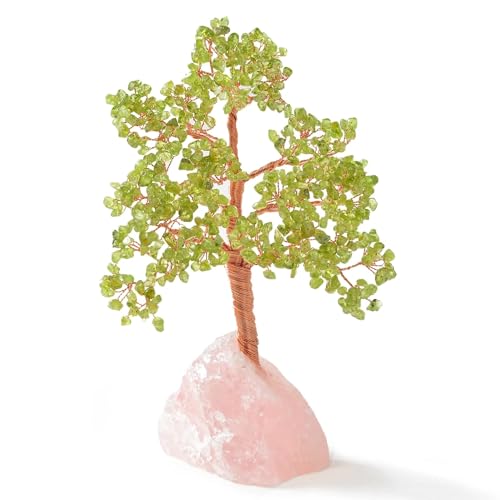
A Kalifano Premium Peridot tree with 414 natural peridot chips on a carved natural rose quartz base, a pairing the standard crystal-tree market rarely offers. Peridot carries the heart-and-solar-plexus prosperity overlap (similar territory to green aventurine) but with a more vivid color and rare-stone collector premium. The rose quartz base adds heart-chakra grounding underneath. A statement gift for collectors, milestone anniversaries, or executive-level recipients.
View on Amazon →Larger tree (12 to 16 inches), premium crystal varieties (Brazilian amethyst, Madagascar rose quartz, raw citrine), or carved stone trunks. Best for: milestone gifts, mother-in-law gifts, executive gifts, decor-forward homeowners. A real altar centerpiece or statement-shelf piece.
$150 and Up: Collector & Custom Trees
Large 16-inch-plus trees, custom-made, or premium-curated pieces. Best for: major milestones (wedding gifts, retirement, decor-forward homeowners), serious collectors, gift-giving that’s making a statement. Often hand-wrapped with carved stone bases.
Collector Tier Pick: Premium Carnelian Statement Tree

A Kalifano Large Carnelian tree with 1,251 hand-set natural carnelian chips, a deep red-orange field that reads as a statement piece on any altar or shelf. Carnelian is the rarer of the premium Kalifano single-crystal lineup, which makes this the collector tier pick for practitioners who already have an amethyst or citrine and want to expand the altar into the solar-plexus / sacral-chakra creative energy territory. Best for milestone gifts where the recipient is established and collector-leaning.
View on Amazon →Gift Picks by Recipient
- New homeowner: citrine + green aventurine pair for abundance in the new space
- Wellness friend: 7 chakra tree (the practitioner gift)
- Anniversary: rose quartz tree
- Office colleague: small citrine tree
- Spiritual practitioner: clear quartz or amethyst tree (lets them program the intention)
- Boss-mom or overworked friend: amethyst (peace and sleep) or black tourmaline (EMF protection from screens)
The seven-chakra tree is the practitioner-tradition gift. If you want a single crystal-tree gift that ‘works for everyone,’ that’s the answer.
Frequently Asked Questions
What is a crystal tree?
A crystal tree is a decorative figurine shaped like a small bonsai, with chip-form gemstone leaves wired to copper-wire branches and a resin or stone trunk base. The leaves are real gemstones (amethyst, citrine, rose quartz, etc.), typically 2 to 6 mm chips. The shape draws on the Tree of Life and Chinese feng shui money tree (摇钱树) traditions.
Are crystal trees real crystals?
Yes, the gemstone chips on each branch are real crystals. The trunk is typically resin (sometimes carved stone for premium pieces) and the branches are copper wire. This is the standard trade construction. Reputable sellers will tell you whether the chips are natural, dyed, or lab-created.
Where should I put a crystal tree in my home?
Use the feng shui bagua map. Citrine in the southeast corner for wealth, rose quartz in the southwest for love and relationships, clear quartz or amethyst in the north for career and life direction, green aventurine in the east for family and health, and any tree on the office desk for practical daily reach.
What is the best crystal tree for wealth and prosperity?
Citrine. The yellow citrine tree is the traditional feng shui money tree, placed in the southeast corner of a home or office (the wealth bagua zone). Pair with a green aventurine tree for compounded abundance work. The pairing is the practitioner-tradition stack for new business launches and salary work.
How do I cleanse a crystal tree?
Use sound (singing bowl or bell), smoke (sage or palo santo), a selenite plate underneath, or moonlight. Avoid water soaking, ultrasonic cleaners, steam, salt, and prolonged direct sun. Monthly cleansing is enough for ambient placements. Cleanse immediately after heavy emotional work.
Can a crystal tree get wet?
No. The trunk + glue + copper wire assembly is not water-safe. Even chips that are individually water-safe can rust the wire and dissolve the glue at the branch attach points. Cleanse a crystal tree with sound, smoke, or a selenite plate underneath instead.
What is a 7 chakra crystal tree?
A seven-chakra crystal tree carries chip leaves in seven colors corresponding to the seven main chakras: red (root), orange (sacral), yellow (solar plexus), green (heart), blue (throat), indigo (third eye), and violet or clear (crown). It’s the practitioner-tradition crystal-tree gift because the full chakra coverage works for almost everyone.
Are crystal trees a good gift?
Yes. Crystal trees are one of the most flexible wellness gifts because they double as decor and practitioner tool. The seven-chakra tree is the safest ‘works for everyone’ option. Match a single-crystal tree to the recipient’s intention (rose quartz for love, citrine for new ventures, amethyst for stress).
Sources & References
Sources & References
- Buddha & Karma “Feng Shui Gem Trees: Meaning, Benefits, and Where to Place Them.” Buddha & Karma, https://buddhaandkarma.com/blogs/guide/feng-shui-gem-crystal-tree-meaning-benefits-placement.
- Feng Shui Mall “Crystal Gem Tree.” Feng Shui Mall, https://www.fengshuimall.com/crystal-trees.
- Hall, Cally. Gemstones: The Definitive Visual Guide. DK Publishing, 2002.
- Inner Wisdom Store “The Benefits of Feng Shui Gem Trees and Where to Place Them.” Inner Wisdom Store, https://innerwisdomstore.com/blogs/guide/the-benefits-of-feng-shui-gem-trees-and-where-to-place-them.
- International Feng Shui Guild “Bagua Map References.” IFS Guild, https://ifsguild.org/.
- Yatskia Crystals “Crystal Tree Benefits: Maximum Power and Positioning for Best Impact.” Yatskia Crystals, https://yatskiacrystals.com/blogs/news/crystal-tree-benefits-maximum-power-and-positioning-for-best-impact.
- ZenStar Store “Exploring Feng Shui Crystal Trees: Their Significance, Benefits, and Optimal Placement.” ZenStar Blog, https://zenstarstore.com/blogs/blog/feng-shui-crystal-trees.
Recommended Reference Book

Karen Frazier’s Crystals for Beginners is the practitioner-friendly entry-point reference for everything that touches a crystal tree practice: chakra correspondences, cleansing methods, intention-setting, and the per-stone meaning system that this guide builds on. Best companion book to keep on the shelf next to a crystal-tree altar.
View on Amazon →We may earn a commission from links on this page at no extra cost to you. This helps us keep CrystalsAlchemy running.
This article was originally published on