Turquoise Meaning: Healing Properties, Birthstone & Real vs Fake (2026)
The same blue stone Egyptian queens set in gold 5,000 years ago is sitting in the bead bin at your local craft store right now. Except half of what’s labeled turquoise isn’t actually turquoise. The turquoise meaning we recognize today, sky-stone, throat-chakra, December birthstone, sky-blue protection across 6,000 years of cultures, gets muddied the moment you walk into a marketplace where dyed howlite, spotted jasper, and resin-pressed dust all carry the word “turquoise” on the price tag.
This guide untangles all of it. You’ll get the real mineralogy, the cultural depth that makes turquoise carry genuine spiritual weight, the December birthstone story, the practitioner-tradition healing properties, and a hands-on real vs fake test methodology. By the end, you’ll know exactly what you’re holding when someone hands you a piece of “turquoise.”
In This Guide
- What Is Turquoise? Meaning, Symbolism & Quick Facts
- Turquoise at a Glance (Properties Table)
- The Real Mineralogy: What Makes Turquoise, Turquoise
- Turquoise Meaning & Symbolism Through History
- Spiritual & Metaphysical Properties (Practitioner Tradition)
- Turquoise as the December Birthstone
- Turquoise & the Zodiac
- Color Meanings: Sky-Blue vs Green Turquoise
- How to Tell Real Turquoise from Fake
- Real Turquoise Varieties (Sleeping Beauty, Kingman, Persian)
- What’s Sold AS Turquoise But Isn’t (Howlite, African, White Buffalo)
- How to Use Turquoise in Daily Practice
- Cleansing & Care for Turquoise
- Frequently Asked Questions
What Is Turquoise? Meaning, Symbolism & Quick Facts
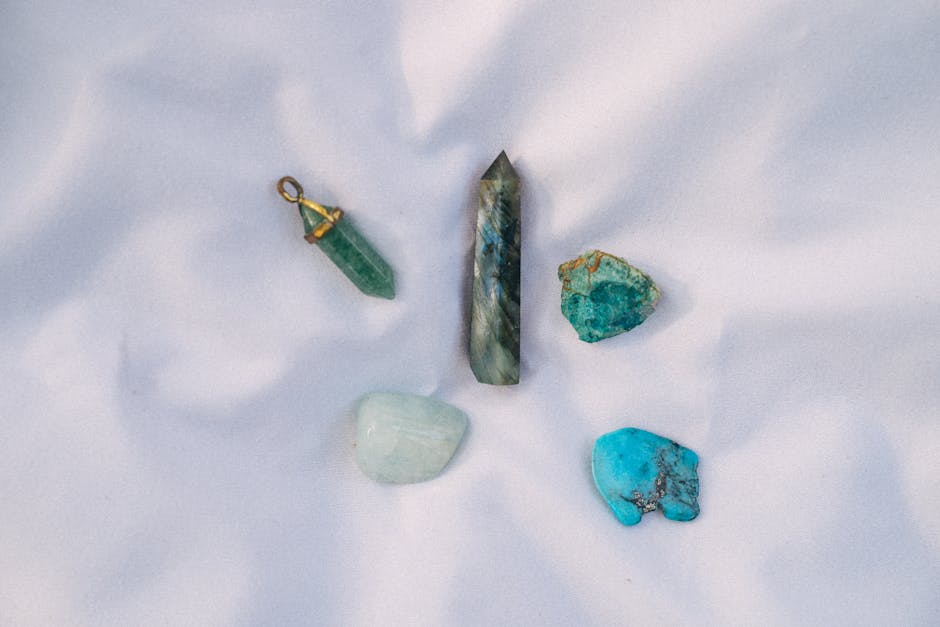
Turquoise is a hydrous copper-aluminum phosphate mineral (CuAl₆(PO₄)₄(OH)₈·4H₂O) prized for over 6,000 years across Egyptian, Persian, and Native American cultures. Its sky-blue to green color comes from copper and iron in its chemistry. Practitioners associate it with the throat chakra, communication, protection, and sky/water symbolism.
The name itself tells a small story. “Turquoise” comes from the Old French turquois, meaning “Turkish,” because the stone reached medieval Europe along trade routes that ran through Turkey. The mines were in Persia and the Sinai. The word stuck anyway. Today you still say “turquoise” for a color and a stone that, technically, has nothing to do with Turkey at all.
That naming quirk fits the larger pattern. Turquoise has always been a stone of crossing places. Blue-and-green color. Sky-and-water symbolism. Copper-and-aluminum chemistry. Ancient world to modern jewelry case. It sits at the bridge between mineral and meaning.
When you ask what turquoise represents, the answer holds across cultures. Sky. Water. Communication. Protection. The stone of the in-between.
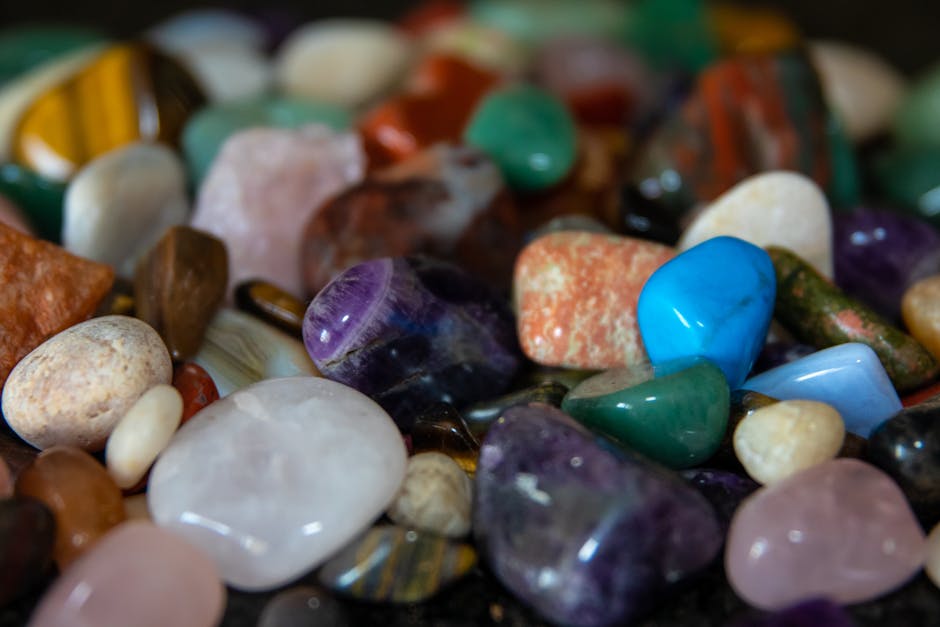
What sets it apart from other blue stones (lapis, sodalite, blue calcite, larimar) is the chemistry. Turquoise carries copper. The copper is what gives it that distinctive sky-blue, and the copper is what every “fake turquoise” lacks. Howlite has no copper. Spotted jasper has no copper. White Buffalo has no copper. The mineral that gave us 6,000 years of cultural meaning is, at its core, copper carried into aluminum-rich rock by water.
Turquoise at a Glance (Properties Table)
| Property | Detail |
|---|---|
| Mineral class | Phosphate |
| Chemical formula | CuAl₆(PO₄)₄(OH)₈·4H₂O |
| Mohs hardness | 5 to 6 |
| Specific gravity | 2.6 to 2.9 |
| Color range | Sky-blue, robin’s-egg blue, blue-green, apple-green |
| Crystal system | Triclinic (cryptocrystalline aggregate; rare visible crystals) |
| Luster | Waxy to subvitreous |
| Streak | Pale blue to greenish |
| Major sources | Iran (Nishapur), United States (Arizona, Nevada, New Mexico), China (Hubei), Sinai Peninsula |
| Birthstone | December (modern AGTA list and traditional 15th-century lists) |
| Zodiac (traditional) | Sagittarius, Pisces, Aquarius |
| Chakra | Throat (Vishuddha) primarily; some traditions extend to heart and third eye |
| Care rules | No water, no salt, no prolonged sun, no harsh chemicals, store separately |
A couple of those rows deserve attention before you move on. The Mohs 5 to 6 reading puts turquoise on the softer side of the gemstone spectrum, which is why most market turquoise is stabilized (resin-impregnated to harden the porous structure for cutting and setting). The “no water” rule is non-negotiable for raw or untreated stones. I’ll get into the care reasoning in detail later in the guide.
The Real Mineralogy: What Makes Turquoise, Turquoise
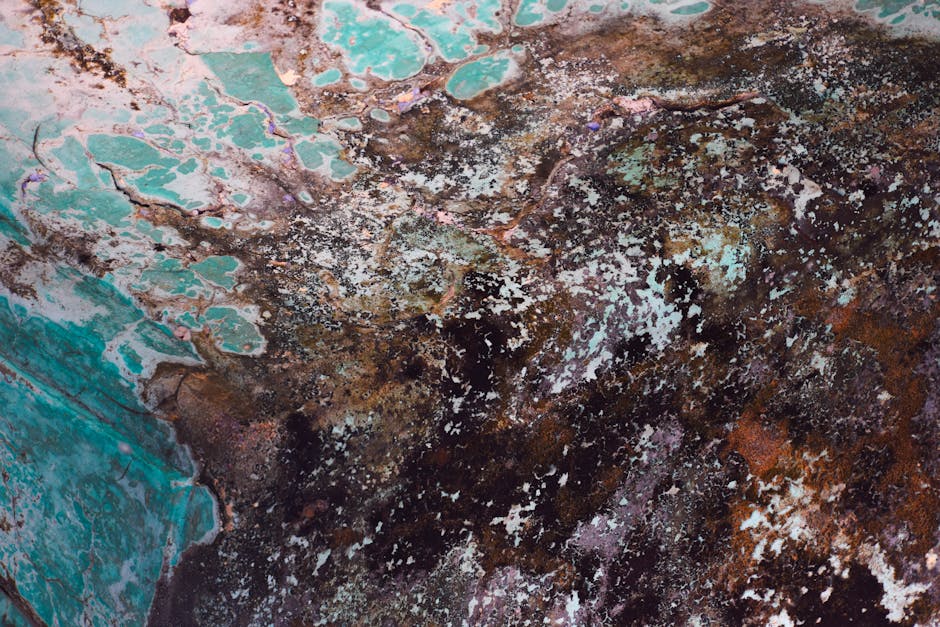
The formula CuAl₆(PO₄)₄(OH)₈·4H₂O reads as a sentence once you slow down. Copper. Aluminum (six atoms). Phosphate (four units). Hydroxyl (eight units). Plus four water molecules built into the crystal structure.
Color is chemistry. Pure copper-rich turquoise with low iron substitution gives you the sky-blue of classic Sleeping Beauty stones from Arizona. As iron substitutes for aluminum in the lattice, the color shifts toward green. The blue-to-green spectrum is a chemistry readout: copper for blue, iron for green.
Turquoise rarely forms visible crystal faces. It’s almost always cryptocrystalline, a microcrystalline aggregate of grains too small to see without magnification. Mineralogists call it a phosphate mineral that crystallizes in the triclinic system but typically presents as massive aggregate. Practitioners count it as a crystal in the broader sense. Both are right.
Mohs 5 to 6 sounds reasonable until you factor in porosity. Raw turquoise drinks water, oils, body sweat, and lotions. Set it in a ring without treatment and within months the color shifts. The industry fix since the 1960s is stabilization: pressing colorless resin into the pores under heat and pressure. Stabilization is not a scam, it’s standard practice. The question is whether the seller discloses it. Untreated natural-grade turquoise is collector territory, priced accordingly.
I have a Sleeping Beauty turquoise cab my grandmother passed down. Almost matrix-free, that pure sky-blue color, with the slightly waxy luster that natural untreated turquoise carries. It feels cool against the palm even on a warm afternoon, and the surface has a softness polished resin can’t fake. That cab is how I learned what real, untreated turquoise looks like.
Turquoise Meaning & Symbolism Through History
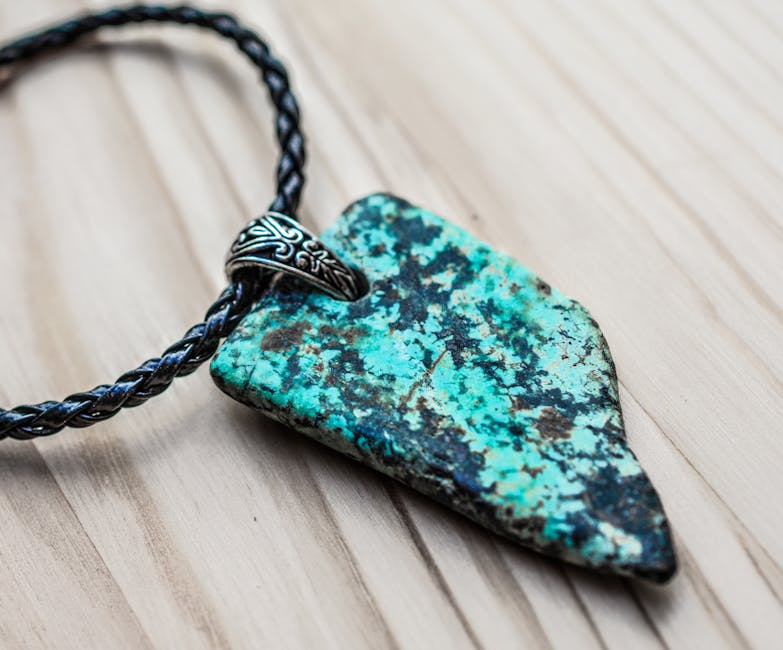
Six thousand years is a long time for a mineral to stay in the human spiritual record. Turquoise’s cultural depth runs across continents, and its meaning has stayed remarkably consistent: sky, water, protection, communication with the unseen.
In ancient Egypt, the Egyptians mined turquoise in the Sinai Peninsula at sites sacred to Hathor, “Lady of Turquoise,” goddess of joy and the sky. Pharaohs wore turquoise scarab amulets as protective talismans, and Tutankhamun’s funerary mask is inlaid with turquoise alongside lapis lazuli and carnelian. The stone was buried with the dead because it was thought to protect the soul through the underworld journey.
In Persia, turquoise was Pirouzeh, meaning “victory.” For more than 3,000 years, Persian turquoise from the Nishapur mines was the global gold standard, set into dome inlays, sword hilts, and amulets worn by travelers, with the belief that turquoise would shift color to warn of approaching danger. The blue domes of Persian mosques echo the same association.
In the American Southwest, turquoise has been sacred for over 1,000 years. Pueblo peoples mined the Cerrillos deposits in what is now New Mexico as early as 200 CE. Zuni and Hopi traditions associate turquoise with sky, rain, and breath. The Navajo silversmithing tradition that produced the now-iconic silver-and-turquoise jewelry began around 1860, after Navajo smiths learned silverwork during the Long Walk era and began setting turquoise into their pieces. Apache warriors carried turquoise for protection and accuracy in aim, attaching small stones to arrows and bows.
Spiritual & Metaphysical Properties (Practitioner Tradition)

When you read about turquoise spiritual meaning across crystal-healing traditions, the same themes surface again and again. None of this is clinical. It’s the practitioner-tradition language that has accumulated around the stone over millennia.
Throat chakra. Turquoise is most strongly associated with the throat chakra (Vishuddha), the energy center connected with truthful expression and authentic voice. Practitioners report that turquoise is often used to support speaking honestly when stakes are high. Difficult conversations. Public speaking. Creative voice work.
Protection. The protection association runs back to Persia, ancient Egypt, and Apache warrior tradition. Tradition holds that turquoise is a travel and protection stone, carried by people moving through unfamiliar territory or facing risk. The “color-shift warning” lore probably comes from real porosity behavior. Oils and sweat actually do change the color of untreated turquoise over time.
Courage and presence under pressure. Many find turquoise associated with steadiness in moments of stress. Tradition links this to the throat-chakra resonance: when communication flows clearly, the body settles.
Sky-water bridge. A consistent thread across cultures. Turquoise is read as a bridge between sky and water, breath and emotion. Many practitioner traditions place it as a connector stone between heart and throat.
These are practitioner-tradition associations, not medical claims. Turquoise is a stone people have used for thousands of years to focus attention and set intention.
Featured Pick from Energy Muse

A genuine turquoise point necklace at the throat chakra placement the Spiritual & Metaphysical tradition has worked with for centuries. Worn close to the throat where the stone has carried voice, courage, and protection symbolism across Persian, Egyptian, and Native American practitioner lineages. The wearable form of the practitioner tradition.
Shop at Energy Muse →Turquoise as the December Birthstone
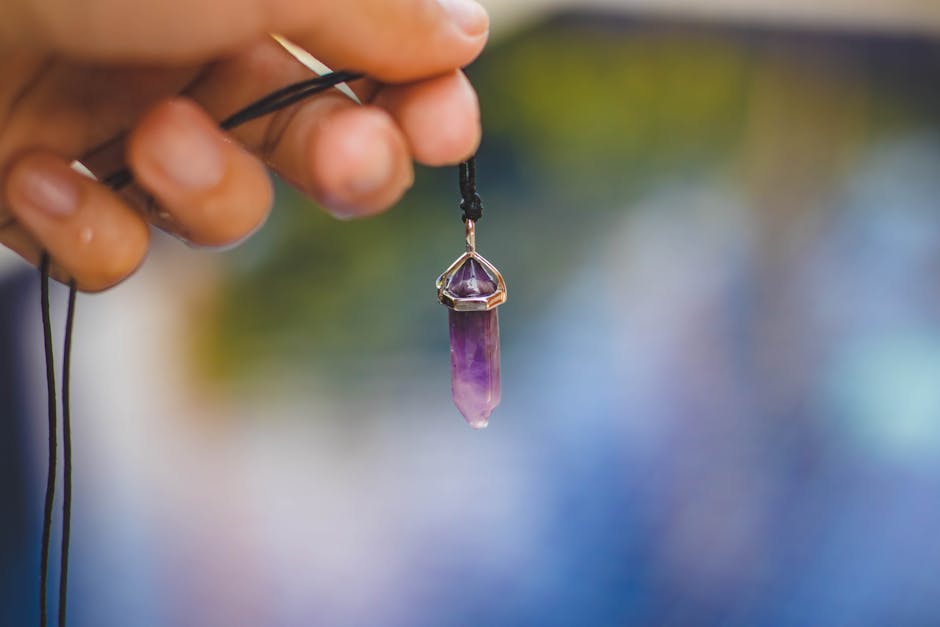
If you were born in December, turquoise is your birthstone. Specifically, one of three modern December birthstones (alongside tanzanite and zircon) on the American Gem Trade Association’s official list. Turquoise is also the traditional birthstone for December, an association that reaches back to 15th-century European birthstone tables and even earlier into apostolic-stone lore.
Why turquoise for December? The traditional explanation ties it to the winter sky. December’s pale, cold blue, the color of clear winter daylight at noon, matches the sky-blue of classic turquoise. Older birthstone traditions also called turquoise “the stone of Sagittarian wisdom,” linking it to the December-spanning Sagittarius sun sign and to the open-sky, far-reaching, truth-seeking quality both turquoise and Sagittarius traditions share.
The modern American birthstone list was standardized in 1912 by the American National Association of Jewelers (now Jewelers of America), pulling together various older European and Talmudic traditions into a single twelve-month chart. Turquoise’s December placement was already centuries old by that point. Tanzanite was added to the December slot in 2002 (because it had become commercially significant), and zircon has been on the December list since the 1912 standardization.
If you’re choosing a turquoise birthstone gift for a December person, two paths work. Sleeping Beauty turquoise carries the classic sky-blue color most people picture when they hear “turquoise.” Kingman turquoise, often blue-green with character matrix, reads more like the American Southwest tradition: earthier, with visible geology.
Look for a clear stabilization disclosure if the price is moderate. Untreated natural Sleeping Beauty in jewelry-grade quality starts at hundreds of dollars per carat. Stabilized, well-cut turquoise from major American mines lands at a much friendlier price point and is what most December birthstone jewelry actually contains.
Featured December Birthstone Gift

A 925 sterling silver bodhi-leaf pattern pendant earring set in genuine turquoise, in the wearable gift form practitioners reach for when buying a December birthstone piece that lasts. The bodhi-leaf motif carries protection symbolism in the Buddhist tradition, and sterling silver setting keeps the porous stone protected from the skin oils that damage unprotected turquoise.
Shop at Buddha Stones →Featured Companion Gift on Amazon
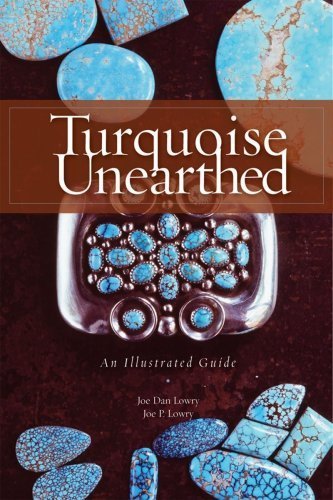
The reference book for anyone receiving turquoise as a December birthstone gift. Joe Lowry walks through every major American mine (Sleeping Beauty, Kingman, Bisbee, Lander Blue, Number 8, Royston) with photographs, stories, and matrix-by-matrix identification. The birthstone book a December turquoise lover actually keeps on the shelf.
View on Amazon →Turquoise & the Zodiac
Turquoise crosses three zodiac signs in traditional birthstone-zodiac tables. The connections are mostly atmospheric and elemental rather than rigid.
Sagittarius (November 22 to December 21). The strongest zodiac association. Sagittarius spans the start of December, which lines up with turquoise as the December birthstone. The fire-sign-meets-air-stone pairing reads as the truth-telling, far-traveling, big-picture quality both Sagittarius and turquoise traditions share. Turquoise is often listed first when you look up Sagittarius birthstones.
Pisces (February 19 to March 20). A water sign with strong intuitive associations. Pisces traditions often pair with turquoise’s sky-water symbolism, and many practitioners use turquoise for Pisces folks who want to support clearer expression of their inner sense.
Aquarius (January 20 to February 18). Aquarius is an air sign aligned with communication, ideas, and humanitarian voice. Turquoise’s throat-chakra resonance fits naturally. Some traditions place turquoise as an Aquarius supporting stone alongside amethyst and garnet.
These are traditional pairings, not horoscope mandates. Pick the stone that resonates, regardless of birthday.
Color Meanings: Sky-Blue vs Green Turquoise

Color is chemistry (covered earlier), but tradition reads the colors differently. Here’s how the two main color streams break down.
Sky-blue turquoise (Sleeping Beauty Arizona, Persian Nishapur, top-grade Hubei). Read in tradition as the sky stone. Sky-blue turquoise meaning runs to clear communication, spirit-realm connection, and the classic “throat chakra opening” lore. It’s the color of medieval Persian domes and Egyptian funerary masks.
Green turquoise (Kingman green, many Nevada stones, some Royston). Read in tradition as the earth stone variant. Green turquoise meaning leans toward grounding, rooted protection, and ancestral connection. In Native American Southwestern traditions especially, the greens carry strong associations with the land. Some practitioners place green turquoise closer to the heart chakra than the throat.
Spider-web matrix turquoise (Lander Blue, Number 8, certain Royston pieces). The matrix carries its own symbolic weight. The web pattern is read in some traditions as the visible web of connection, the felt sense that everything is woven together. Stones with prominent matrix often command higher prices because the matrix reads as the stone’s own story.
One closing note. The color you receive is the color the chemistry decided. You don’t pick blue versus green based on what the stone “should” mean. You let the stone present its color and read what it shows you.
Featured Pick from Energy Muse

A natural Mexican turquoise specimen showing the green-to-teal end of the chemistry spectrum, where iron substitutes for copper in the host phosphate. The greener Mexican mines (Sonora, Cananea) sit at the opposite end of the color spectrum from Sleeping Beauty’s sky blue, and a side-by-side comparison is the fastest way to learn what the iron-versus-copper ratio actually does to a stone.
Shop at Energy Muse →How to Tell Real Turquoise from Fake
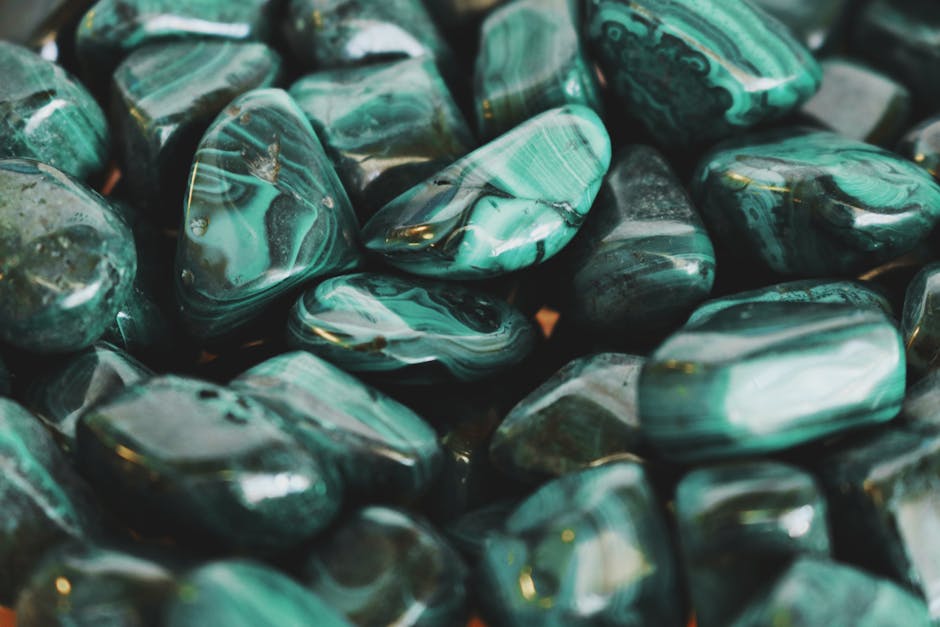
This is the moat section. If you walk away from this guide with one practical skill, let it be this. So, how to tell if turquoise is real, and how do you sort real turquoise vs fake when both are sitting on the same tray? Here is the methodology, in five tests you can run with cheap supplies.
The Hardness Test
Real turquoise sits at Mohs 5 to 6. You can’t scratch it with your fingernail (Mohs 2.5) or a copper coin (Mohs 3.5). Howlite, the most common fake, is Mohs 3.5. A copper penny will scratch dyed howlite. Plastic and resin imitations give way under a steel pin (Mohs 6.5+). Pick a hidden spot, like the back of a cab or an inner edge of a bead, and test gently. Real turquoise resists. Howlite, magnesite, and most plastic imitations do not.
The Acetone Test
Wet a Q-tip with acetone (plain nail polish remover works) and rub a hidden area of the stone for several seconds. Dyed howlite bleeds blue dye onto the swab almost immediately. Reconstituted turquoise sometimes also bleeds, depending on the resin chemistry. Real turquoise, whether natural or stabilized, does not transfer color to the swab. This is the single fastest fake test. It costs a dollar and takes thirty seconds.
The Hot Needle Test
Heat a sewing needle with a lighter for several seconds. Touch the heated tip to a hidden area of the stone (the back of a cab, the inside of a bead hole). Plastic imitations melt and smell distinctly of plastic. Reconstituted “block” turquoise (resin-bound dust) smells of resin or burning plastic. Real turquoise (natural or stabilized) does not melt and does not smell of plastic. The smell is the tell.
The Matrix Pattern
Real matrix is irregular, three-dimensional, embedded in the stone. The veins run at angles, vary in width, intersect and branch the way real geology does. Painted “matrix” on dyed howlite is uniform, surface-only, and often too perfect. Parallel lines. Evenly spaced spider-web. Identical pattern repeating across multiple beads in a strand. If every bead in the strand has the exact same web pattern, it’s painted.
The Price Red Flag
Real turquoise (even Kingman green at the lower end of the market) starts around $1 to $3 per carat for low grade and climbs into the hundreds of dollars per carat for top-grade Sleeping Beauty or Persian. A “natural turquoise” strand at a craft store priced at $5 for forty beads is mathematically impossible to be real turquoise. Almost certainly dyed howlite, dyed magnesite, or reconstituted block. Use price as your first sanity check before you even touch the stone.
Hold a piece of real Persian turquoise next to a dyed howlite of the same size. The real one feels colder, denser, slightly waxy under the thumb. The fake feels warmer almost instantly, lighter in the palm, with a chalky drag where real turquoise has that subtle waxy slip. Your hand learns the difference fast, faster than your eye does. This is one of those cases where the body becomes the most reliable instrument once it has the reference.
Authentic Specimen on Exquisite Crystals
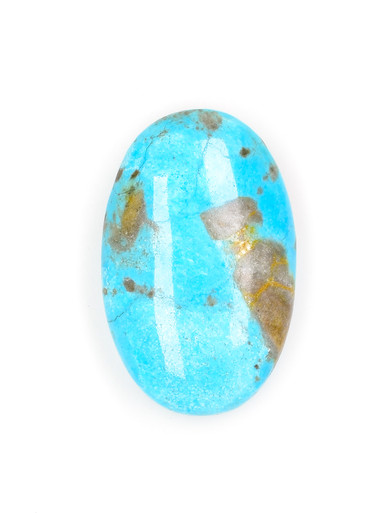
A genuine AAAA No. 8 turquoise pocket stone from the historic Number 8 Mine in Eureka County, Nevada, the visual benchmark for what real American turquoise looks like. Use the matrix pattern, the natural color depth, and the weight as the reference standard when comparing against dyed howlite, plastic, or resin-stabilized fragments sold online.
Shop at Exquisite Crystals →Real Turquoise Varieties (Sleeping Beauty, Kingman, Persian)
These are the named varieties most collectors and crystal buyers encounter. All of them are real turquoise. The differences are mine source, color, matrix character, and price.
Sleeping Beauty (Arizona)
The classic sky-blue. Sleeping Beauty turquoise comes from the Sleeping Beauty Mine in Globe, Arizona, which closed for turquoise production in 2012 and now operates only for copper. Pre-2012 stock is what’s still in the market, and prices have climbed steadily as supply tightens. Sleeping Beauty’s signature is pure sky-blue with little to no matrix, the color most people picture when they hear “turquoise.”
Kingman (Arizona)
The largest active US source. Kingman turquoise covers a wide color range from pale sky-blue to deep blue-green to apple-green, often with character matrix in black, brown, or pyrite. Kingman is the workhorse American turquoise. Most stabilized turquoise on the modern market comes from Kingman. Quality varies enormously, from inexpensive stabilized cabs to high-grade natural pieces.
Persian (Iran)
The historical gold standard. Persian turquoise (also called Iranian turquoise) from the Nishapur region has been mined for over 3,000 years. It’s typically very fine-grained, sky-blue, and often matrix-free. Top-grade Persian commands premium prices and is the reference point against which all other turquoise is judged.
Bisbee (Arizona)
Deep “Bisbee blue” with chocolate-brown matrix. The Lavender Pit copper mine produced turquoise as a byproduct until it closed for turquoise in the 1970s. Existing stock is collector territory and a true Bisbee piece commands a significant premium. The color is a deep, slightly purple-tinted blue instantly recognizable to collectors.
Nevada (Lander Blue, Number 8, Royston)
Nevada produces some of the most distinctive turquoise in the world. Lander Blue turquoise (often called the most valuable American turquoise) is dark blue with fine spider-web black matrix. Number 8 from Eureka County shows golden-brown matrix on blue-green ground. Royston is famous for blue-to-green color transitions in a single cab. Most Nevada mines are now closed or producing in very small quantities.
Collector Specimen on Exquisite Crystals
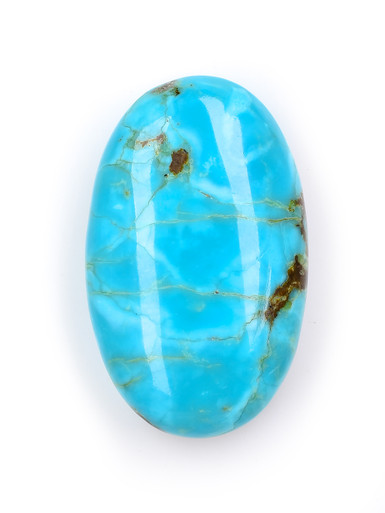
A AAAA-grade No. 8 turquoise palm stone in the size practitioners actually use for daily handling. The Number 8 mine is one of only a handful of American sources still releasing material since the great American mines closed, which is why high-grade specimens have steadily climbed in collector value year over year.
Shop at Exquisite Crystals →What’s Sold AS Turquoise But Isn’t (Howlite, African, White Buffalo)
This section is the truth-in-labeling section. These materials are sold as “turquoise” or with the word “turquoise” in their name. None of them are mineralogically turquoise. Knowing the difference protects your wallet and your collection.
“Turquoise Howlite” / “White Turquoise”
Howlite is a separate mineral (Ca₂B₅SiO₉(OH)₅) with no copper in the formula. It’s white in its natural state, soft (Mohs 3.5), and porous. The crystal-bead industry dyes howlite blue and sells it as “turquoise howlite,” “white turquoise,” or just plain “turquoise” at the lowest price points. This is the single biggest consumer-protection issue in the crystal market. Real turquoise is never white. The howlite turquoise meaning marketed by sellers borrows turquoise’s spiritual associations, but the mineral is unrelated.
“African Turquoise”
A trade name for a spotted jasper found in Africa, typically a feldspar-bearing chalcedony with green-brown coloring and dark matrix-like spots. Contains no copper. Mineralogically unrelated to true turquoise. The african turquoise meaning circulating in metaphysical writing leans toward grounding and growth, which is fine as a jasper meaning, but the stone is not turquoise.
The first time I picked up “African turquoise” in a bead shop, I almost bought a whole strand. The color was right, the label said turquoise. It took a mineralogy book that night to set me straight. The trade name is decades old, but the mineralogy is worth knowing.
“White Buffalo”
A genuinely beautiful stone (calcite-based with black manganese-oxide matrix from the Tonopah area in Nevada) but mineralogically not turquoise. It’s marketed as “White Buffalo turquoise” because it forms in the same regional strata that produce turquoise, and because the matrix pattern resembles classic spider-web turquoise. Real White Buffalo is rare and has its own collector market. Just don’t conflate it with turquoise mineralogically.
Reconstituted / Block Turquoise
Real turquoise dust mixed with resin, pressed into blocks, then cut into cabs, beads, or inlay. Reconstituted turquoise contains real turquoise material, but it’s heavily resin-bound, low value, and should always be disclosed at point of sale. The hot needle test will catch it (resin smell). Acceptable as a budget option if you know what you’re buying.
Synthetic / “Created” Turquoise
Lab-grown materials chemically similar to natural turquoise. Used mostly in commercial-grade jewelry where consistent color and durability matter more than provenance. If a stone is exceptionally vivid, perfectly uniform, and inexpensive, synthetic is a reasonable suspicion.
How to Use Turquoise in Daily Practice

Turquoise crystal meaning translates into practice in six reliable ways. Pick one or two that match your week. The stone does its work through repetition, not novelty.
As Daily Jewelry (Necklace, Earrings, Rings)
The wearable form is the oldest form. A turquoise pendant on a chain, sitting at the hollow of the throat or just below the collarbones, places the stone at the throat chakra (Vishuddha), the traditional position for a communication-supporting stone. Silversmith-set turquoise (the Navajo silver-and-turquoise tradition since the 1860s) is the long-standing practitioner choice because sterling silver protects the porous stone from skin oils better than plated metals do. Turquoise earrings keep the stone near the head and ears, useful for practitioners who associate turquoise with both speaking and hearing clearly. Turquoise rings on the dominant hand work well for writers, teachers, and people who use their hands when they speak. Care note: take turquoise off before showers, swimming, lotion, and perfume application. Put it on last when getting dressed, take it off first when undressing. Daily wear is fine if you respect the water and chemical rules.
In Meditation & Throat-Chakra Work
The traditional placement is to hold the stone in your left hand (the receptive hand in many practitioner traditions) during seated meditation, or to lie down and place a turquoise cab directly over the throat or in the hollow above the collarbones for ten to fifteen minute sessions. Set a specific intention before you begin: “clear voice,” “speak the truth I’ve been avoiding,” “let my words match my body,” “ask the question I haven’t asked.” Breathe slowly through the nose, exhale through the mouth as if forming the shape of words. The throat-chakra association deepens with consistency. Three short sessions a week reads better in practitioner reports than one long session a month.
On Your Desk or Workspace
If your work involves your voice (teaching, podcasting, sales calls, public speaking, video shoots, customer-facing work), set a piece of turquoise on the desk within line of sight of your laptop or microphone. Many practitioners place it just to the left of the keyboard or directly beside the mic stand. Before a call or recording, take a single breath, touch the stone briefly with the dominant hand, and name the intention silently: “speak clearly, speak honestly.” This before-call ritual takes five seconds and gives the body a repeatable cue. Over weeks, the cue itself becomes part of the calm-before-speaking response.
Pocket Carry for Hard Conversations
This use traces directly back to Apache travel-stone tradition. Carry a small tumbled turquoise piece in a pocket on days you know will demand difficult communication: job interviews, performance reviews, doctor visits, hard family conversations, court appearances, breakup conversations. Practitioners differ on which pocket. Many place it in the dominant-hand pocket so the stone is reached for first when the hand drops. Others prefer the non-dominant pocket on the heart side. Either works. The purpose is tactile reassurance in the moment you need it, and a physical anchor for the intention you set that morning.
Bedside / Nightstand for Voice-Day Prep
The night before a public-speaking day, an important presentation, a podcast recording, or a high-stakes meeting, place a turquoise stone on the bedside table next to a glass of water (water for you, not the stone, never water on turquoise). Some practitioners also place a small piece under the pillow for dream-incubation, a tradition with roots in both Persian and Native American practice for receiving guidance through dreams. In the morning, pick up the stone before checking your phone. Hold it for thirty seconds, recall the intention, and carry it with you for the day. The stone becomes a continuity thread between rest, intention, and performance.
Pairing With Other Stones
Turquoise pairs well with several other stones in practitioner tradition. Turquoise + clear quartz is the amplification pairing. Quartz is read as an amplifier, so a quartz point placed near a turquoise piece is said to magnify the throat-chakra and communication intentions. Use this pairing for major communication events. Turquoise + black tourmaline is the protection layer. Black tourmaline is the strongest protection stone in the modern crystal canon, and pairing it with turquoise (already a protection stone in Persian and Apache traditions) gives a doubled grounding-protection field. Useful for travel, public-facing work, or environments that feel energetically heavy. Turquoise + amethyst is the truthful-speech-under-stress pairing. Amethyst’s traditional associations with calm and clarity layer over turquoise’s communication associations to support speaking honestly when emotions are high. Place all three on a small dish at your workspace for high-stakes weeks.
Featured Daily-Wear Pick

A 925 sterling silver turquoise and cinnabar purification bracelet in the daily-wear form for everyday practice. Sterling protects the porous stone from skin oils across full days of wear, the same reason the Native American silver-and-turquoise tradition standardized 925 mountings in the 1860s. Cinnabar pairing carries protection symbolism in the Tibetan Buddhist tradition that crosses naturally with turquoise practitioner work.
Shop at Buddha Stones →Cleansing & Care for Turquoise
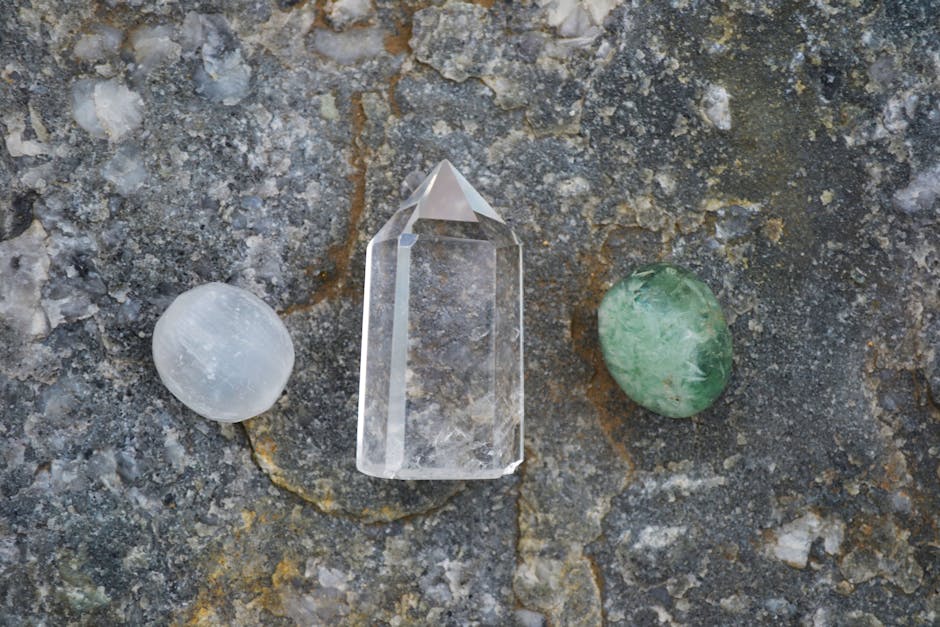
Turquoise care is the most-mishandled topic in crystal blogging. Most posts casually advise rinsing with water. For turquoise, that advice damages the stone. Here is the porosity-aware version.
What NOT to do
No water. Turquoise is porous (Mohs 5 to 6, with significant absorbency). Water seeps into the stone and discolors it from the inside, sometimes irreversibly. This applies to both natural and stabilized turquoise. Stabilization slows the absorption but does not eliminate it. The answer to “can turquoise get wet” is no.
No salt or saltwater. Salt accelerates surface damage and pulls minerals out of the stone. Skip the salt-bowl cleansing method that works for quartz.
No prolonged direct sunlight. UV exposure fades turquoise color over months and years. Brief sunlight is fine. Leaving turquoise in a sunny window for weeks is not.
No harsh chemicals. Cleansers, perfume, lotion, hairspray, and household chemicals all damage turquoise. Put turquoise on last when getting dressed. Take it off first.
What TO do
Wipe with a soft dry cloth. A microfiber cloth or a dry cotton cloth removes oils and dust without introducing water.
Energetic cleansing without water. Sage smoke, palo santo smoke, sound bath (singing bowl played near the stone, not in water), brief moonlight on a windowsill (not sunlight), and contact with a selenite plate or charging slab all work. None of these involve water touching the stone.
Store separately. Mohs 5 to 6 means harder stones (quartz, citrine, anything in the 7+ range) will scratch turquoise if they share a jewelry box drawer. Use a soft pouch or a divided box.
Don’t soak it. I learned this the hard way with a small Kingman cab I dropped into a singing bowl filled with water for “sound infusion” cleansing, the kind some practitioners swear by. The bowl rang beautifully. The stone did not survive it. Within a few hours the color had dulled from a clear blue-green to a muddier, almost gray-green tone, and it never came back. Sound cleansing is fine. Water cleansing is not. Play the bowl near the stone, not over it.
Featured Pick from Energy Muse

A self-cleansing selenite box built specifically for storing porous stones like turquoise that cannot be put in water. Set your turquoise jewelry inside overnight and the surrounding selenite walls clear it without ever introducing moisture, salt, or sunlight that damages the stone. The practitioner-tradition standard for the “no water” family of crystals, and the one cleansing tool a serious turquoise collector keeps within reach.
Shop at Energy Muse →Frequently Asked Questions
What does turquoise symbolize?
The traditional turquoise meaning centers on sky, water, communication, and protection across more than 6,000 years of cultural use. It is most strongly associated with the throat chakra (Vishuddha) in modern practitioner traditions, the energy center governing truthful expression and clear voice. Across Egyptian, Persian, and Native American traditions, it has consistently been read as a stone of bridge-making: sky and water, breath and speech.
Is turquoise a real crystal?
Yes, with one technical caveat. Turquoise is a real mineral (a hydrous copper-aluminum phosphate, CuAl₆(PO₄)₄(OH)₈·4H₂O) that crystallizes in the triclinic system. It rarely forms visible crystal faces; almost all turquoise is cryptocrystalline. Mineralogists count it as a phosphate mineral. Practitioners count it as a crystal. Both are correct.
Is turquoise a December birthstone?
Yes. Turquoise is one of three modern December birthstones (alongside tanzanite and zircon) on the American Gem Trade Association’s official list. It is also the traditional turquoise birthstone for December dating back to 15th-century European birthstone tables and was included in the 1912 American National Association of Jewelers standardized list.
What chakra is turquoise good for?
Turquoise is most strongly associated with the throat chakra (Vishuddha) in modern practitioner traditions. Some traditions also link it secondarily to the heart chakra (especially green-leaning turquoise) and the third eye (especially deep-blue Persian stones). The throat chakra association governs communication, truthful expression, and authentic voice.
Can turquoise get wet?
No. Turquoise is porous (Mohs 5 to 6), and water absorbs into the stone, often discoloring it permanently. This applies to both raw natural turquoise and stabilized turquoise. Avoid showers, swimming, dishwashing, and saltwater while wearing turquoise jewelry. Wipe with a dry soft cloth only, and use smoke, sound, moonlight, or selenite contact for cleansing.
Is howlite the same as turquoise?
No. Howlite is a separate mineral (Ca₂B₅SiO₉(OH)₅) with completely different chemistry, no copper, and a Mohs hardness of about 3.5 (versus turquoise’s 5 to 6). Howlite is naturally white. It is commonly dyed blue and sold as “turquoise howlite” or “white turquoise” in low-cost crystal markets. Real turquoise is never white.
Is African turquoise real turquoise?
No. “African turquoise” is a trade name for a spotted jasper, a feldspar-bearing chalcedony found in Africa. It contains no copper and is mineralogically unrelated to true turquoise. The trade name is established and unlikely to change, but if you’re looking for real turquoise, “African turquoise” is not it.
Sources & References
- “Turquoise.” Mindat.org, www.mindat.org/min-4060.html.
- King, Hobart M. “Turquoise: A Phosphate Mineral and Gem Material.” Geology.com, geology.com/minerals/turquoise.shtml.
- “Turquoise Description.” Gemological Institute of America, www.gia.edu/turquoise-description.
- “December Birthstones: Tanzanite, Zircon, and Turquoise.” American Gem Trade Association, agta.org/birthstones/december/.
- “Turquoise.” Smithsonian National Museum of Natural History, naturalhistory.si.edu.
- Hall, Judy. The Crystal Bible: A Definitive Guide to Crystals. Godsfield, 2003.
- Lowry, Joe, and Joe P. Lowry. Turquoise Unearthed: An Illustrated Guide. Rio Nuevo Publishers, 2002.
- Hurlbut, Cornelius S., and Cornelis Klein. Manual of Mineralogy. 21st ed., John Wiley & Sons, 1993.
Related guides: May Birthstone: Emerald Meaning, Properties & Real-vs-Fake Guide · Crystals for Studying: 8 Best Stones for Focus, Memory & Mental Clarity
We may earn a commission from links on this page at no extra cost to you. This helps us keep CrystalsAlchemy running.
This article was originally published on