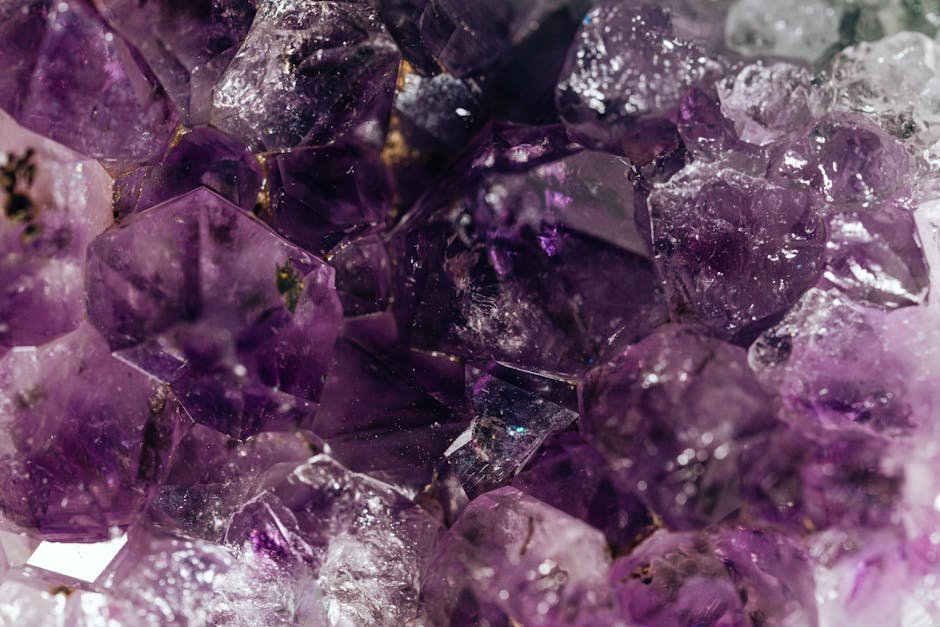
Amethyst vs Lepidolite: Which Is the More Calming Crystal?
Amethyst and Lepidolite, two powerhouse crystals, but which one do you actually need? This guide breaks down exactly how they differ in energy, healing properties, and practical use, so you can choose the right one for your intention instead of guessing.
In This Guide
- The Ancient Crystal Rivalry Worth Knowing Today
- What Makes Amethyst One of the Best Calming Crystals
- Lepidolite for Calm: The Gentle Newcomer
- Amethyst vs Lepidolite: A Side-by-Side Comparison
- How to Use Amethyst and Lepidolite for Calm
- How to Choose Between Amethyst vs Lepidolite for You
- Combining Amethyst and Lepidolite: The Ultimate Calming Crystal Pairing
- Frequently Asked Questions
The Ancient Crystal Rivalry Worth Knowing Today

When worry will not switch off, two violet crystals keep rising to the top of every crystal healer’s recommendation list: amethyst and lepidolite. The amethyst vs lepidolite question is one of the most interesting in crystal healing, not merely because both stones share a similar purple palette, but because tradition associates them with two different kinds of calm. Understanding that difference is the key to choosing the right stone for you.
Amethyst has been revered for more than 2,000 years. Ancient Greeks carved drinking vessels from it, believing the stone protected against intoxication and excess, the word itself derives from the Greek amethystos, meaning ‘not intoxicated.’ In time, its calming violet frequency became associated with spiritual clarity, meditative peace, and the quieting of mental noise. Lepidolite, by contrast, is a relatively modern discovery: first formally documented in 1792 and notable as a lilac, lithium-bearing mica with a soft, pearly shimmer. This pairing of an ancient favorite and a much newer one makes this calming crystals comparison unlike any other. Explore the full spectrum of crystal healing properties and you will quickly see why these two stones occupy a unique category all their own.
What Makes Amethyst One of the Best Calming Crystals
Amethyst is arguably the most recognized crystal in the world, and its reputation for calm is not accidental. For centuries, healers across cultures, from Roman physicians to Tibetan monks, have turned to amethyst as a stone of calm, a companion for worried nights, and a symbol of inner stillness. As a best calming crystal, amethyst is particularly prized for targeting the kind of worry that lives in the mind: the relentless inner monologue, catastrophic thinking, and the inability to switch off at the end of the day.
In crystal healing tradition, amethyst is understood to work primarily through its association with the crown chakra (Sahasrara) and the third eye chakra (Ajna). These two energy centers govern higher thought, intuition, and our connection to something greater than our individual fears. When these chakras become congested, as they often do under chronic stress, the result is mental overwhelm, obsessive thinking, and a profound disconnection from inner peace. Amethyst is thought to gently clear and activate these centers, creating space for calm awareness to emerge in place of restless reactivity.
Amethyst Origins: From Ancient Greece to the Mines of Uruguay
Amethyst is a variety of quartz (silicon dioxide, SiO₂) whose purple color arises from trace amounts of iron and natural irradiation during geological formation. According to the Gemological Institute of America (GIA), amethyst is the most prized variety of quartz and was historically considered as precious as ruby, emerald, and sapphire until large deposits were discovered in Brazil in the nineteenth century, dramatically increasing its availability.
The world’s finest amethyst comes from several remarkable geographic sources. Uruguayparticularly the Artigas region, produces deeply saturated, velvety purple crystals prized by collectors and healers alike for their rich, concentrated color. Brazil, especially the state of Rio Grande do Sul, is the world’s largest producer, yielding enormous cathedral geodes and tumbled stones in extraordinary abundance. Zambia in southern Africa contributes intensely colored, reddish-purple specimens with exceptional depth of hue, while Madagascar produces pale lilac pieces with a gentle, almost ethereal quality. Many crystal practitioners believe the geographic origin of an amethyst subtly influences its energetic signature alongside its visible color characteristics.
How Amethyst Activates the Crown and Third Eye Chakras for Calm
The relationship between amethyst and the upper chakras is central to understanding how this stone is used for calm. The third eye chakra, located at the center of the forehead, governs the mind’s capacity for clear awareness and discernment, the ability to perceive a situation as it actually is, rather than through the distorted lens of fear. When amethyst is placed on or near this chakra during meditation, many practitioners report a notable quieting of mental chatter: a softening of the incessant inner commentary that worry feeds upon. Deepening this practice with powerful amethyst affirmations can anchor a daily sense of calm and reinforce the stone’s energy through intentional spoken word.
The crown chakra, at the top of the head, connects individual consciousness to a broader sense of peace and spacious awareness. Worry, at its core, is often rooted in a sense of contraction, the mind believing it must solve every problem alone, immediately, and perfectly. Working with amethyst at the crown chakra is thought to dissolve this contracted state, replacing it with a felt sense of openness and trust. This is why amethyst pairs so naturally with meditation practice: it does not suppress worried thoughts so much as it creates the inner conditions in which those thoughts can be witnessed without being believed. Amethyst is also traditionally linked with the dreaming mind and restful sleep, which is why so many people keep it by the bed for nights when racing thoughts make it hard to settle.
Featured Crystals from Energy Muse
Both crystals side by side, hand-selected pieces so you can experience the difference for yourself.


Lepidolite for Calm: The Gentle Newcomer
If amethyst is the ancient sage of the calming crystal world, lepidolite is the gentle newcomer. Lepidolite belongs to the mica group of minerals, a family of silicate minerals characterized by a distinctive layered, sheet-like structure and a silky, sometimes glittery sheen. It forms most often in pegmatite rocks: coarse-grained igneous formations that cool slowly deep within the Earth, creating ideal conditions for the growth of lithium-bearing minerals of exceptional size and purity.
What sets lepidolite apart in the calming toolkit is its character. Crystal healers describe it as the softest and most soothing of the purple stones, and they connect its natural lithium content with its reputation for balance and steadiness. That link is symbolic. It belongs to crystal tradition, and handling a stone has nothing in common with any other use of lithium. What the amethyst vs lepidolite comparison really comes down to is the kind of calm you are looking for.
Amethyst: Calm the Mind from Above
Premium amethyst clusters, points, and palm stones chosen for their deep purple color and tranquility-inducing energy.


Lepidolite Origins: From Brazilian Pegmatites to California’s Gem Districts
Lepidolite was first formally described in 1792 and named from the Greek lepidos, meaning ‘scale,’ a reference to its characteristic platy, scaly cleavage. According to Mindat.org, lepidolite’s full chemical formula is K(Li,Al)₃(Al,Si,Rb)₄O₁₀(F,OH)₂, a complex potassium-lithium-aluminum phyllosilicate that reflects the rich mineral diversity of the deep pegmatite environments in which it crystallizes.
The world’s most significant lepidolite deposits are found in Minas Gerais, Brazil, where deep pink and lavender specimens of exceptional beauty are mined alongside tourmaline, aquamarine, and other celebrated gemstones. Russia’s Ural Mountains produce fine-grained lepidolite with a distinctive silvery-lilac sheen. In the United States, the Pala pegmatite district of San Diego County, California and the gem pegmatites of Maine are notable sources of quality lepidolite. Afghanistan and Madagascar yield high-quality specimens in a range of pink and purple tones, while Japan produces a particularly pure, fine-grained form prized for its subtle color. The lilac and deep pink specimens from Brazil’s Minas Gerais are among the most sought-after by crystal practitioners for their rich color and striking appearance.
The Lithium Connection: Mineral Fact and Crystal Tradition
Lepidolite is a genuine lithium mineral. The U.S. Geological Survey (USGS) identifies it as one of the mineral sources of lithium worldwide, alongside spodumene and lithium-bearing brines. That is a fact about geology. In crystal practice it is read as symbolism: a stone formed around a steadying element, chosen when you want to feel steadier.
In crystal healing, lepidolite is described as a grounding, stabilizing stone. Practitioners often say that working with it feels like being wrapped in a soft blanket, a gentle, all-over sense of calm that differs from the more mentally focused serenity of amethyst. This is why it is so often suggested for days when worry is felt in the body as much as in the mind. Where amethyst is associated with quieting thoughts, lepidolite is associated with settling.
Lepidolite’s association with the heart chakra (Anahata) reinforces this body-centered approach. Worry frequently grips the heart center, constricting breath, triggering palpitations, creating a visceral sense of dread in the chest. Lepidolite’s gentle, mica-soft energy is said to dissolve this gripping quality, releasing stored emotional tension from the chest and upper body with an effectiveness that surprises many first-time users. In crystal healing, its calming reputation carries naturally into the hours before sleep, making it a favorite companion for restless, worried nights.

Amethyst vs Lepidolite: A Side-by-Side Comparison
Understanding the key differences between these two remarkable stones is essential for making an informed, intuitive choice. The table below distills the core properties most relevant to finding calm in this amethyst vs lepidolite comparison:
| Property | Amethyst | Lepidolite |
|---|---|---|
| Mineral Family | Quartz (Silicon Dioxide) | Mica (Phyllosilicate) |
| Color Range | Pale lavender to deep violet-purple | Lilac, pink, violet-gray, silver |
| Hardness (Mohs) | 7 | 2.5–3 (handle with care) |
| Primary Origins | Brazil, Uruguay, Zambia, Madagascar | Brazil, Russia, California, Maine, Afghanistan |
| Chakra Association | Crown (Sahasrara), Third Eye (Ajna) | Heart (Anahata), Third Eye (Ajna) |
| How It Calms | Quiets mental chatter, promotes meditative calm | Associated with feeling settled and emotionally steady |
| Best For | Racing thoughts, a busy mind at night | Tension held in the body, emotional overwhelm |
| Notable Mineral | Iron (source of purple color) | Lithium-bearing mica |
| Water Cleansing | Safe for brief water contact | Avoid water, mica layers can separate |
Both crystals share a purple palette, an association with the third eye chakra, and a deep tradition of use for calm, but as the table makes clear, they come at it from distinctly different directions. Amethyst is fundamentally the crystal of the mind; lepidolite is fundamentally the crystal of the heart and body. Recognizing this distinction is the foundation of working skillfully with either stone.
Healing Tools & Jewelry
Wearable crystal energy and healing tools, designed to keep your intentions close throughout the day.


How to Use Amethyst and Lepidolite for Calm
Knowing which crystal resonates with you is only the first step, the real transformation comes from learning how to engage with these stones in ways that genuinely fit your daily life and help you feel supported. Whether you prefer formal meditation, informal carrying practices, or environmental crystal placement, both amethyst and lepidolite offer a rich array of approaches suited to different lifestyles and worry patterns. For those who enjoy incorporating elemental energies into their crystal practice, pairing either stone with air element crystals during meditation creates a beautifully layered approach to mental and emotional calming.
Working with Amethyst for Calm
Meditation hold: Hold a tumbled amethyst in your non-dominant hand during meditation, or place a larger piece directly on your forehead (third eye chakra) or the top of your head (crown chakra) while lying down. Begin with ten-minute sessions and notice whether the quality of your mental activity softens over time. Consistency matters far more than duration in the early stages of crystal meditation practice.
Bedroom placement: Place an amethyst cluster or geode on your nightstand, on a windowsill facing your bed, or under your bed frame. Many crystal healers believe amethyst radiates a field of calm throughout the sleeping space, which makes it a favorite for the bedroom. This is one of amethyst’s best-loved uses.
Workspace anchor: A small amethyst point or cluster on your desk serves as both a visual reminder to return to calm and an energetic presence during stressful work periods. Position the termination pointing toward you to draw its calming field inward. Glancing at the stone and taking a conscious breath is itself a micro-mindfulness practice that interrupts the worry cycle.
Affirmation and intention work: Amethyst responds beautifully to spoken intention. Hold your stone, close your eyes, and repeat affirmations such as ‘My mind is calm and clear’ or ‘I release all worry and return to peace.’ The combination of tactile grounding and verbal intention creates a powerful calming ritual. Wearing amethyst as a pendant resting near the throat or heart area keeps this calming influence present throughout even the most demanding days.
Working with Lepidolite for Calm
Pocket stone for tense moments: Lepidolite’s most immediately powerful application is as a pocket stone during periods of heightened worry or emotional overwhelm. Because lepidolite is relatively soft (Mohs 2.5–3), choose a polished or tumbled piece rather than a raw specimen for carrying, raw lepidolite can flake along its cleavage planes. Hold it tightly when worry surges, focusing on the cool, silky, layered texture as a grounding sensory anchor. This tactile quality alone has a remarkable capacity to interrupt the worry spiral.
Heart chakra placement: During any lying-down meditation, restorative yoga, or yoga nidra session, place a piece of lepidolite directly on your chest over the heart chakra. The gentle physical weight of the stone combined with conscious, slow breathing makes a simple ritual for letting go of the tension you feel in the chest and solar plexus. This is the placement most recommended for emotional overwhelm and grief-adjacent heaviness.
Bedtime: Place a piece of lepidolite under your pillow or inside a small cloth pouch tucked into your pillowcase. Its soothing energy is said to suit the wind-down before sleep. Unlike amethyst, which some sensitive people find a little stimulating, lepidolite is almost always described as gentle.
Important care note: Because lepidolite is a mica-group mineral, it should never be submerged in water for cleansing purposes, water penetrates and separates the delicate mica layers, permanently damaging the stone’s structure. Instead, cleanse lepidolite with sound (singing bowls, bells), moonlight, smoke, or by resting it on a selenite charging plate. Selenite’s gentle, high-vibration energy is perfectly complementary to lepidolite’s calming frequency and is widely regarded as the ideal cleansing companion for this stone.

A standout amethyst piece from Energy Muse, hand-selected for its energetic quality and connection to healing. This is the kind of piece that anchors a collection and deepens your daily practice.
Shop at Energy Muse →How to Choose Between Amethyst vs Lepidolite for You
The most practical guidance in the amethyst vs lepidolite debate is deceptively simple: follow your body’s wisdom about where your worry lives. If your worry resides primarily in your mind, the catastrophic thoughts, the inability to stop analyzing, the racing inner monologue that won’t quietamethyst is likely your primary ally. If your tense moments show up more in your body, the tight chest, the stomach knots, the shallow breath, the feeling of being permanently switched to high alert, lepidolite is the stone practitioners most often reach for as a grounding, physical anchor.
Consider these scenarios as a practical decision guide:
- Choose amethyst if your worry peaks at bedtime with racing thoughts you cannot silence. Choose amethyst if your worry lives mostly in your head: overthinking, big-picture worry, or planning that will not stop. Choose amethyst if you are drawn to meditation and spiritual practice and want a crystal that actively deepens and supports that work.
- Choose lepidolite if your worry is felt in the body as much as the mind. Choose lepidolite if you often feel emotionally overwhelmed, especially during big life transitions. Choose lepidolite if you have tried other calming crystals and found them too stimulating.
- Choose both if your worry regularly affects mind and body simultaneously. Choose both if you are building a comprehensive crystal wellness toolkit and want energetic coverage across the full spectrum of worry. Both stones together, amethyst for morning meditation, lepidolite for evening wind-down, make a simple daily rhythm that many practitioners enjoy more than either stone alone.
Beyond these scenarios, trust your instinctive response when you hold each stone. Does one feel more immediately soothing in your hands? Does one seem to resonate more deeply with where you are emotionally right now? These subtle body signals are genuine information. Building a thoughtful crystal protection and wellness practice means learning to listen to and honor these intuitive responses over time.
Lepidolite: Soft and Soothing
Quality lepidolite pieces selected for their lavender shimmer, soft texture, and gentle character.


Combining Amethyst and Lepidolite: The Ultimate Calming Crystal Pairing
One of the most rewarding discoveries in working with the best calming crystals is that amethyst and lepidolite do not need to compete, they are natural and complementary partners. Their different mechanisms make them powerfully synergistic: amethyst quiets the busy mind from above (crown and third eye), while lepidolite soothes the tense body from the heart center outward. Together, they create a top-to-bottom energetic response to worry that neither stone achieves alone.
Try this combined amethyst and lepidolite practice: Lie down in a comfortable position. Place a lepidolite palm stone on your heart chakra at the center of your chest. Hold a tumbled amethyst in each hand, or place a single piece on your third eye at the center of your forehead. Take five slow, deep breaths, extending each exhale to twice the length of the inhale. With each exhale, consciously imagine the amethyst dissolving mental tension from above while the lepidolite melts physical tightness from the chest and belly. Continue for ten to twenty minutes. Many practitioners describe this particular combination as one of the most holistically calming crystal experiences available, addressing the whole picture, from the spinning mind to the knotted body, in a single unified practice.
You can also combine these stones in your home environment with elegant simplicity: an amethyst cluster placed on a high shelf or bookcase (representing the mental and spiritual dimension of calm) paired with a lepidolite specimen at a lower level, on a coffee table, meditation altar, or beside a cushion, creates a beautifully balanced energetic landscape for the entire room. For those exploring the complete depth of crystal healing energies, this kind of intentional, layered crystal pairing is often where the most meaningful transformations unfold.
Whether you feel drawn to amethyst’s ancient meditative wisdom, lepidolite’s gentle softness, or the combined power of both, this calming crystals comparison ultimately reveals the same truth: the most effective crystal practice is built not on which stone is objectively superior, but on which stone, or combination of stones, meets you precisely where your worry lives.
Gift Sets & Accessories
Perfect for gifting or completing your collection.

More from Energy Muse
Additional healing crystals and tools to deepen your practice, each piece hand-selected for quality and intention.


Frequently Asked Questions
Which is better in a tense moment: amethyst or lepidolite?
For moments of sudden overwhelm, practitioners tend to reach for lepidolite because of its grounding, body-centered character. Holding a polished stone while you take slow, long out-breaths gives you a simple ritual to come back to. Amethyst is more often chosen as a daily practice stone, used during meditation to build a steady habit of calm. Many crystal healers keep a lepidolite stone in a pocket for tense moments and use amethyst in a regular morning or evening practice.
Can I use amethyst and lepidolite together for calm?
Yes. Amethyst and lepidolite are considered one of the most complementary calming pairs, because tradition gives them different roles. Amethyst is associated with a quiet mind and the crown and third eye chakras, while lepidolite is associated with the heart chakra and a softer, settling calm. Combining them, for example placing lepidolite on your heart center while holding amethyst during meditation, brings the two together.
Does lepidolite really contain lithium, and is it safe to handle?
Yes, lepidolite genuinely contains natural lithium as a core component of its mineral composition, this is a well-documented mineralogical fact confirmed by sources including Mindat.org and the U.S. Geological Survey, which lists lepidolite as one of the world’s primary lithium mineral sources. Lepidolite is completely safe to hold, carry, and use in meditation; the lithium is chemically bound within the mineral’s crystalline matrix and is not bioavailable through ordinary skin contact. However, lepidolite should never be used to make a direct-method crystal-infused drinking water elixir, if you wish to make a gem water with lepidolite, always use the indirect method, placing the stone outside the water vessel rather than submerging it.
How do I cleanse and care for amethyst and lepidolite?
Amethyst can be cleansed with brief water rinsing, moonlight, sound (singing bowls or bells), smoke cleansing, or by resting it on a selenite charging plate, however, avoid prolonged direct sunlight exposure, as UV light gradually fades amethyst’s color over time. Lepidolite requires more delicate care: as a member of the mica mineral family, it should never be submerged in water, as moisture penetrates and separates its characteristic layered sheet structure, permanently damaging the stone. Cleanse lepidolite instead with moonlight, sound, smoke cleansing, or by placing it on a selenite plate, which gently clears and recharges it without any risk of physical degradation.
Where can I buy high-quality amethyst and lepidolite crystals?
The most reliable sources for genuine, high-quality amethyst and lepidolite include reputable crystal shops, both local and online, that openly disclose the geographic origin of their stones; look for Brazilian or Uruguayan amethyst and Brazilian or Californian lepidolite as strong quality indicators. Gem and mineral shows are excellent venues to examine stones in person, compare quality across multiple vendors, and speak directly with knowledgeable sellers who can confirm a stone’s authenticity and provenance. When purchasing online, prioritize sellers who provide clear, unfiltered photographs, weight or size specifications, and fair return policies, and exercise caution with unusually low prices, which can indicate dyed quartz sold as amethyst or synthetic material sold as lepidolite.
Last Updated on November 29, 2026
We may earn a commission from links on this page at no extra cost to you. This helps us keep CrystalsAlchemy running.
This article was originally published on