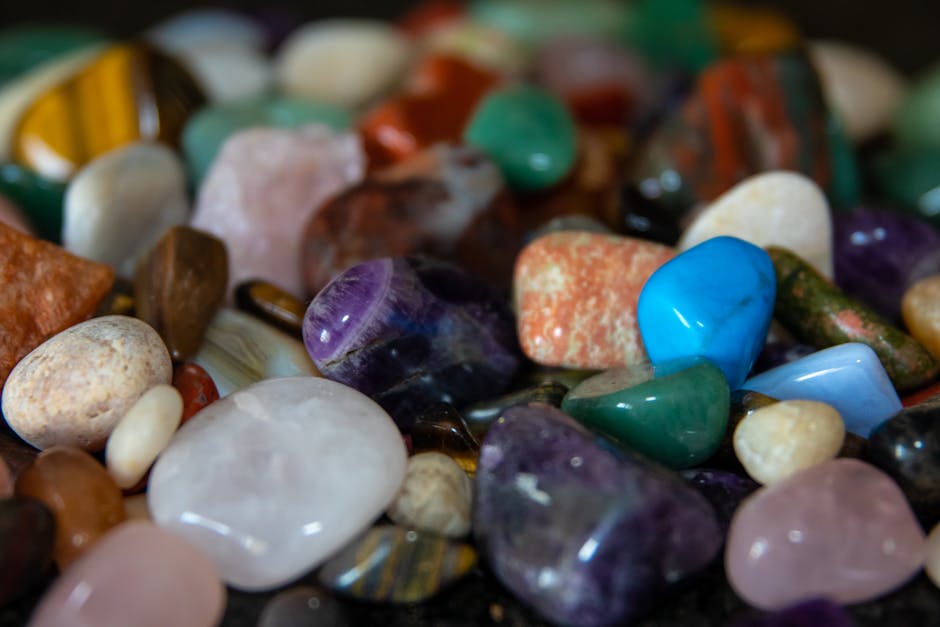
Agate Crystal: Meaning, Properties & Healing Guide
Agate is one of those crystals that earns its reputation. Whether you are drawn to it for energy work, emotional healing, or spiritual growth, this guide covers everything you need: core healing properties, the 12 most collected varieties, and the best ways to cleanse, charge, and use agate with real intention.

Picture this: you are browsing a crystal shop, completely overwhelmed by shimmering rows of stones, and someone hands you a smooth, banded piece of agate. You turn it over in your palm. The layers of color, soft greys, warm browns, gentle blues, seem almost too perfect to be natural. And here is the thing: people have had exactly that reaction for thousands of years. Agate is not a stone you have to be introduced to. It introduces itself.
Agate is one of the oldest named gemstones on Earth. The Greek philosopher Theophrastus wrote about it around 300 BCE after finding specimens near the Achates River in Sicily, which is where the name comes from. Egyptians carried it for protection. Romans ground it into eye-amulets. Medieval Europeans set it into rings to ward off thunderstorms. Whatever humans have needed stability for, agate has shown up for the job.
What makes agate unusual among modern crystal-world favorites is that it earns its reputation across every lens you can look at it through. Mineralogists respect it because the banded growth pattern shows you the geology in real time. Lapidaries love it because it cuts and polishes predictably. Crystal healers trust it because the effect, though quiet, is consistent and reproducible. There is no cult of personality around agate the way there is around moldavite or labradorite. It just works, and people keep coming back.
This pillar guide breaks down what agate actually is (the mineralogy is more interesting than you think), the 12 varieties worth collecting, the healing properties that hold up under real-world use, and how to choose, cleanse, and work with agate day to day. If you are new, start at the top. If you are looking for a specific variety, the table of contents will drop you in wherever you need to land. If you are already deep in the practice and just want to fill gaps in a collection, skip to the varieties deep-dive.
In This Guide
What Is Agate? The Stone Family Explained
Agate is a banded variety of chalcedony, which is itself a microcrystalline form of quartz. Instead of growing into the big six-sided points you see in clear quartz or amethyst, the silica crystals in agate are packed so tight you need a microscope to see them. That tight structure is what gives agate its smooth, slightly waxy feel and the dreamy banded patterns that made it famous.
The bands form over thousands to millions of years as silica-rich water seeps into gas bubbles and cavities in volcanic rock. Each layer picks up slightly different trace minerals, which is why you see green (chromium, celadonite), red (iron oxide), blue (micro-particle scattering), and everything in between. The result is a stone where every single piece is genuinely one of a kind.
| Variety | Color | Chakra | Element | Best For |
|---|---|---|---|---|
| Blue Lace Agate | Pale blue, white bands | Throat | Water, Air | Communication, calm speech |
| Moss Agate | Green inclusions in clear/white | Heart | Earth | Growth, new beginnings, gardening |
| Fire Agate | Iridescent brown, red, gold | Sacral, Root | Fire | Passion, protection, vitality |
| Botswana Agate | Pink-grey banded | Crown, Sacral | Earth, Fire | Comfort, processing grief |
| Crazy Lace Agate | Swirling pink, red, white | Sacral, Heart | Fire, Earth | Joy, balance, optimism |
| Tree Agate | White with green dendrites | Heart, Root | Earth | Abundance, stability |
| Dendritic Agate | Translucent with fern-like patterns | Heart, Crown | Earth, Air | Inner peace, plenty |
| Plume Agate | Feathery inclusions | Third Eye | Air | Creative vision, dreamwork |
| Dragon Vein Agate | Red-black crackled pattern | Root, Heart | Fire | Courage, strength |
| Laguna Agate | Tight red-orange banding | Root, Sacral | Fire | Vitality, collector pieces |
| Turritella Agate | Fossil snail shells in brown | Root | Earth | Ancestral work, stability |
| Rainbow Agate | Multi-color banded | All | All elements | Chakra balancing, full-spectrum work |
The twelve varieties above cover the most-collected and most-worked types. There are dozens more once you get into regional specimens, lace patterns, and named deposits, but these are the ones you will see in reputable crystal shops and the ones I recommend starting with.
Agate at a Glance
- Mineral family: Chalcedony (cryptocrystalline quartz)
- Chemical formula: SiO2 (silicon dioxide)
- Hardness: 6.5 to 7 on the Mohs scale
- Color range: Every color in the spectrum, typically banded
- Primary chakras: Varies by variety (throat, heart, root most common)
- Zodiac: Gemini, Virgo, Capricorn, Taurus (variety-dependent)
- Planets: Mercury, Moon, Earth
- Elements: Earth (core), plus Water, Fire, or Air by variety
- Number: 7 (balance)
Because agate sits around 6.5-7 on the Mohs scale, it is durable enough for everyday jewelry. It handles water (with a few exceptions like fire agate and dendritic specimens with delicate inclusions), survives sunlight (most varieties), and does not flake or cleave the way softer stones do. That durability is part of why it has been worked into ritual objects for three thousand years. Most stones we see in ancient archaeology either fell out of favor or were too soft to survive. Agate did both jobs: it stayed relevant, and it stayed whole.
The other thing worth understanding about agate is that it is not rare. Major commercial deposits exist on every inhabited continent, with the biggest producers today being Brazil and Uruguay (banded agate), Botswana (the namesake variety), India (moss agate), Mexico (crazy lace, laguna, fire), and the United States (plume, dendritic, dryhead). Rough agate is inexpensive enough that entire towns in Germany, Brazil, and India have built economies around cutting and polishing it. That accessibility is part of the gift. Agate is a crystal practice you can sustain on any budget, even if you never buy a piece over $30.
The Deep History: 3,000 Years of Agate Lore
Agate shows up in the archaeological record earlier than most gemstones because it was abundant, workable with primitive tools, and visibly special. Minoan craftsmen carved it into seals around 1800 BCE. Egyptian physicians ground it into powders for eye and stomach remedies. Mesopotamian priests inscribed it with cuneiform amulet prayers.
The name “agate” comes from Theophrastus, a Greek philosopher and student of Aristotle, who wrote about the stone he collected near the Achates River (now the Dirillo) in Sicily around 300 BCE. The river still produces banded agate nodules today, and Theophrastus is the reason we do not call it something else.
Greek and Roman use
Romans took agate seriously. Pliny the Elder devoted several paragraphs of Natural History to its varieties, noting stones from India, Crete, and Egypt. Roman farmers wore agate to ensure abundant harvests. Soldiers carried it into battle. Jewelers ground it into cameos and intaglios so fine that some survive in museum collections today.
Medieval and Renaissance beliefs
By the Middle Ages, agate had picked up a reputation as the gemstone of stability. Farmers buried pieces in their fields before planting. Travelers tied agate beads to their bridles to prevent horses from spooking. German lapidaries in Idar-Oberstein began industrial-scale agate cutting in the 1400s, a craft that is still practiced there and is where most of the precision-cut specimens on the market come from today.
Islamic and Eastern traditions
Agate carried significant weight in the Islamic world as well. Prophet Muhammad is traditionally recorded as wearing a silver ring set with an agate stone (likely a Yemeni variety), which is part of why agate-set silver rings remain culturally important across much of the Middle East today. In Persian and Mughal miniature painting, agate is one of the pigments ground into the palette for ornamental border work. In traditional Chinese practice, banded agate was carved into snuff bottles and scholar’s stones, and the Qing dynasty imperial treasury held substantial agate collections that are now split between museums in Beijing and Taipei.
Modern revival
The modern crystal healing movement picked agate back up in the 1970s and 80s, drawing on earlier traditions catalogued by authors like Judy Hall and Melody. Today, agate is one of the most widely sold crystals worldwide, with major deposits mined in Brazil, Uruguay, India, Botswana, Mexico, and the United States. Genuine material is relatively affordable, which is a rarity among crystals with this kind of historical depth.
What is worth noting about the modern revival is that agate did not need to be reintroduced. Even during the mid-20th century gap in mainstream crystal work, rockhounds, lapidaries, and rural craft traditions in Germany, Brazil, and the American Southwest kept agate cutting and collecting alive. When the New Age movement picked crystals back up in the 1970s, agate was already there, with a three-thousand-year continuous literature to draw on. That continuity is unusual. Most crystals have a traditional use, a long gap, and a modern reinterpretation that may or may not match. Agate’s modern meaning tracks closely with what the Romans, medieval Europeans, and Islamic traditions all said about it: it is the stone of stability.
Healing Properties and Metaphysical Benefits
Across every variety, agate carries a core energetic signature: steadiness. Where clear quartz amplifies and amethyst soothes, agate grounds. It is the stone people reach for when life is moving faster than they can track, when the nervous system needs a floor to stand on, or when a situation calls for patience rather than force.
Emotional balance
Agate helps process emotions without forcing them to the surface too quickly. It is a slow-working stone, which is exactly the point. Pair it with amethyst for anxiety processing or with rose quartz for heart-centered grief work. Where faster stones can leave you overwhelmed, agate metabolizes at a pace the body can actually keep up with.
Physical vitality
Traditional crystal healing ascribes agate influence over the stomach, reproductive system, and skin, particularly for conditions with an emotional root. Modern practitioners often use agate in body-layouts for grounding after energetic work, especially following intense sessions with high-frequency stones like moldavite or selenite.
Spiritual grounding
Agate is one of the most reliable stones for keeping you in your body during spiritual practice. Meditation teachers often recommend holding a palm-stone of agate during longer sessions to prevent the “floating” feeling that some practitioners struggle with. It does not block higher-chakra work, it simply makes sure you come back.
Mental focus and clarity
Several varieties, especially blue lace and dendritic agate, are associated with clear communication and structured thinking. If you are working through a decision that requires both head and heart, agate keeps both lines open without letting one drown out the other. Clear quartz pairs well here when you need amplification.
Protection and energy filtering
Several varieties, especially fire agate, dragon vein, and darker banded specimens, have traditional associations with protection. The mechanism, as most practitioners describe it, is less “blocking” and more “filtering.” Where obsidian and black tourmaline push heavy energy away, agate seems to slow it down and soften it, so whatever reaches you arrives at a metabolizable pace. For empathic people in high-traffic jobs (retail, teaching, nursing, service industries), a piece of dark-banded or fire agate in the pocket during shifts can make a measurable difference in post-work exhaustion.
Sleep and dreamwork
Blue lace agate on the bedside table tends to calm racing thoughts before sleep, especially for people whose insomnia has a communication-anxiety component (unsent emails, unhad conversations, speech-work from the day). Plume agate pulls in the opposite direction, toward vivid dreaming and dream recall, so choose the variety according to what you actually want the night to do. Avoid fire agate and dragon vein in the bedroom if you struggle with restless sleep, the activating varieties do not belong near the pillow.
Agate supports earth element work, grounding practices, and slow-building intentions. It is not the stone for dramatic breakthroughs, it is the stone for the long stretch that makes the breakthrough possible. That framing matters because newcomers to crystal work sometimes mistake agate’s quietness for weakness. It is not weak. It is patient. Those are very different things.
The 12 Agate Varieties Worth Knowing
Each agate variety carries its own energetic fingerprint. Some practitioners work with one or two varieties their whole practice. Others collect broadly. Either approach is valid. What matters is knowing what each variety actually does so you can pick the right one for the situation in front of you.
Our Top Pick for Agate Work

A full-spectrum banded agate point that works across every chakra. Rainbow agate is the collector’s variety: each color band corresponds to a different energy center, making it useful for full-body crystal layouts or altar centerpieces. Ethically sourced and hand-selected for banding clarity.
Shop at Energy Muse →1. Blue Lace Agate: The Throat-Chakra Specialist
Blue lace agate is the gentlest member of the family. Pale sky-blue banded with thin white lace lines, it looks like a piece of a calm morning frozen in stone. Its primary territory is the throat chakra: communication, self-expression, and the ability to speak what is actually true rather than what is easy.
Sourced almost exclusively from the Ysterputs Farm in Namibia, genuine blue lace is becoming scarcer every year. It is the stone I recommend to anyone who shrinks in difficult conversations, mumbles through presentations, or goes silent when they most need to speak up. A blue lace agate bracelet worn on the dominant wrist before a hard conversation does measurable work.
🛒 Featured Pick from Amazon

A sterling silver setting that sits exactly at the base of the throat, which is where blue lace does its best work. Hand-selected cabochon with visible banding, ideal for daily wear during seasons of difficult communication.
Check Price on Amazon →2. Moss Agate: The Gardener’s Stone
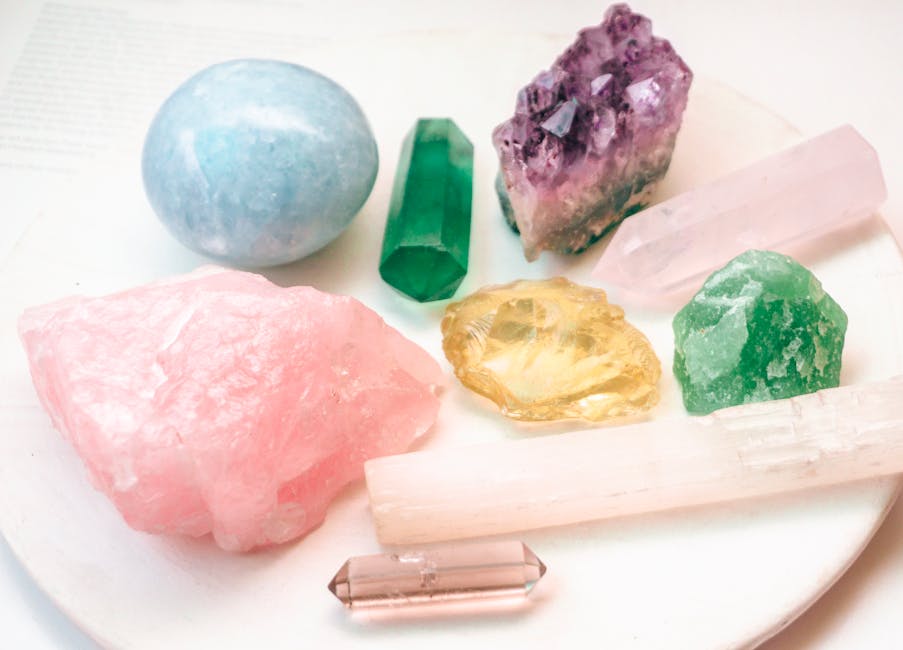
Moss agate is technically not a true agate because it lacks the banding, but it has carried the name for so long that even mineralogists have stopped arguing. What it is: clear or milky chalcedony with green inclusions (usually chlorite or hornblende) that look exactly like moss or ferns frozen mid-growth. The dendritic patterns are never the same twice.
This is the stone of new beginnings, slow growth, and abundance earned over time. Gardeners bury small pieces at the base of seedlings. Entrepreneurs keep it on their desks during launches. It is particularly beloved by people who resonate with the earth element and who want steady, sustainable growth rather than fast wins that disappear.
Moss agate is also one of the most recommended stones for fertility work and for anyone trying to create something that takes a long time to grow, which is a broader category than the usual reading suggests. A novel, a garden, a new business, a recovery from burnout, a rebuilt relationship after rupture, all count. The common thread is patience with a living process. Moss agate holds the space for slow biological time, which is a kind of time our culture is uniquely bad at respecting.
🛒 Featured Pick from Amazon

A polished moss agate tower that holds its energy steadily in a room. Good for home office, altar, or the base of a crystal grid focused on abundance, new business ventures, or garden work.
Check Price on Amazon →Correspondence close: Heart chakra, earth element, planet Earth (or Venus in some traditions), zodiac Virgo. Pairs with green aventurine for financial growth and with tree agate for stability during transitions.
3. Fire Agate: The Iridescent Protector

Fire agate is the most mineralogically unusual member of the family. The iridescent flash comes from thin layers of iron oxide (goethite or hematite) trapped between chalcedony bands, which diffract light the way a soap bubble does. Hold it to the sun and you will see reds, golds, and greens flicker through the surface.
Sourced primarily from Mexico and the American Southwest, fire agate has a reputation as a serious protection stone. It is not gentle like blue lace, it is active, protective, and slightly confrontational toward heavy energy. A volcanic agate skull carved from related material makes a striking altar piece if you work with protection ritual regularly.
Practically, fire agate is one of the more expensive agate varieties because the iridescent flash is highly variable across specimens. You can buy a hundred grams of banded agate for under ten dollars. Good-flash fire agate costs multiples of that per carat. If you are buying online, always check for a video (not just photos), because the flash only reveals itself under moving light. Flat-lit photos can make a weak piece look stronger than it is.
Correspondence close: Sacral and root chakras, fire element, planet Mars, zodiac Aries and Leo. Keep it away from prolonged water contact because the iron inclusions can oxidize. Pairs with black tourmaline for layered protection work.
4. Botswana Agate: The Comfort Stone
Botswana agate is sometimes called the “sunset stone” because of its warm pink, grey, and white banding. It comes almost exclusively from the Bobonong district of Botswana, where it has been worked into ritual objects for centuries. It is the stone people reach for when they need comfort without numbness.
Particularly useful for processing grief, loneliness, and the kind of emotional heaviness that does not have a clear source. I recommend it for anyone in the middle of a loss, anyone coming off antidepressants, or anyone who feels disconnected from joy and wants to rebuild the connection slowly.
Featured Botswana Pick

AA-grade Botswana agate with exceptional banding depth. Hand-selected from the Bobonong district. This is comfort-stone material: warm in the hand, steady in the pocket, reliable over the long arc of grief work or nervous-system regulation.
Shop at Energy Muse →5. Crazy Lace Agate: The Laughter Stone
Crazy lace agate is exactly what it sounds like: wildly swirled bands of red, pink, cream, and brown that look like a painter decided to abandon symmetry entirely. Sourced from Mexico, specifically the Chihuahua region, it has been called the laughter stone because of its reputation for lifting mood and dissolving emotional heaviness.
This is a stone I recommend for seasonal depression, for people stuck in rumination, and for anyone who has forgotten what joy feels like. It is not a magic mood-fix, but it acts as a gentle nudge back toward lightness, which is sometimes all the door needs to open.
Featured Crazy Lace Pick

Crazy lace agate stacked with amethyst, combining mood-lift with emotional balance. The amethyst softens the crazy lace energy and keeps the joy-work from tipping into avoidance. Daily-wear bracelet for anyone in a long winter.
Shop at Energy Muse →6. Tree Agate and Dendritic Agate: The Growth Pair
Tree agate and dendritic agate are often confused because both feature green or black branch-like inclusions. The difference is the base: tree agate has an opaque white or cream base (the branches look painted on), while dendritic agate has a translucent or clear base (the branches look suspended in glass).
Energetically they work as a pair. Tree agate grounds and stabilizes long-term abundance work, which makes it the stone for people building businesses, growing gardens, or nurturing any slow project. Dendritic agate is more expansive, working on inner peace, plenty, and the sense that there is enough. Together they make one of the strongest abundance pairings in the chalcedony family.
A practical note on naming: “dendritic” refers to the branching mineral pattern, so dendritic agate and moss agate sometimes get conflated in casual use. The distinction in the industry is based on how organized the pattern is. Moss agate shows fuzzy, moss-textured inclusions. Dendritic agate shows sharper, more clearly branched patterns that often look like tiny fossilized ferns. Both are real, both are named, both are useful, and either will serve you well if your focus is on abundance and plenty.
Correspondence close: Heart and root chakras, earth element, planet Earth, zodiac Virgo and Gemini. Both pair beautifully with citrine for manifestation work and with green aventurine for financial growth.
7. Plume Agate and Dragon Vein Agate: The Creative Pair
Plume agate gets its name from feather-like mineral inclusions that look almost painted. Sourced primarily from the western United States (Oregon, Idaho), it is the dreamwork stone of the agate family. Keep it near the bed for vivid dreaming, or on the writing desk for creative block.
Dragon vein agate is a dyed variety in most cases, but the base material is real agate with natural crackle patterns. The heat-treatment process that creates the red-and-black “dragon scale” look is well-documented and does not compromise the stone’s energetic properties, though purists prefer undyed specimens. It is used for courage, strength, and breaking through creative stagnation that needs force rather than patience.
Correspondence close: Third eye (plume) and root/heart (dragon vein). Plume resonates with air and Mercury, dragon vein with fire and Mars. Pairs well with labradorite for dreamwork and with red jasper for willpower.
8. Laguna Agate and Turritella Agate: The Collector’s Pair
Laguna agate is the most sought-after banded agate on Earth. Mined from a single exhausted deposit in Chihuahua, Mexico (the Ojo Laguna locality, now essentially played out), it is prized for its tight, intricate banding in red, orange, pink, and white. Specimens from original stock now command serious collector prices. If you see “laguna agate” at low prices, it is almost always mislabeled.
Turritella agate is the opposite in personality: a muddy brown base packed with fossil snail shells (genus Elimia, sometimes called Turritella in older literature). It is used for ancestral work, connection to deep time, and grounding through lineage. Sourced from Wyoming’s Green River Formation.
🛒 Featured Pick from Amazon
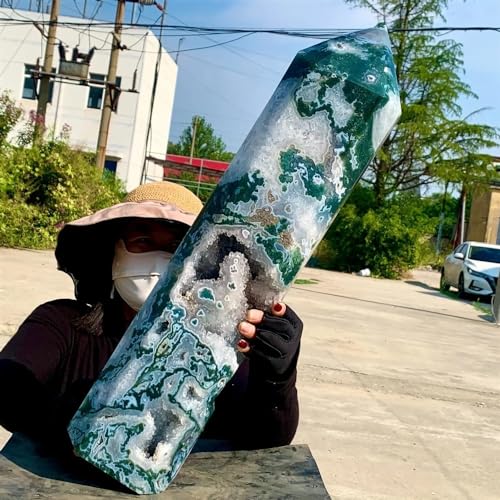
A polished agate obelisk with striking banding. Good representative piece for collectors who want a display-worthy specimen in the $100+ range. Works as a grid centerpiece or as an altar focal point for water-element practice.
Check Price on Amazon →Correspondence close: Root and sacral chakras (laguna), root chakra (turritella). Laguna is fire-element, turritella is earth. Laguna pairs with carnelian for vitality, turritella with smoky quartz for ancestral and lineage work.
9. Rainbow Agate and Classic Banded Agate: The Full-Spectrum Pair
Rainbow agate (sometimes called “iris agate” in older literature) shows full-spectrum color banding. Some specimens are natural, some are enhanced, but both work for chakra-balancing practice because each color band corresponds to a different energy center. Pass a clear rainbow agate over each chakra during a body-layout and you have a complete alignment tool in one stone.
Classic banded agate, the kind Theophrastus named, still comes out of Sicily, Brazil, Uruguay, and Idar-Oberstein cutters in Germany. It is the everyday stone for stability, patience, and all-purpose grounding. The rainbow agate point featured at the top of the varieties section is the premium collector’s piece in this category.
🛒 Featured Pick from Amazon

Polished green agate slabs set as bookends. A practical and decorative way to bring agate energy into a home office or reading nook, especially for people who work with heart-chakra or growth intentions during daily work.
Check Price on Amazon →Correspondence close: All chakras (rainbow), primary chakra varies by band (banded). Works across all elements depending on dominant color. Pairs with clear quartz for amplification and with selenite for a full altar grid.
How to Use Agate in Daily Practice
Agate is forgiving. You do not need a complicated ritual or a full moon to get results. What it rewards is consistency: small, daily contact beats an occasional intensive session every time.
Wearing agate
A palm-stone in the pocket, a tumbled piece in the bra, a beaded bracelet, or a pendant at the throat (for blue lace) or heart (for moss or tree). Agate works through proximity. The stone does not need to be “activated” to function, but the clearer your intention when you put it on, the clearer the work it does.
Meditation and breathwork
Hold a palm-stone in the non-dominant hand during meditation. Agate is especially useful if you tend to dissociate or float off during sitting practice. For breathwork, place a heavier specimen on the lower belly during the session to emphasize grounding.
Home placement
Agate slabs and bookends work beautifully in high-traffic areas where you want to feel settled: home offices, reading nooks, and bedside tables. Avoid placing fire agate or heavy red varieties in the bedroom if you struggle with sleep, the activation can be too much for restful spaces. Moss and tree agate belong near plants, in the kitchen, or in any room where the family gathers. Rainbow agate and clear banded specimens make strong altar centerpieces because they carry the full color spectrum without a dominant bias.
Daily ritual for busy lives
You do not need an altar or a fifteen-minute meditation to work with agate. A practical daily ritual that actually gets done: when you put on your bracelet or drop the palm-stone in your pocket in the morning, pause for three breaths with the stone against your skin. State one intention for the day (calm, patience, growth, protection, joy, whichever fits the variety). That is the whole practice. Consistency at ten seconds a day beats a monthly hour-long ritual every time.
Pairing agate with other crystals
Agate plays well with most other stones. Common productive pairings include agate with clear quartz for amplification, agate with selenite for high-vibration cleansing work alongside grounding, agate with rose quartz for emotional healing supported by stability, and agate with black tourmaline for layered protection. Avoid stacking agate with high-intensity transformation stones like moldavite or phenacite unless you have specific reason, the contrast between accelerator and stabilizer can feel internally contradictory during active practice.
Crystal grids
Agate is the base stone in many grounding grids. Place a central piece (a rainbow agate point or a large banded specimen) and surround it with four or six smaller tumbled pieces arranged in a square or hexagon. Connect with clear quartz points if you want to amplify the grid’s reach.
Journaling practice
Hold a blue lace or plume agate while writing. Blue lace helps you say what is actually true. Plume helps you notice what is beneath the obvious. Both work as pacing tools if you tend to rush past the hard material when you journal.
How to Cleanse and Charge Agate
Agate is one of the most cleansing-friendly stones in the collection. At 6.5-7 Mohs it handles water without issue (with the exceptions noted below), and it charges well in moonlight, sunlight, or on selenite.
Water cleansing
Rinse under cool running water for 30 seconds to a minute. Safe for blue lace, moss, tree, dendritic, banded, rainbow, botswana, and crazy lace. Avoid prolonged water contact with fire agate (iron inclusions oxidize), turritella (fossil inclusions can degrade), and any agate in a fragile setting.
Moonlight charging
Full-moon and new-moon windowsill placement is the universal charging method for agate. Overnight is enough. If you are charging with intention, hold the stone, state the intention clearly, and place it where the moon actually reaches it (not behind curtains).
Sunlight charging
Safe for most agate varieties. Limit to a few hours because prolonged direct sunlight can fade blue lace and some dyed varieties over months of repeated exposure. Avoid sun-charging any stone labeled “enhanced color” until you have confirmed the dye is stable.
Selenite and sound
Selenite plates work universally for agate. Place the stone on the plate for 12-24 hours. Sound cleansing (singing bowl, bell, tuning fork) works beautifully for the whole family and has the advantage of cleansing multiple pieces at once.
Earth burial
For heavily used pieces, or after intense emotional work, bury the stone in clean earth for 24-72 hours. Agate responds particularly well to earth cleansing because it is already an earth-element stone. Mark the spot clearly, because smaller tumbled pieces are surprisingly easy to lose.
Agate, Zodiac Signs, and Chakras
Because agate is such a broad family, its zodiac and chakra correspondences vary widely by variety. Here is the quick-reference breakdown for matching the right variety to the right sign or energy center.
Zodiac correspondences
Gemini: Blue lace, moss, rainbow. Gemini rules communication and variety, making it the sign most at home across the agate family. Virgo: Moss, tree, dendritic, which align with Virgo’s earth-element practicality and growth orientation. Capricorn: Botswana, banded, turritella for long-term stability and ancestral work. Taurus: Moss, tree for the earth element and sensory comfort. Scorpio: Botswana, dragon vein for shadow work and transformation. Leo: Fire agate, crazy lace for vitality and joy. Pisces: Blue lace for emotional articulation.
Chakra correspondences
Throat chakra: Blue lace is the standout, though any pale-blue agate will serve. Heart chakra: Moss, tree, dendritic. Root chakra: Red, black, and dragon vein varieties, plus turritella. Sacral chakra: Fire agate, crazy lace, laguna. Third eye: Plume, iris-patterned specimens. Crown: Botswana for comfort-based crown work, and rainbow agate across the full column.
For chakra-balancing practice, a rainbow agate point is the single most versatile tool because every band covers a different center. For focused work on one chakra, match the variety to the center and work with that stone consistently over days or weeks rather than rotating.
The Bottom Line on Agate
Agate is the stone you reach for when the situation calls for steadiness. It does not produce dramatic breakthroughs. It does not accelerate change. What it does, reliably, is hold the floor while everything else moves.
If you are just starting out, pick one variety that matches your current work. Blue lace for communication seasons. Moss for growth phases. Botswana for grief. Fire for protection. Crazy lace when you need to remember what joy feels like. Build the collection slowly, one piece at a time, and you will end up with a practice that actually tracks with your life rather than a drawer full of stones you bought and forgot.
Our top pick for all-purpose agate work is the rainbow agate point featured earlier in the guide. It covers every chakra, works across every element, and gives you a single serious piece to build a practice around rather than scattering energy across ten low-quality tumbled stones.
🛒 Featured Pick from Amazon
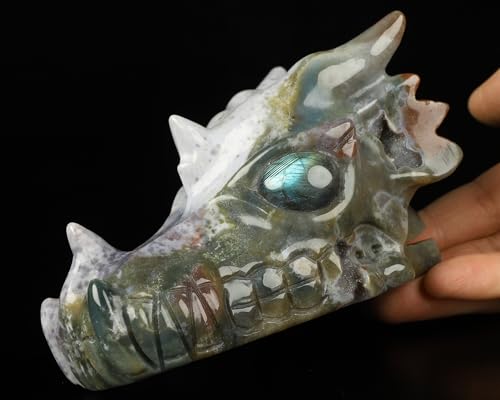
A serious altar specimen: natural Indian agate hand-carved into a dragon skull, showcasing the stone’s banded translucency. Investment-grade carving for collectors and ritual practitioners who want a centerpiece with presence.
Check Price on Amazon →Frequently Asked Questions
What is the agate crystal meaning?
Agate is the stone of steadiness and slow, grounded healing. Across every variety, it carries an earth-element signature that helps stabilize emotions, ground spiritual practice, and support long-arc intentions like patience, abundance, and nervous-system regulation. Each variety then adds its own specific flavor: blue lace for communication, moss for growth, fire for protection, and so on.
How do I use agate for healing?
The simplest method is daily contact: a palm-stone in the pocket, a beaded bracelet on the non-dominant wrist, or a pendant worn at the throat or heart. For more structured work, hold a piece during meditation, place it on the relevant chakra during a body-layout, or build a grounding grid with a central agate point and four to six tumbled pieces around it.
What is the difference between blue lace agate and moss agate?
Blue lace agate is a throat-chakra stone used for communication, calm speech, and emotional articulation. It has pale blue and white bands. Moss agate is a heart-chakra stone used for growth, new beginnings, and abundance work. It has clear or milky chalcedony with green dendritic inclusions that look like moss. Different energies, different chakras, both useful for different seasons.
Can agate go in water?
Most agate varieties handle water without issue because the stone sits at 6.5-7 on the Mohs scale. Safe for water cleansing: blue lace, moss, tree, dendritic, banded, rainbow, botswana, crazy lace. Avoid prolonged water contact with fire agate (iron inclusions can oxidize), turritella (fossil inclusions can degrade), and any piece in a fragile metal setting.
Where can I buy genuine agate crystals?
Reputable online sources include Energy Muse (hand-selected specimens), Moonrise Crystals, and established Amazon sellers with verified mineral-dealer credentials. In person, look for shops with clear source information. Avoid listings that promise a specific stone for under $3, bulk-tumbled mystery lots, and any seller who cannot answer basic questions about origin. Idar-Oberstein (Germany), Brazil, Uruguay, and Mexico are the main cutting centers for premium material.
Is agate safe for everyday jewelry?
Yes, most agate varieties are durable enough for daily wear. At 6.5-7 Mohs it resists scratching better than opal or pearl, though it is still softer than diamond or sapphire. Clean with warm soapy water and a soft cloth. Avoid ultrasonic cleaners on fire agate or any variety with visible inclusions, because the vibrations can fracture the inclusion layers.
How do I tell if agate is real?
Genuine agate has weight (it is denser than glass), cool temperature (it stays cool in the hand longer than plastic), and natural banding irregularities (dyed imitations often have suspiciously uniform color). Hold it to strong light, real agate shows translucency in thin sections. If a seller cannot tell you the origin (Brazil, Mexico, Botswana, India, Germany), treat that as a yellow flag and ask follow-up questions.
What is the best agate for beginners?
Banded agate or moss agate. Both are widely available, relatively affordable, and forgiving to work with. Banded agate is the all-purpose grounding stone that teaches you what agate energy feels like in its simplest form. Moss agate adds the abundance and growth dimension that many beginners are also interested in. Start with one, work with it daily for a month, and let the practice tell you what to add next.
Which chakra does agate work on?
It depends on the variety. Blue lace works on the throat. Moss, tree, and dendritic work on the heart. Red, dragon vein, and turritella work on the root. Fire agate and crazy lace work on the sacral. Plume agate works on the third eye. Botswana works on the crown. Rainbow agate works across all seven chakras because each band corresponds to a different energy center.
Sources & References
- Hall, Judy. The Crystal Bible: A Definitive Guide to Crystals. Godsfield Press, 2003. View on Amazon.
- Gienger, Michael. Healing Crystals: The A-Z Guide to 430 Gemstones. Earthdancer Books, 2014. View on Amazon.
- Gemological Institute of America (GIA): Agate Description & Buying Guide.
- Mindat.org: Agate Mineral Information and Data, Hudson Institute of Mineralogy.
- Mineralogy, Geochemistry and Genesis of Agate, MDPI.
- Theophrastus. On Stones (De Lapidibus), ca. 300 BCE. Translated by Earle R. Caley and John F. C. Richards, Ohio State University, 1956.
- Pliny the Elder. Natural History, Book XXXVII. Written ca. 77 CE. Loeb Classical Library edition.
- Melody. Love Is in the Earth: A Kaleidoscope of Crystals. Earth-Love Publishing House, 1995. View on Amazon.
We may earn a commission from links on this page at no extra cost to you. This helps us keep CrystalsAlchemy running.
This article was originally published on