May Birthstone: Emerald Meaning, Properties & Real-vs-Fake Guide (2026)
If you or someone you love has a May birthday, your birthstone is one of the most storied gems on the planet. The May birthstone is emerald, and the emerald meaning packed into this deep green variety of beryl spans six thousand years of cultural history. Pharaohs claimed mines for it. Roman emperors dedicated it to Venus. Mughal courts called it Tears of the Moon. Spanish galleons hauled it back from the Americas by the chestful.
That is a lot of weight for one little green stone to carry, and most birthstone guides give you maybe two paragraphs of it before pivoting to the gift shop.
This guide does the opposite. You will get what emerald actually means, why it became the May stone (instead of, say, jade or peridot), what color you should be looking at, the historical alternates almost nobody talks about, the zodiac split between Taurus and Gemini, what your birthstone says about you, gift ideas at every budget, how to spot a real one, and how to take care of the jewelry once you have it.
Let’s start with the basics.
✨ Featured Pick from Energy Muse

The Money Magnet bracelet set from Energy Muse, a hand-pairing of pyrite, citrine, and green aventurine in the abundance combination most practitioners reach for first. Emerald is the May birthstone of prosperity. This bracelet set gives you the same energetic blend in a wearable form that lives on the wrist all day. Worth keeping in mind as the kind of gift that the May birthstone tradition was built for.
Shop at Energy Muse →In This Guide
What Is the May Birthstone?

If you came here asking what is the birthstone for May, the short answer is emerald, the rich green variety of the mineral beryl. Emerald has been the official May birthstone since the modern birthstone list was standardized in 1912 by the Jewelers of America (now the Jewelers Industry Council of America). It symbolizes love, renewal, wisdom, and prosperity, and it traditionally celebrates the 20th, 35th, and 55th wedding anniversaries.
The match between emerald and May is older than the 1912 list, though. Across cultures, May has always been the month that sealed spring into summer. The fresh chlorophyll green of new leaves. The persistent green of mature growth. Emerald’s deep green captures both phases at once, which is partly why so many traditions arrived at the same answer when they had to pick a stone for the month.
Emerald is not the only stone associated with May. Older birthstone lists name chrysoprase (an apple-green chalcedony favored by Greeks and Romans) as the historical May stone, and some traditions list agate. More on those alternates further down. For most modern birthstone jewelry, though, emerald is the answer when someone says “May birthstone.”
If you got here because someone you love has a May birthday, or because you do, here is the short version: your birthstone is an emerald, your birthstone color is green, you fall under either Taurus (May 1 to May 20) or Gemini (May 21 to May 31) for zodiac, and emerald is also your traditional anniversary stone if you are married to a May-born partner.
That is the surface of it. The interesting part is everything underneath.
May Birthstone Meaning & Symbolism
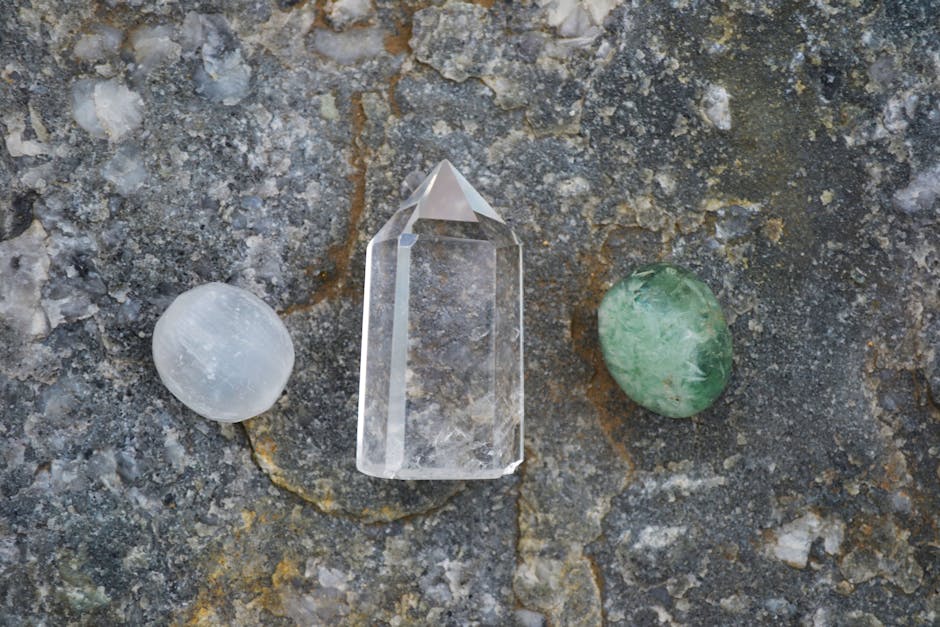
As the May birthstone, emerald symbolizes love, renewal, wisdom, and prosperity. The deep green variety of beryl carries one of the oldest and richest meaning systems in the gem world, blending heart-chakra love work with Mercury-ruled wisdom and the perennial spring symbolism of fresh growth.
What does emerald mean in the birthstone tradition specifically? Three threads stack.
Love and faithful partnership. This is why emerald shows up as the 20th, 35th, and 55th wedding anniversary stone. The green is not the spike of new infatuation. It is the calm green of mature growth, the kind that has put down roots and survived a few seasons. People who choose emerald jewelry often choose it for partnerships that are meant to last.
Renewal and wisdom. Across cultures, emerald is the stone you turn to for new starts, but specifically for new starts that come from learning, not luck. The Egyptians associated it with rebirth, which is why so many were buried with mummies. The Vedic tradition assigned it to Mercury, the planet of intellect, communication, and commerce. The modern crystal-meaning lineage carries that thread forward.
Prosperity and abundance. Green and growth show up in nearly every prosperity tradition for a reason. Emerald specifically gets paired with the kind of wealth that comes from skill, knowledge, or honest work, rather than wealth that arrives by accident. Practitioners who keep an emerald near their workspace report that it supports the focus and clear communication that builds careers and businesses.
In crystal practice, emerald is a heart-chakra stone first and a throat-into-Mercury wisdom stone second. The heart-chakra resonance is what most people feel first when they hold one. There is a softening that happens. Many find that emerald takes the edge off the protective armor everyone builds around the heart, and reopens it without forcing anything. Tradition holds that emerald supports honest communication in close relationships, which is partly why couples gift it to each other.
Sum the spiritual meaning of emerald in one line and it reads: love that has the wisdom to last and the patience to grow. That is the heart of the emerald meaning carried by the May birthstone, and the emerald stone meaning that has persisted across so many cultures. The emerald symbolism you see in May birthstone jewelry, anniversary gifts, and crystal practice all traces back to those three threads: love, wisdom, and renewal.
✨ Featured Pick from Energy Muse

A hand-painted aventurine Lakshmi statue, where the heart-and-abundance thread of emerald has its most direct expression in another stone. Aventurine is the alternate May birthstone option for green-stone practitioners who want the abundance current without the treatment fragility of natural emerald. Lakshmi, the goddess of prosperity in the Vedic tradition, sits naturally next to a stone the same tradition gave to Mercury.
Shop at Energy Muse →Why Emerald Became the May Birthstone
Why emerald is the May birthstone (instead of, say, peridot or jade) comes down to two reasons combined: color logic and six thousand years of cumulative cultural votes.
The color logic is the easy part. May is the month when most temperate climates finish their spring transition. Trees go from new leaves to settled canopies. Gardens move from seedling to bloom. The dominant visual color of the month, in most of the cultures that built the birthstone tradition, is green. Pick the most prized green gemstone, hand it to May, and the match writes itself.
The deeper reason is the historical layering. Several civilizations independently arrived at emerald as a stone of significance, and when the modern birthstone list was assembled in 1912, those threads pulled together.
The earliest vote came from Egypt. The Eastern Desert mines (Mons Smaragdus, “the emerald mountain”) produced gem-quality emerald from at least 1500 BCE through the Roman period. Cleopatra famously claimed the largest mines as her personal property and engraved stones with her likeness as diplomatic gifts. Egyptians buried mummies with emeralds because the green was associated with rebirth, eternal youth, and the renewal cycle. That is the origin of the renewal symbolism still attached to the stone today.
Greece and Rome added the love thread. Both dedicated emerald to Venus and Aphrodite, goddesses of love and spring. Romans also linked emerald to Mercury, anchoring the wisdom and communication thread that the Vedic tradition would later amplify.
In Vedic astrology, emerald (Sanskrit Panna Ratna) is one of the nine sacred gems, the navaratna. It is ruled by Mercury (Budha), planet of intellect, learning, commerce, and communication. Vedic astrologers traditionally recommended emerald to students, professionals, writers, and merchants, especially those born under Gemini or Virgo ascendants. That is the origin of the “stone for thinkers” reputation.
Then came the Mughals, who adored emeralds and called them Tears of the Moon. They inscribed sacred verses into the stones, including the 141-carat Mughal Emerald carved with chrysanthemum, lotus, and Mughal poppy patterns alongside Quranic poetry, possibly during the reign of Shah Jahan. The Mughals also helped shape the global market by exporting Indian-cut emerald jewelry across Asia and Europe.
The last vote came from the Americas. Inca emperor Atahualpa held a vast emerald hoard that Spanish conquistadors looted in the 16th century. Spanish galleons carrying Colombian emeralds back to Europe were repeatedly attacked. The Atocha emeralds, recovered in 1985 from a 1622 Spanish wreck off the Florida coast, are still in museums and private collections today.
By the time Jewelers of America assembled the modern birthstone list in 1912, every major gem-trading civilization had already cast a vote for emerald as something significant. May was the spring month most cultures associated with green. The list-makers gave May the stone that had already earned its place.
May Birthstone Color: From Sky-Green to Deep Forest
The May birthstone color is green. Emerald spans a spectrum from pale bluish-green to vivid deep forest green, with the most prized stones falling in the pure-green to slightly bluish-green range. Color saturation matters more than tone: a vivid medium-green emerald is worth more than a pale dark-green stone of the same size.
The green comes from trace amounts of chromium and vanadium in the beryl crystal structure. Same mineral as aquamarine and morganite. Different trace elements. Different color. That is why “may birthstone color” is technically a question with a one-word answer (green) and a ten-word answer (chromium and vanadium-traced beryl in the medium-saturation pure-green range).
Country of origin influences the typical color tone in real emerald:
- Colombian emeralds (from Muzo, Chivor, and Coscuez) tend toward the warmer, slightly yellowish-green at Muzo and the cooler bluish-green at Chivor. Colombian emerald is the global benchmark for fine quality.
- Zambian emeralds (from the Kagem mine) typically show a bluish-green with high transparency, partly from iron content. Often more affordable than Colombian, sometimes with cleaner clarity.
- Brazilian emeralds (from Itabira, Nova Era, and Bahia) often show a yellower-green tone with more inclusions, but produce some of the largest stones on the market.
- Sandawana emeralds (from Zimbabwe) and Panjshir Valley emeralds (from Afghanistan) sit in the deeper forest-green to vivid medium-green range and are prized by collectors.
The first time I saw a “pure-green” Colombian emerald cab in person, I assumed any green stone with a clean window must be flawless. A jeweler friend later told me it had been resin-filled to within an inch of its life. That was the moment I learned the trade really is about disclosure.
Two color flags worth noting before you buy. Yellow undertones can be natural (especially in Brazilian emeralds) but can also signal a poor-quality stone or imitation. Brown undertones are almost always a sign of a fake or heavily included imitation, since natural emerald rarely shows true brown tones. More on spotting a real emerald in the section below.
✨ Featured Pick from Energy Muse

A hand-carved malachite box, the deep-green stone the Egyptians pulled from the same desert as emerald and used for jewelry, eye paint, and burial offerings. Malachite shows the May green spectrum at its most concentrated saturation. A practitioner-altar piece for May-born collectors who want the green-stone family represented beyond the cost of fine emerald.
Shop at Energy Muse →Alternate May Birthstones: Chrysoprase, Agate & Beyond

Most modern birthstone posts skip this part, but the May birthstone tradition has alternates. Some are historical, some are modern, and a few exist purely for budget or ethical reasons. Worth knowing about, even if you ultimately go with emerald.
Chrysoprase is the historical Greek and Roman May stone. It is an apple-green variety of chalcedony (cryptocrystalline quartz), colored by trace nickel rather than chromium. Older birthstone lists from before the 20th century often named chrysoprase as the May stone, and some traditional almanac lists still do. Chrysoprase has its own meaning system (joy, optimism, heart-opening) and at Mohs 6.5 to 7 it is harder to chip than emerald.
Agate appears in some traditions, especially Eastern European birthstone lists, sometimes alongside emerald and sometimes in place of it. Banded agate or moss agate are the typical May agates. Agate is the budget-friendly option in any month it shows up.
Tsavorite garnet is the modern gem-trade alternate. It is a vivid green grossular garnet from East Africa, with a saturation that often rivals emerald. Tsavorite is harder (Mohs 6.5 to 7.5), untreated, and significantly more affordable than fine emerald. Some jewelers offer tsavorite as a “modern May birthstone” option for clients who want green without the treatment-fragility of emerald.
Green tourmaline (also called verdelite) shows up in some modern jewelry collections as a May alternate. It comes in a wide green range, takes a brilliant cut beautifully, and is unrelated to emerald (mineralogically a borosilicate, not a beryl).
Why people choose alternates: budget (a fine emerald can run $1,000+ per carat, while a tsavorite of equivalent visual impact runs a quarter of that), ethics (untreated stones are easier to source as alternates), durability (chrysoprase, tsavorite, and tourmaline are all easier on daily-wear jewelry than treatment-fragile emerald), and personal connection (some people simply respond to chrysoprase or tsavorite more than emerald).
Emerald is the May birthstone, and emerald is what most jewelers default to. But if it does not fit your budget, ethics, or aesthetic, the historical and modern alternates are real options.
✨ Featured Pick from Energy Muse

A polished chrysoprase touchstone in the practitioner-tradition form for the historical May birthstone. Chrysoprase was the May stone older Greek and Roman lists named before emerald took the seat. The apple-green color and Mohs 6.5 to 7 hardness make chrysoprase the untreated, daily-wear-friendly alternate for May practitioners who want a green stone the trade does not have to oil.
Shop at Energy Muse →May Birthstone & the Zodiac: Taurus and Gemini
The May birthstone has two zodiac homes, because May itself splits the zodiac. May 1 through May 20 is Taurus. May 21 through May 31 is Gemini. Emerald serves both signs, but the way it works for each is slightly different.
Taurus (May 1 to May 20)
Bulls value loyalty, comfort, persistence, and the slow build. Taurus is a fixed earth sign ruled by Venus, the planet of love, beauty, and pleasure. Emerald aligns with the Taurus pace naturally. The green of mature growth, not the spike of new growth, matches the Taurus preference for the patient version of anything good. Practitioners often pair emerald with Taurus work for relationship longevity, financial steadiness, and the kind of self-worth that does not need external validation. As a Venus stone (via the Greco-Roman tradition), emerald fits a Taurus altar especially well.
Gemini (May 21 to May 31)
Now flip everything. Gemini is a mutable air sign ruled by Mercury, the planet of intellect, communication, and commerce. Twins are quick, curious, articulate, and prone to mental scatter. For Gemini, emerald is THE Mercury stone, the gem the Vedic tradition specifically prescribed (as Panna Ratna) for Gemini ascendants. Emerald focuses scattered chatter into clarity, supports honest communication in close relationships, and grounds the air-sign mind into the heart. Practitioners often suggest emerald to Gemini writers, students, and communicators who want their words to land with weight.
For both signs, emerald supports the heart-chakra-into-throat-chakra channel, which is the energetic pathway between what you feel and what you say. That alignment is partly why emerald is the wedding-anniversary stone for the May-marriage couple regardless of zodiac: it keeps the channel open.
If you are shopping for someone born in May, the zodiac does not change the gift. Emerald is the answer for both Taurus and Gemini birthdays. If you want to add a personal touch, though, a Taurus-leaning gift might lean toward heavier, grounded jewelry (a substantial pendant, a statement ring), while a Gemini-leaning gift might lean toward something more delicate and movable (chain earrings, a slim bracelet, a small tumble in a pocket).
What Your May Birthstone Says About You
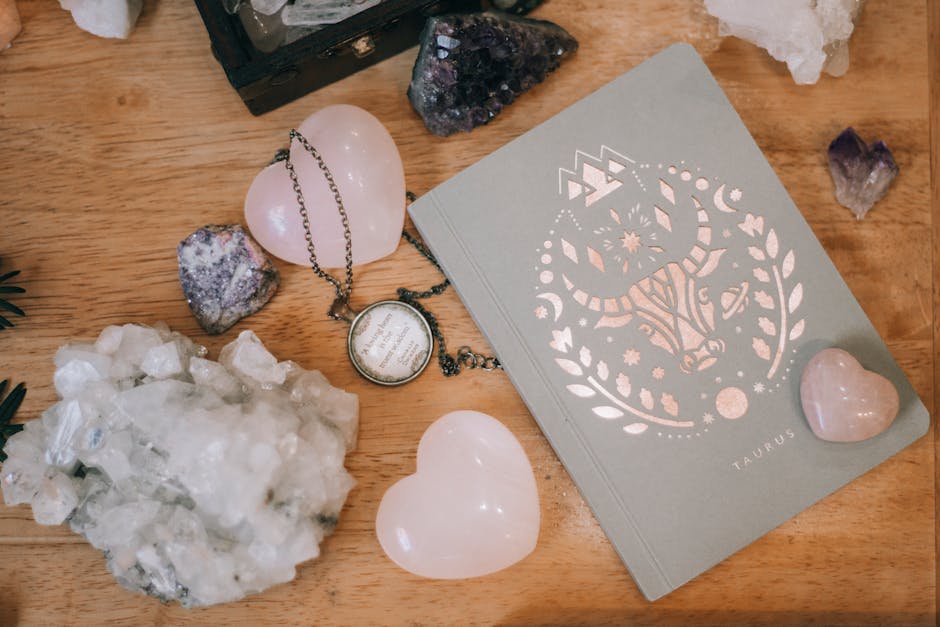
If your birthstone is emerald, you carry one of the most coherent identity-symbol packages of the twelve months. The May birthstone is unusual that way: most months pull in stones with one or two associations, while emerald arrives with a stack of them. The threads stack.
You are tied to Mercury. Even if your sun sign is Taurus rather than Gemini, your birthstone’s planetary association is Mercury. That is intellect, communication, learning, commerce, and the active “doing” of fresh starts. May-born people often gravitate toward roles that involve translating between people, ideas, or worlds. Writers, teachers, salespeople, therapists, mediators, lawyers, and translators all show up disproportionately on the May-born list.
Your stone is heart-centered. Emerald is a heart-chakra stone first. The personality archetype that resonates with emerald is someone who leads with the heart but thinks with Mercury. Loyalty matters to you. Authenticity matters to you. The performance of love is less interesting to you than the slow, real version that builds with time.
You carry renewal energy. Emerald has been the renewal stone for six thousand years. May itself is the month of renewal in the temperate northern hemisphere. The combination shows up as a personality willing to start over, learn from the previous round, and put down new roots. May-born people are often the ones in their family or friend group who can rebuild after a hard year and come out the other side wiser.
You value the patient version of anything good. The deep green of mature growth says it more directly than the new green of spring. People drawn to emerald often value relationships, careers, creative work, and self-development that compounds over decades, not weeks.
In my practice, the May-born clients who feel most at home with their birthstone are the ones who lead with the heart but think with Mercury. The ones who can have a hard conversation without losing their love for the person they are having it with. The kind who send the apology text twenty minutes after the argument, not three days later. Emerald is a stone for that kind of person, and being born under it is a quiet vote of confidence from the cosmos that you have the equipment for it.
May Birthstone Jewelry: A Gift Guide for Every Budget
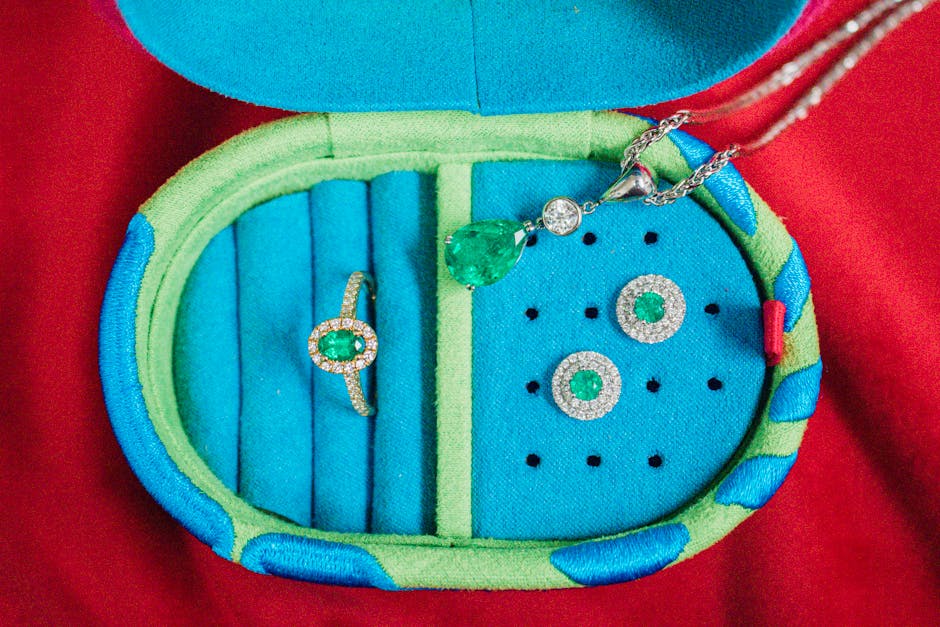
Emerald is the traditional gift for the 20th, 35th, and 55th wedding anniversaries. It is also the default May birthday gift. The good news for gift-shoppers: May birthstone jewelry exists at every budget tier, and the practitioner-grade stones do not have to cost a fortune.
Here is how the tiers actually break down.
Entry tier ($20 to $50): tumbled stones and small specimens
✨ Featured Pick from Energy Muse

A natural malachite bracelet from Energy Muse, the green-stone wearable in the price tier that actually fits “Entry” budget for birthstone gifts. Malachite carries the same heart-and-prosperity thread emerald does, with deeper green saturation and without the treatment fragility. The right entry-tier May birthstone gift for someone who wears the stone daily.
Shop at Energy Muse →Buying for someone who works with crystals more than they wear them? A tumbled emerald (typically Brazilian or Zambian) or a small natural emerald cluster lives in this tier. Small sterling silver studs with lab-created emerald can also fit here.
This is the right tier for the spiritual-practitioner-segment recipient or anyone newer to crystals. Do not feel like you have to spend more to give something meaningful. A small natural emerald held in the hand carries the energy of the stone just as cleanly as a center stone in a ring.
Mid tier ($80 to $200): real sterling silver pendants and earrings
Wearable Tier Pick, Sterling Silver Jewelry Set

A sterling silver emerald jewelry set (ring, earrings, and pendant) at the entry-mid budget. The combination of small natural emerald with red corundum creates a confidence-and-courage pairing that suits the May birthstone gift tradition. A complete jewelry set at one-third the price of any individual piece in the quality tier.
Shop at Buddha Stones →Sterling silver settings with small natural emerald (1 to 3mm round or oval, typically Brazilian or Zambian, oil-treated as standard) live in this range. This is the sweet spot for a thoughtful birthday gift or a first significant anniversary. Look for sellers who disclose treatment level and origin. If they will not tell you, walk away.
Mid Tier Pick, Carved Palm Stone
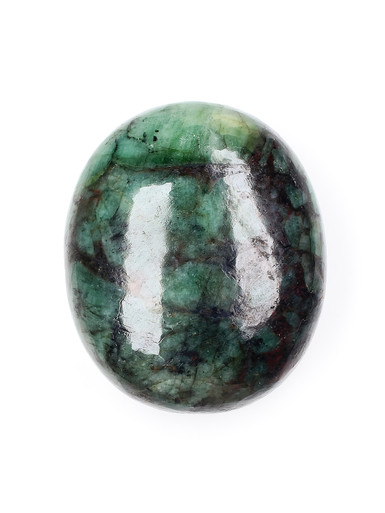
A larger natural emerald palm stone, hand-carved from a high-quality matrix and polished to bring out the deep green color. At 1.54 inches across, this is the size that practitioners use for serious meditation or as an altar centerpiece. A real natural emerald specimen at the collector-entry budget.
Shop at Exquisite Crystals →Quality tier ($300 to $2,000+): rings and statement pieces
Quality Tier Pick, Sterling Silver Emerald Necklace
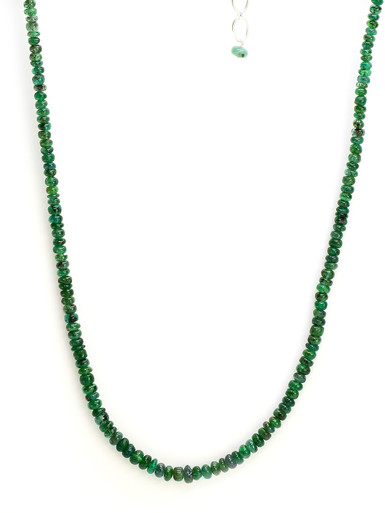
A real natural emerald bead necklace, finished in sterling silver with translucent deep-green faceted 3.3 mm beads on a 17 inch chain (with a 1.5 inch extender). This is the milestone-gift tier: the right piece for a 20th anniversary, a significant May birthday, or a gift that says this is for keeps. Genuine Colombian or Brazilian emerald, sourced and verified by a specialist gem dealer.
Shop at Exquisite Crystals →Real natural emerald rings, statement pendants, and tennis-style emerald jewelry live here. Center stones in the 0.5 to 2 carat range with quality color saturation. For daily wear (especially rings), bezel settings protect emerald better than prongs because the bezel cushions impact. This is the right tier for milestone gifts (20th and 35th anniversary) and for serious birthday gifts.
Collector tier ($2,000+): fine Colombian emerald
Natural untreated or minimally-treated Colombian emerald in the 2+ carat range, with full lab certification. This is the 55th anniversary tier. Very few emeralds reach the “no oil” classification, so expect significant treatment disclosure even at the high end.
A few buying notes that apply across all tiers:
- Bezel or halo settings for daily-wear emerald. The inclusion structure is what makes the stone fragile, and a bezel cushions impact.
- Treatment disclosure: most natural emerald jewelry is oil-treated. That is industry standard. Reputable sellers will disclose Minor, Moderate, or Significant on the GIA scale.
- For under-budget gifts, lab-created emerald is chemically identical to natural and runs 10 to 20 percent the price. Disclosure is required by FTC.
- Match the metal to the recipient. Yellow gold tends to enrich emerald’s green, white gold and platinum tend to cool it.
May birthstone necklace, ring, and earring picks across each tier follow below.
How to Spot a Real May Birthstone
Before you buy or wear, you want to know it is real. Here is how to tell if emerald is real, with four quick reader-friendly tests anyone can do without a lab, plus a note about the treatment industry that catches a lot of first-time buyers off guard.
Four reader-friendly tests
- Loupe or magnifying glass. Hold a 10x loupe over the stone and look inside. Natural emerald shows internal inclusions, fissures, and tiny crystal pockets. Gem dealers call this the “jardin,” French for garden. The jardin is a feature, not a flaw. A perfectly clean emerald with no visible inclusions is suspicious until proven otherwise (it is usually lab-created or imitation).
- Color undertone. Tilt the stone under daylight and look at the dominant green. Pure green or slightly bluish-green tones usually signal real emerald. Strong yellow or brown undertones can signal a low-grade emerald, a different green stone (peridot, green tourmaline, glass), or an imitation.
- Cold-feel test. Touch the stone to your cheek or lip. Natural emerald stays cool to the touch longer than glass or plastic, because gem-quality minerals conduct heat away from skin more efficiently. This is a quick triage test, not a definitive proof.
- Lab certification. For any serious purchase ($300+), ask for a GIA, IGI, or AGS certificate. The report tells you origin, treatment level, and whether the stone is natural, lab-created, or imitation. Reputable sellers will provide certification or refund if you decide to verify with an independent lab.
What sellers should disclose
Roughly 95 percent of commercial emerald is oil-treated. Cedar oil has been used to fill surface-reaching fractures since antiquity, and modern resins (Opticon, ExCel) do the same job with longer durability. Treated emerald is still real emerald. The Federal Trade Commission requires disclosure in the US, and the GIA Minor / Moderate / Significant scale tells you how much filler is in the stone. Treatment level affects price by 20 to 60 percent.
When clients ask me about lab-created emerald, I tell them: chemically, it IS emerald. The energetic question is yours, not mine.
How to Care for May Birthstone Jewelry

Emerald sits at Mohs 7.5 to 8 on the hardness scale. That is harder than glass but softer than ruby, sapphire, or diamond. The bigger care issue is not the surface hardness, though. It is the inclusion structure and the treatment fillers.
What to avoid
Ultrasonic cleaners. Steam. Hot water soaks. Bleach, chlorine, and harsh chemicals. Anything that creates heat, vibration, or chemical reaction will sweat the oil or resin treatment out of the fractures, leaving the stone looking cloudy or actually cracking it.
Don’t ultrasonic-clean an emerald. Or steam it. Or soak it. Ask me how I learned that the oil sweats out and you end up with a ring full of nothing.
What to do instead
Lukewarm water with a drop of mild dish soap. Soft toothbrush. Soft cloth for drying. That is it. Two minutes, monthly, is plenty for most jewelry.
Storage
Store emerald jewelry in a separate soft pouch or its own compartment. Emerald scratches softer stones (pearl, opal, lapis) when stored loose, and gets scratched by harder stones (diamond, ruby, sapphire) sitting next to it. The inclusion network also makes emerald slightly more fragile to drops on hard surfaces, so a cushioned jewelry box is worth the few dollars.
Re-oiling
If your emerald jewelry is oil-treated and starts to look cloudy or dry after years of wear, a jeweler can re-oil it. Cedar oil treatment lasts 5 to 20 years depending on wear and care. Re-oiling is standard practice and not expensive. If your stone has resin treatment (Opticon, ExCel), re-treatment is more involved and best left to specialist shops.
Can emerald be worn every day?
Yes for low-impact jewelry: pendants, earrings, light bracelets. Yes for rings with care, especially with bezel or halo settings that protect the stone from impact. The high-impact zone (knuckle hits on doorframes, gym equipment, kitchen counters) is where ring damage tends to happen.
How to Wear & Use Your May Birthstone

Five practical ways to work with emerald in daily life:
- Daily jewelry wear. The most common, and often the most powerful. A ring, pendant, or pair of earrings worn against your skin keeps the emerald in your energy field through the day. Heart-chakra placement (a pendant resting at the sternum) is the traditional choice and the one most practitioners reach for.
- Heart-chakra meditation. Sit comfortably, lay a tumbled emerald or a small cab over your heart center (between the collarbones and the diaphragm), close your eyes, and breathe into the contact point for five to ten minutes. The intention is to soften whatever protective armor the heart has built and reopen it without forcing.
- On the desk during work. Mercury rules learning, communication, and commerce. An emerald cluster, tumble, or small specimen on your desk supports the focused, clear work most professionals are trying to do. Writers, students, teachers, lawyers, mediators, and small-business owners often respond especially well to emerald in the workspace.
- Crystal grid centerpiece. Use a larger emerald specimen as the centerpiece of a heart-work grid, surrounded by rose quartz (self-love) and green aventurine (opening to abundance). Run the grid for a moon cycle and journal the shifts.
- Bedside. A small tumble or specimen on the nightstand for renewal practice, faithful-relationship work, or processing close-relationship dynamics through dreams.
I keep a Zambian emerald tumble in my heart-chakra grid. The deeper green sits like a held breath. Not the spike of carnelian. Not the calm of amethyst. Something steadier than either.
If you are new to working with crystals, daily jewelry wear is the simplest and most effective entry point. The May birthstone wants to live close to the body. Emerald in your peripheral vision and against your skin will do more than emerald sitting in a drawer waiting for the perfect moment.
✨ Featured Pick from Energy Muse

A natural emerald pendulum from Energy Muse, the form most practitioners reach for when the goal is clarity over jewelry. Pendulums make the Mercury thread of emerald visible: they slow your nervous system enough to actually hear what your gut already knows. Worth keeping on the desk for a one-question check-in before any decision that needs the heart and the head pointed in the same direction.
Shop at Energy Muse →Heart-Chakra Grid Centerpiece
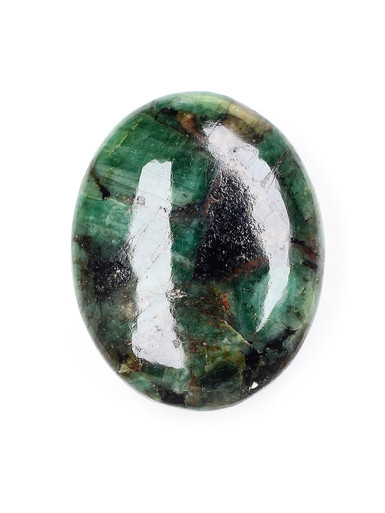
A natural emerald palm stone in the size most practitioners use as the center of a heart-chakra grid. The 1.6 inch palm size carries enough mass to feel grounding in the hand without being too heavy for daily meditation work. Surround it with rose quartz for self-love or green aventurine for abundance, and run the grid for a moon cycle.
Shop at Exquisite Crystals →Frequently Asked Questions
What is the birthstone for May?
The birthstone for May is emerald, the deep green variety of the mineral beryl. Emerald has been the official May birthstone since 1912, when Jewelers of America standardized the modern birthstone list. It symbolizes love, renewal, wisdom, and prosperity, and serves as the traditional 20th, 35th, and 55th wedding anniversary gem.
What does emerald symbolize?
Emerald symbolizes love, renewal, wisdom, and prosperity. As the May birthstone, it carries six thousand years of cultural meaning, from Egyptian rebirth symbolism to Roman dedication to Venus, Vedic Mercury wisdom, and Mughal “Tears of the Moon” poetry. In modern crystal practice, emerald is a heart-chakra stone tied to faithful partnership, mature love, and the kind of growth that compounds over time.
How can you tell if an emerald is real?
Four quick tests work for most situations. Look under a 10x loupe for the natural inclusion garden (“jardin”), check for pure-green or bluish-green undertones (yellow or brown can signal fake), test the cold-feel against your cheek (real emerald stays cool longer than glass), and ask for GIA, IGI, or AGS certification on serious purchases. Treated emerald is still real emerald. Imitation is glass, dyed beryl, or doublets.
Is emerald a crystal?
Yes. Emerald is the deep green variety of the mineral beryl, a beryllium aluminum silicate that crystallizes in the hexagonal system. The same mineral in different trace-element compositions produces aquamarine (blue, iron-traced), morganite (pink, manganese-traced), and goshenite (clear, no trace). Emerald gets its color from chromium and vanadium in the beryl matrix.
Can emerald be worn every day?
Yes, with the right setting and care. Pendants and earrings handle daily wear easily. Emerald rings handle daily wear with bezel or halo settings (which protect the stone from impact better than prongs). Avoid ultrasonic cleaners, steam, and hot water at all times because these damage the oil or resin treatments standard in 95 percent of commercial emerald.
What chakra is emerald?
Emerald is a heart-chakra (Anahata) stone. The deep green resonates with love, compassion, self-acceptance, and faithful partnership. Practitioners often pair emerald with rose quartz for self-love work, with green aventurine for opening to abundance, or with throat-chakra stones (like blue lace agate) to support honest communication in close relationships.
What zodiac is emerald?
Emerald is the birthstone for both Taurus (April 20 to May 20) and Gemini (May 21 to June 20), with the May-month calendar covering most of Taurus and the start of Gemini. In Vedic astrology, emerald (Panna Ratna) is also recommended for Virgo ascendants because both Gemini and Virgo are ruled by Mercury.
Is lab-created emerald real emerald?
Chemically, yes. Lab-created (synthetic) emerald has the identical Be3Al2Si6O18 plus chromium composition as natural emerald, produced by the Chatham flux-grown process (1930s) or Biron hydrothermal (1980s). Lab-created emerald is typically 10 to 20 percent the price of natural and is often cleaner than natural. The energetic question (does it carry the same energy?) is a personal call. The Federal Trade Commission requires sellers to disclose lab-created status.
Related guides: Turquoise Meaning: Healing Properties, Birthstone & Real vs Fake · Crystals for Studying: 8 Best Stones for Focus, Memory & Mental Clarity
Sources & References
Sources & References
- American Gem Society “May Birthstone: Emerald.” American Gem Society, https://www.americangemsociety.org/birthstones/may-birthstone/.
- Arem, Joel E. Color Encyclopedia of Gemstones. 2nd ed., Springer, 1987.
- Gemological Institute of America “May Birthstones.” GIA, https://www.gia.edu/birthstones/may-birthstones.
- Gemological Institute of America “On the Identification of Various Emerald Filling Substances.”Gems & Gemology, vol. 35, no. 2, Summer 1999.
- Hall, Cally. Gemstones: The Definitive Visual Guide. DK Publishing, 2002.
- International Gem Society “May Birthstone: Emerald.” IGS, https://www.gemsociety.org/article/may-birthstone/.
- Jewelers of America “The History of Birthstones.” Jewelers of America, https://www.jewelers.org/.
- The Old Farmer’s Almanac “May Birthstone: Emerald, Color Meaning & Symbolism.” Almanac.com, https://www.almanac.com/content/may-birthstone-color-and-meaning.
Recommended Reference Book

Cally Hall’s definitive visual guide to gemstones, the standard reference for the meaning, mineralogy, and identification side of gem study. The DK Smithsonian Handbook edition is the version most jewelers, gemologists, and serious collectors keep on the shelf. If you read one book on emerald and birthstones, this is it.
View on Amazon →We may earn a commission from links on this page at no extra cost to you. This helps us keep CrystalsAlchemy running.
This article was originally published on