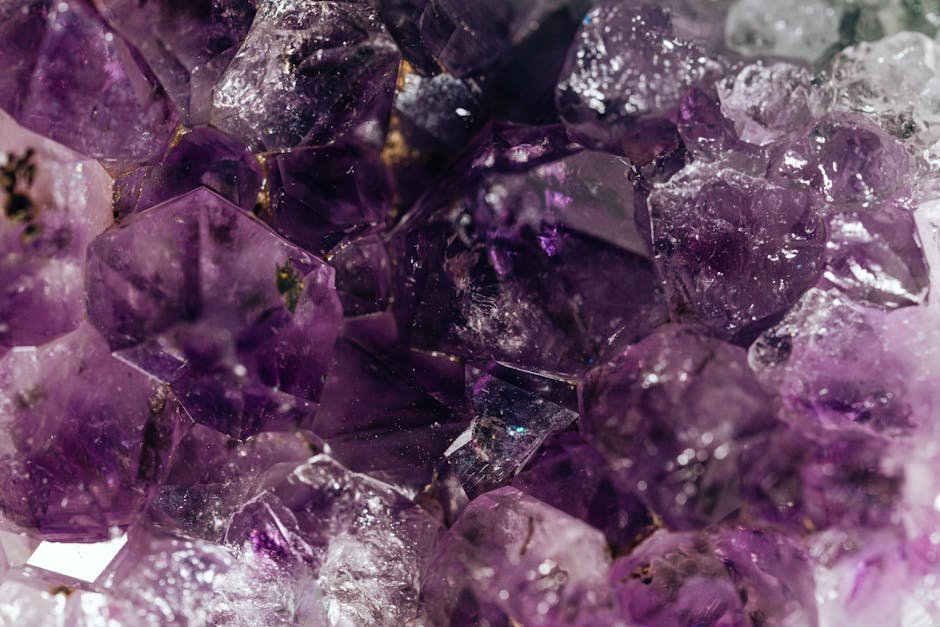
Amethyst vs Lepidolite: Which Is Better for Anxiety?
Amethyst and Lepidolite Anxiety — two powerhouse crystals, but which one do you actually need? This guide breaks down exactly how they differ in energy, healing properties, and practical use — so you can choose the right one for your intention instead of guessing.
The Ancient Crystal Rivalry Modern Anxiety Sufferers Need to Know
Nearly one in three adults will experience an anxiety disorder at some point in their lives, making anxiety the most common mental health condition in the world. As millions seek complementary tools alongside conventional care, two violet crystals keep rising to the top of every crystal healer’s recommendation list: amethyst and lepidolite. The amethyst vs lepidolite debate is one of the most fascinating in the entire world of crystal healing — not merely because both stones share a hauntingly similar purple palette, but because they are believed to work through two entirely different mechanisms. Understanding those mechanisms is the key to choosing the right stone for your specific experience of anxiety.
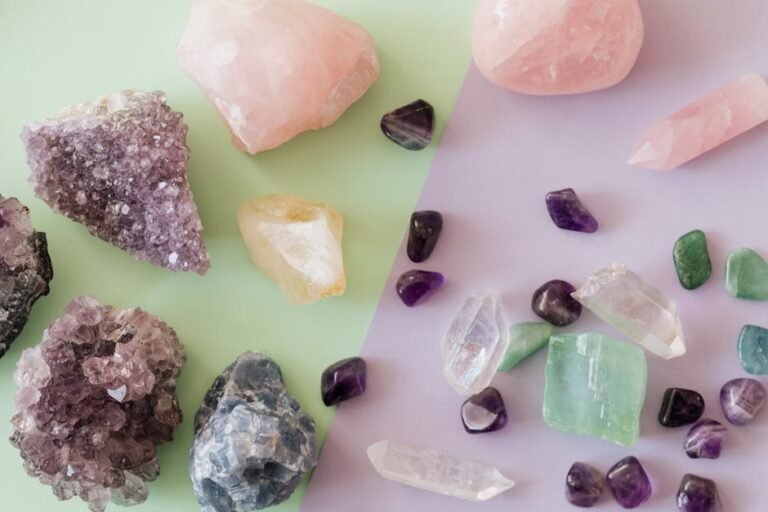
Amethyst has been revered for more than 2,000 years. Ancient Greeks carved drinking vessels from it, believing the stone protected against intoxication and excess — the word itself derives from the Greek amethystos, meaning ‘not intoxicated.’ In time, its calming violet frequency became associated with spiritual clarity, meditative peace, and the quieting of mental noise. Lepidolite, by contrast, is a relatively modern discovery: first formally documented in 1792 and remarkable for containing naturally occurring lithium — the same element used in modern psychiatric medicine as a mood stabilizer. This pairing of ancient spiritual tradition and mineral science makes this anxiety crystals comparison unlike any other. Explore the full spectrum of crystal healing properties and you will quickly see why these two stones occupy a unique category all their own.
What Makes Amethyst One of the Best Crystals for Anxiety
Amethyst is arguably the most recognized crystal in the world, and its reputation for easing anxiety is not accidental. For centuries, healers across cultures — from Roman physicians to Tibetan monks — have turned to amethyst to calm the over-active mind, ease insomnia born of worry, and create a sense of inner stillness. As a best crystal for anxiety, amethyst is particularly prized for targeting the kind of anxiety that lives in the mind: the relentless inner monologue, catastrophic thinking, and the inability to switch off at the end of the day.
In crystal healing tradition, amethyst is understood to work primarily through its association with the crown chakra (Sahasrara) and the third eye chakra (Ajna). These two energy centers govern higher thought, intuition, and our connection to something greater than our individual fears. When these chakras become congested — as they often do under chronic stress — the result is mental overwhelm, obsessive thinking, and a profound disconnection from inner peace. Amethyst is thought to gently clear and activate these centers, creating space for calm awareness to emerge in place of anxious reactivity.
Amethyst Origins: From Ancient Greece to the Mines of Uruguay
Amethyst is a variety of quartz (silicon dioxide, SiO₂) whose purple color arises from trace amounts of iron and natural irradiation during geological formation. According to the Gemological Institute of America (GIA), amethyst is the most prized variety of quartz and was historically considered as precious as ruby, emerald, and sapphire until large deposits were discovered in Brazil in the nineteenth century, dramatically increasing its availability.
The world’s finest amethyst comes from several remarkable geographic sources. Uruguay — particularly the Artigas region — produces deeply saturated, velvety purple crystals prized by collectors and healers alike for their rich, concentrated color. Brazil, especially the state of Rio Grande do Sul, is the world’s largest producer, yielding enormous cathedral geodes and tumbled stones in extraordinary abundance. Zambia in southern Africa contributes intensely colored, reddish-purple specimens with exceptional depth of hue, while Madagascar produces pale lilac pieces with a gentle, almost ethereal quality. Many crystal practitioners believe the geographic origin of an amethyst subtly influences its energetic signature alongside its visible color characteristics.
How Amethyst Activates the Crown and Third Eye Chakras for Calm
The relationship between amethyst and the upper chakras is central to understanding how this stone addresses anxiety. The third eye chakra, located at the center of the forehead, governs the mind’s capacity for clear awareness and discernment — the ability to perceive a situation as it actually is, rather than through the distorted lens of fear. When amethyst is placed on or near this chakra during meditation, many practitioners report a notable quieting of mental chatter: a softening of the incessant inner commentary that anxiety feeds upon. Deepening this practice with powerful amethyst affirmations can anchor a daily sense of calm and reinforce the stone’s energy through intentional spoken word.
The crown chakra, at the top of the head, connects individual consciousness to a broader sense of peace and spacious awareness. Anxiety, at its core, is often rooted in a sense of contraction — the mind believing it must solve every problem alone, immediately, and perfectly. Working with amethyst at the crown chakra is thought to dissolve this contracted state, replacing it with a felt sense of openness and trust. This is why amethyst pairs so naturally with meditation practice: it does not suppress anxious thoughts so much as it creates the inner conditions in which those thoughts can be witnessed without being believed. Amethyst is also celebrated for its influence on the dreaming mind and restful sleep, making it a valuable tool for anxiety-driven insomnia where racing thoughts prevent rest.
Featured Crystals from Energy Muse
Both crystals side by side — hand-selected pieces so you can experience the difference for yourself.


Lepidolite for Anxiety: The Most Scientifically Fascinating Crystal
If amethyst is the ancient sage of the anxiety crystal world, lepidolite is the intriguing newer discovery with scientific credentials that make even skeptics pause. Lepidolite belongs to the mica group of minerals — a family of silicate minerals characterized by a distinctive layered, sheet-like structure and a silky, sometimes glittery sheen. It forms most often in pegmatite rocks: coarse-grained igneous formations that cool slowly deep within the Earth, creating ideal conditions for the growth of lithium-bearing minerals of exceptional size and purity.
What sets lepidolite apart from every other crystal in the anxiety healing toolkit is its natural content of lithium — the same element found in lithium carbonate and lithium citrate, prescription compounds prescribed worldwide as mood stabilizers. This mineral connection to clinical psychiatric medicine makes the amethyst vs lepidolite comparison uniquely compelling: here, crystal healing tradition and conventional pharmacology appear to genuinely intersect at the level of mineral chemistry. While no crystal should replace professional medical treatment for anxiety disorders, the mineral reality of lepidolite gives this stone a distinctive scientific dimension that no other commonly used anxiety crystal can claim.
Find Peace with Crystal Anxiety Audiobooks
Explore audiobooks on using amethyst, lepidolite, and other calming crystals to manage anxiety, quiet the mind, and restore emotional balance — all on Audible.
Free trial includes 1 audiobook + access to the Plus catalog. Cancel anytime. As an Amazon Associate we earn from qualifying purchases.
Amethyst: Calm the Mind from Above
Premium amethyst clusters, points, and palm stones chosen for their deep purple color and tranquility-inducing energy.


Lepidolite Origins: From Brazilian Pegmatites to California’s Gem Districts
Lepidolite was first formally described in 1792 and named from the Greek lepidos, meaning ‘scale,’ a reference to its characteristic platy, scaly cleavage. According to Mindat.org, lepidolite’s full chemical formula is K(Li,Al)₃(Al,Si,Rb)₄O₁₀(F,OH)₂ — a complex potassium-lithium-aluminum phyllosilicate that reflects the rich mineral diversity of the deep pegmatite environments in which it crystallizes.
The world’s most significant lepidolite deposits are found in Minas Gerais, Brazil, where deep pink and lavender specimens of exceptional beauty are mined alongside tourmaline, aquamarine, and other celebrated gemstones. Russia’s Ural Mountains produce fine-grained lepidolite with a distinctive silvery-lilac sheen. In the United States, the Pala pegmatite district of San Diego County, California and the gem pegmatites of Maine are notable sources of quality lepidolite. Afghanistan and Madagascar yield high-quality specimens in a range of pink and purple tones, while Japan produces a particularly pure, fine-grained form prized for its subtle color. The lilac and deep pink specimens from Brazil’s Minas Gerais are among the most sought-after by crystal practitioners for their generous lithium content and striking appearance.
The Lithium Connection: Why Lepidolite Is Uniquely Calming
Lithium’s role as a mood stabilizer is one of the most robust findings in the history of psychiatric medicine. First introduced as a treatment for mania in the late 1940s, lithium compounds have been studied extensively for their capacity to regulate emotional states and support neurological balance. The U.S. Geological Survey (USGS) identifies lepidolite as one of the primary mineral sources of lithium worldwide, alongside spodumene and lithium-bearing brines — a geological fact that gives crystal healers a compelling reason to take this stone seriously.
In crystal healing, the belief is that lepidolite’s natural lithium content creates a uniquely grounding, stabilizing energetic field. Practitioners consistently describe working with lepidolite as feeling like being wrapped in a soft emotional blanket — a gentle, pervasive sense of nervous system calm that differs qualitatively from the more mentally focused serenity of amethyst. This is why lepidolite is so frequently recommended for anxiety that manifests physically: the tight chest, the trembling hands, the shallow breath, the persistent sense of the body being switched permanently to high alert. Where amethyst addresses the thoughts that fuel anxiety, lepidolite is understood to address the body’s response to those thoughts.
Lepidolite’s association with the heart chakra (Anahata) reinforces this body-centered approach. Anxiety frequently grips the heart center — constricting breath, triggering palpitations, creating a visceral sense of dread in the chest. Lepidolite’s gentle, mica-soft energy is said to dissolve this gripping quality, releasing stored emotional tension from the chest and upper body with an effectiveness that surprises many first-time users. Its calming influence carries naturally into the hours before sleep, making it a powerful companion for anxiety-driven insomnia.

A standout amethyst piece from Energy Muse — hand-selected for its energetic quality and connection to spirituality & faith. This is the kind of piece that anchors a collection and deepens your daily practice.
Shop at Energy Muse →Amethyst vs Lepidolite: A Side-by-Side Comparison
Understanding the key differences between these two remarkable stones is essential for making an informed, intuitive choice. The table below distills the core properties most relevant to anxiety healing in this amethyst vs lepidolite comparison:
| Property | Amethyst | Lepidolite |
|---|---|---|
| Mineral Family | Quartz (Silicon Dioxide) | Mica (Phyllosilicate) |
| Color Range | Pale lavender to deep violet-purple | Lilac, pink, violet-gray, silver |
| Hardness (Mohs) | 7 | 2.5–3 (handle with care) |
| Primary Origins | Brazil, Uruguay, Zambia, Madagascar | Brazil, Russia, California, Maine, Afghanistan |
| Chakra Association | Crown (Sahasrara), Third Eye (Ajna) | Heart (Anahata), Third Eye (Ajna) |
| Anxiety Mechanism | Quiets mental chatter, promotes meditative calm | Soothes nervous system, stabilizes emotional body |
| Best Anxiety Type | Racing thoughts, intellectual anxiety, insomnia | Physical anxiety, emotional overwhelm, nervous tension |
| Notable Mineral | Iron (source of purple color) | Natural lithium (mood-stabilizing element) |
| Water Cleansing | Safe for brief water contact | Avoid water — mica layers can separate |
Both crystals share a purple palette, an association with the third eye chakra, and a deep tradition of use in anxiety relief — but as the table makes clear, they approach that relief from distinctly different directions. Amethyst is fundamentally the crystal of the mind; lepidolite is fundamentally the crystal of the nervous system. Recognizing this distinction is the foundation of working skillfully with either stone.
Healing Tools & Jewelry
Wearable crystal energy and healing tools — designed to keep your intentions close throughout the day.


How to Use Amethyst and Lepidolite for Anxiety Relief
Knowing which crystal resonates with you is only the first step — the real transformation comes from learning how to engage with these stones in ways that genuinely support your nervous system. Whether you prefer formal meditation, informal carrying practices, or environmental crystal placement, both amethyst and lepidolite offer a rich array of approaches suited to different lifestyles and anxiety patterns. For those who enjoy incorporating elemental energies into their crystal practice, pairing either stone with air element crystals during meditation creates a beautifully layered approach to mental and emotional calming.
Working with Amethyst for Anxiety
Meditation hold: Hold a tumbled amethyst in your non-dominant hand during meditation, or place a larger piece directly on your forehead (third eye chakra) or the top of your head (crown chakra) while lying down. Begin with ten-minute sessions and notice whether the quality of your mental activity softens over time. Consistency matters far more than duration in the early stages of crystal meditation practice.
Bedroom placement: Place an amethyst cluster or geode on your nightstand, on a windowsill facing your bed, or under your bed frame. Many crystal healers believe amethyst radiates a field of calm throughout the sleeping space, reducing the anxiety that tends to peak at bedtime and during night waking. This is one of amethyst’s most celebrated applications and the one most consistently reported as effective by practitioners.
Workspace anchor: A small amethyst point or cluster on your desk serves as both a visual reminder to return to calm and an energetic presence during stressful work periods. Position the termination pointing toward you to draw its calming field inward. Glancing at the stone and taking a conscious breath is itself a micro-mindfulness practice that interrupts the anxiety cycle.
Affirmation and intention work: Amethyst responds beautifully to spoken intention. Hold your stone, close your eyes, and repeat affirmations such as ‘My mind is calm and clear’ or ‘I release all worry and return to peace.’ The combination of tactile grounding and verbal intention creates a powerful anxiety-interruption ritual. Wearing amethyst as a pendant resting near the throat or heart area keeps this calming influence present throughout even the most demanding days.
Working with Lepidolite for Anxiety
Pocket stone for acute anxiety: Lepidolite’s most immediately powerful application is as a pocket stone during periods of heightened anxiety or emotional overwhelm. Because lepidolite is relatively soft (Mohs 2.5–3), choose a polished or tumbled piece rather than a raw specimen for carrying — raw lepidolite can flake along its cleavage planes. Hold it tightly when anxiety surges, focusing on the cool, silky, layered texture as a grounding sensory anchor. This tactile quality alone has a remarkable capacity to interrupt the anxiety spiral.
Heart chakra placement: During any lying-down meditation, restorative yoga, or yoga nidra session, place a piece of lepidolite directly on your chest over the heart chakra. The gentle physical weight of the stone combined with conscious, slow breathing can release anxiety tension stored in the chest and solar plexus with surprising effectiveness. This is the placement most recommended for emotional overwhelm and grief-adjacent anxiety.
Sleep support: Place a piece of lepidolite under your pillow or inside a small cloth pouch tucked into your pillowcase. Its naturally soothing energy is said to quiet the nervous system during the crucial transition into sleep — particularly valuable for anxiety-driven insomnia. Unlike amethyst, which some sensitive individuals find mildly activating, lepidolite is almost universally described as purely sedating and gentle in its action.
Important care note: Because lepidolite is a mica-group mineral, it should never be submerged in water for cleansing purposes — water penetrates and separates the delicate mica layers, permanently damaging the stone’s structure. Instead, cleanse lepidolite with sound (singing bowls, bells), moonlight, smoke, or by resting it on a selenite charging plate. Selenite’s gentle, high-vibration energy is perfectly complementary to lepidolite’s calming frequency and is widely regarded as the ideal cleansing companion for this stone.

A standout amethyst piece from Energy Muse — hand-selected for its energetic quality and connection to healing. This is the kind of piece that anchors a collection and deepens your daily practice.
Shop at Energy Muse →How to Choose Between Amethyst vs Lepidolite for Your Anxiety
The most practical guidance in the amethyst vs lepidolite debate is deceptively simple: follow your body’s wisdom about where your anxiety lives. If your anxiety resides primarily in your mind — the catastrophic thoughts, the inability to stop analyzing, the racing inner monologue that won’t quiet — amethyst is likely your primary ally. If your anxiety lives more in your body — the tight chest, the stomach knots, the shallow breath, the feeling of your nervous system being permanently switched to high alert — lepidolite will often offer more immediate and physical relief.
Consider these scenarios as a practical decision guide:
- Choose amethyst if your anxiety peaks at bedtime with racing thoughts you cannot silence. Choose amethyst if your experience of anxiety is primarily mental — overthinking, catastrophizing, existential worry, or obsessive future-planning. Choose amethyst if you are drawn to meditation and spiritual practice and want a crystal that actively deepens and supports that work.
- Choose lepidolite if your anxiety manifests physically — chest tightness, shallow breathing, trembling, stomach distress, or a persistent feeling of dread in the body. Choose lepidolite if you experience frequent emotional overwhelm, mood instability, or anxiety tied to deep emotional processing and life transitions. Choose lepidolite if you have tried other anxiety crystals and found them either too stimulating or insufficiently grounding for your nervous system.
- Choose both if your anxiety regularly affects mind and body simultaneously. Choose both if you are building a comprehensive crystal wellness toolkit and want energetic coverage across the full spectrum of anxiety experience. Both stones together — amethyst for morning meditation, lepidolite for evening wind-down — create a complete daily anxiety support rhythm that many practitioners find more effective than either stone alone.
Beyond your personal anxiety profile, trust your instinctive response when you hold each stone. Does one feel more immediately soothing in your hands? Does one seem to resonate more deeply with where you are emotionally right now? These subtle body signals are genuine information. Building a thoughtful crystal protection and wellness practice means learning to listen to and honor these intuitive responses over time.
Lepidolite: Soothe the Nervous System
Quality lepidolite pieces selected for their lavender shimmer, natural lithium presence, and gentle calming properties.


Combining Amethyst and Lepidolite: The Ultimate Anxiety Crystal Pairing
One of the most rewarding discoveries in working with the best crystals for anxiety is that amethyst and lepidolite do not need to compete — they are natural and complementary partners. Their different mechanisms make them powerfully synergistic: amethyst quiets the anxious mind from above (crown and third eye), while lepidolite soothes the anxious body from the heart center outward. Together, they create a top-to-bottom energetic response to anxiety that neither stone achieves alone.
Try this combined amethyst and lepidolite practice: Lie down in a comfortable position. Place a lepidolite palm stone on your heart chakra at the center of your chest. Hold a tumbled amethyst in each hand, or place a single piece on your third eye at the center of your forehead. Take five slow, deep breaths, extending each exhale to twice the length of the inhale. With each exhale, consciously imagine the amethyst dissolving mental tension from above while the lepidolite melts physical tightness from the chest and belly. Continue for ten to twenty minutes. Many practitioners describe this particular combination as one of the most holistically calming crystal experiences available — addressing the full anxiety spectrum, from the spinning mind to the knotted body, in a single unified practice.
You can also combine these stones in your home environment with elegant simplicity: an amethyst cluster placed on a high shelf or bookcase (representing the mental and spiritual dimension of calm) paired with a lepidolite specimen at a lower level — on a coffee table, meditation altar, or beside a cushion — creates a beautifully balanced energetic landscape for the entire room. For those exploring the complete depth of crystal healing energies, this kind of intentional, layered crystal pairing is often where the most meaningful transformations unfold.
Whether you feel drawn to amethyst’s ancient meditative wisdom, lepidolite’s remarkable mineral science, or the combined power of both, this anxiety crystals comparison ultimately reveals the same truth: the most effective crystal practice is built not on which stone is objectively superior, but on which stone — or combination of stones — meets you precisely where your anxiety lives.
Gift Sets & Accessories
Perfect for gifting or completing your collection.


More from Energy Muse
Additional healing crystals and tools to deepen your practice — each piece hand-selected for quality and intention.


Frequently Asked Questions
Which is better for panic attacks — amethyst or lepidolite?
For acute panic attacks, lepidolite tends to offer faster physical relief due to its grounding, nervous-system-centered energy — holding a polished lepidolite stone firmly while focusing on slow, extended exhales can help interrupt the body’s panic response in the moment. Amethyst is more effective as a preventive tool, used consistently during daily meditation to reduce the underlying frequency and intensity of the anxiety that leads to panic episodes over time. Many crystal healers recommend keeping a lepidolite stone specifically for acute moments and incorporating amethyst into a regular morning or evening meditation practice for longer-term anxiety management.
Can I use amethyst and lepidolite together for anxiety?
Yes — amethyst and lepidolite are considered one of the most naturally complementary anxiety crystal pairings available, precisely because they work through different mechanisms and target different dimensions of the anxiety experience. Amethyst quiets mental chatter via the crown and third eye chakras, while lepidolite soothes physical tension through the heart chakra and its natural lithium content. Combining them — for example, placing lepidolite on your heart center while holding amethyst during meditation — creates a holistic anxiety response that addresses both the mental and physical dimensions simultaneously, making the pairing more complete than either stone could achieve alone.
Does lepidolite really contain lithium, and is it safe to handle?
Yes, lepidolite genuinely contains natural lithium as a core component of its mineral composition — this is a well-documented mineralogical fact confirmed by sources including Mindat.org and the U.S. Geological Survey, which lists lepidolite as one of the world’s primary lithium mineral sources. Lepidolite is completely safe to hold, carry, and use in meditation; the lithium is chemically bound within the mineral’s crystalline matrix and is not bioavailable through ordinary skin contact. However, lepidolite should never be used to make a direct-method crystal-infused drinking water elixir — if you wish to make a gem water with lepidolite, always use the indirect method, placing the stone outside the water vessel rather than submerging it.
How do I cleanse and care for amethyst and lepidolite?
Amethyst can be cleansed with brief water rinsing, moonlight, sound (singing bowls or bells), smoke cleansing, or by resting it on a selenite charging plate — however, avoid prolonged direct sunlight exposure, as UV light gradually fades amethyst’s color over time. Lepidolite requires more delicate care: as a member of the mica mineral family, it should never be submerged in water, as moisture penetrates and separates its characteristic layered sheet structure, permanently damaging the stone. Cleanse lepidolite instead with moonlight, sound, smoke cleansing, or by placing it on a selenite plate, which gently clears and recharges it without any risk of physical degradation.
Where can I buy high-quality amethyst and lepidolite crystals?
The most reliable sources for genuine, high-quality amethyst and lepidolite include reputable crystal shops — both local and online — that openly disclose the geographic origin of their stones; look for Brazilian or Uruguayan amethyst and Brazilian or Californian lepidolite as strong quality indicators. Gem and mineral shows are excellent venues to examine stones in person, compare quality across multiple vendors, and speak directly with knowledgeable sellers who can confirm a stone’s authenticity and provenance. When purchasing online, prioritize sellers who provide clear, unfiltered photographs, weight or size specifications, and fair return policies — and exercise caution with unusually low prices, which can indicate dyed quartz sold as amethyst or synthetic material sold as lepidolite.
We may earn a commission from links on this page at no extra cost to you. This helps us keep CrystalsAlchemy running.
This article was originally published on