Aquamarine Crystal: Meaning, Properties & Healing Guide
Most people know aquamarine as a pretty blue birthstone and stop there — which means they’re sitting on one of the most historically rich and energetically nuanced crystals in existence without realizing it. Ancient sailors carried it across unknown oceans, Roman physicians worked with it, and healers across cultures have trusted it for courage and clear communication for thousands of years. In this guide I’ll show you what aquamarine actually does, who it works best for, and why it belongs in far more collections than it currently occupies.
What Is Aquamarine? The Crystal the Sea Left Behind
Imagine standing on the deck of an ancient vessel, nothing but dark water stretching to every horizon. Tucked into your pocket is a pale blue stone, smooth and cool against your fingers. That stone? Aquamarine. Sailors carried it for centuries before long sea voyages, believing it was the treasure of mermaids — a gift from the ocean floor that would guarantee safe passage. I’ve always loved that image, and honestly, the first time I held a piece of raw aquamarine, I understood completely why someone would want this stone between them and an uncertain sea.
Aquamarine is a variety of the mineral beryl — the same family as emerald, just in a completely different color range. Its characteristic pale blue to blue-green hue comes from trace amounts of iron in the crystal structure. The name itself derives from the Latin aqua marina, meaning “water of the sea,” and it’s one of the most accurate names in all of gemology. According to Britannica, aquamarine forms in granite pegmatites and grows as six-sided prismatic crystals — some specimens reaching several feet in length.
It’s the birthstone for March, a traditional stone of Pisces, and one of the most universally loved blue gemstones on the planet. But beyond its undeniable beauty, aquamarine carries a healing reputation built over thousands of years across cultures and continents. Let me show you why this stone deserves a place in your collection.
Aquamarine Meaning: Courage, Clarity, and Ancient Lore
The mythology surrounding aquamarine is genuinely rich. Ancient Roman fishermen called it the “treasure of mermaids” and believed Neptune had personally blessed it with protective powers. Medieval healers used it to treat throat ailments and sharpen the mind. It was placed on altars, worn by royalty, and gifted to travelers setting out on uncertain journeys. There’s even a tradition of using aquamarine to rekindle affection between couples — the idea being that the stone’s gentle, flowing energy softens conflict the way water smooths stone over time.
What strikes me most about aquamarine meaning across all these traditions is the remarkable consistency around one theme: courage. Not the loud, battle-ready kind — the quieter kind. The courage to speak your truth, to face uncertainty without panic, to navigate the unknown with steadiness and grace. That’s the energy I’ve experienced with this stone again and again in my practice, and it’s why I recommend it so often to clients facing difficult transitions.
Aquamarine is also deeply associated with mental clarity — that specific quality of thinking where the fog lifts and decisions suddenly feel possible. People drawn to this stone often describe a sense of perspective arriving with it, almost like stepping back from the shoreline and finally being able to see the whole ocean at once.
As the March birthstone, aquamarine holds particular significance for Pisces — the water sign with the deepest emotional currents and the greatest need for grounding clarity. If you want to explore how aquamarine and other stones align with your specific zodiac placement, the full zodiac crystals guide breaks it down sign by sign.
Aquamarine Healing Properties and Benefits
Here’s where I want to get specific, because aquamarine’s healing reputation isn’t vague “good vibes.” These are targeted properties you can actually work with intentionally. While mainstream science is still exploring crystal therapy — you can read more about that in the science behind crystal energy — practitioners across traditions have documented consistent results with aquamarine in several key areas. The research on gem therapy published in peer-reviewed literature, including studies on crystal healing and energy vibration, reflects a growing body of documentation around these effects.
The Mermaid’s Stone
Explore audiobooks on ocean healing, throat chakra activation, and the ancient seafaring traditions of aquamarine.
Free trial includes 1 audiobook + access to the Plus catalog. Cancel anytime. As an Amazon Associate we earn from qualifying purchases.
Calming Anxiety and Quieting Mental Noise
You know that specific 2am anxiety where your brain won’t stop looping the same thoughts? That’s exactly when I reach for aquamarine. Of all its properties, I think its ability to calm a racing mind is the one I recommend most often. It doesn’t sedate — it clarifies. There’s a meaningful difference. Instead of numbing the anxiety, aquamarine seems to slow the spiral and help you locate your center again.
The Healing Crystals First Aid Manual documents aquamarine’s traditional application for anxiety, emotional overwhelm, and overactive thinking across multiple healing traditions — a consistency that’s hard to dismiss. If stress and overthinking are your challenge, start simple: carry a tumbled aquamarine in your pocket or keep one on your desk. Just having it nearby is enough.
Communication, Truth, and the Power of Your Voice
Aquamarine has one of the strongest reputations in crystal healing for improving communication — not just speaking more, but speaking more honestly and clearly. It’s the difference between saying what you think people want to hear and actually saying what you mean. For anyone who tends to swallow their words, over-apologize for their opinions, or go completely blank in important conversations, aquamarine is genuinely transformative.
I often pair it with stones from the mercury crystals guide for clients working through communication blocks, especially during Mercury retrograde when misunderstandings seem to multiply. The combination creates a focused, grounded energy for honest self-expression that I’ve seen work beautifully time after time.
Protection, Courage, and Emotional Resilience
Aquamarine’s protective origins go deeper than sailor mythology. The stone carries a genuine shielding energy — subtle, but real. If you’re an empath or highly sensitive person who tends to absorb the emotions and energy of people around you, aquamarine can help you maintain your own energetic field without closing yourself off entirely. Think of it less as armor and more as a membrane: permeable where you want it to be, firm where you need it.
It’s also one of my top recommendations for people navigating major life transitions — grief, career shifts, relationship endings, relocating somewhere unfamiliar. Aquamarine won’t fast-forward you past the hard parts, but it helps you move through them with more steadiness and considerably less panic. That quiet, steady courage is exactly what most of us actually need.
Aquamarine and the Throat Chakra
If you’ve worked with chakras at all, aquamarine’s home is immediately obvious: the throat chakra (Vishuddha), the energy center governing communication, self-expression, and the ability to speak your authentic truth. When this chakra is blocked or underactive, the signs are recognizable — constantly second-guessing what you want to say, holding back your real opinions, or even experiencing a literal tightness or tension in the neck and throat area.
Aquamarine’s blue frequency resonates so naturally with this chakra that it’s become one of the foundational throat chakra stones in crystal healing practice. What I love about it compared to some other blue stones is its gentleness. It doesn’t force the issue. It gradually dissolves the tension and creates the internal space for authentic expression to emerge on its own terms.
A practice I recommend often: Before any conversation where you need to communicate something difficult or important, hold your aquamarine at the base of your throat. Take five slow, deliberate breaths — with each inhale, imagine a soft blue light expanding from the stone outward into your throat and chest. It sounds simple, and it is. But the results are consistently meaningful, especially if you do it regularly over time.
For an amplified throat chakra session, aquamarine pairs beautifully with sodalite — another deep blue stone with strong resonance for logic, clarity, and honest self-expression. Together they create a calm, focused environment for processing and communicating truth.
How to Use Aquamarine Crystal: Forms, Practices, and Pairings
So you’re ready to work with aquamarine — wonderful. But walk into any crystal shop and you’ll find it in a dozen different forms: tumbled stones, raw points, polished spheres, carved shapes, elegant pendants. Which one do you actually need? It depends entirely on what you’re trying to do. Here’s the breakdown I walk new clients through:
| Form | Best For | Notes |
|---|---|---|
| Tumbled Stone | Beginners, pocket carry, daily calm | Smooth, affordable, ideal for holding during meditation |
| Raw / Natural Point | Energy work, altar use, directional intention | More energetically potent, less portable |
| Pendant / Jewelry | Continuous throat chakra work, daily wear | Keeps the stone in your energy field throughout the day |
| Sphere | Room energy, meditation focus, display | Radiates energy in all directions — beautiful for a workspace |
| Carved Shape | Specific intentions, gifting | Hearts for communication in relationships; points for directional focus |
For daily calm: A tumbled stone in your pocket or on your desk is genuinely all you need. You don’t have to be doing a formal ritual for it to work — proximity is enough to start.
For meditation: Hold a tumbled or raw piece in your non-dominant hand. Set a clear intention around clarity or calm before you begin. Even five minutes makes a real difference with consistent practice.
For sleep: If anxiety keeps you awake, place aquamarine on your nightstand or tuck a small tumbled piece under your pillow. Paired with amethyst, it creates an exceptionally restful sleep environment.
For communication: Wear a pendant that rests near your throat. Before important conversations, hold it briefly, take one conscious breath, and go. That’s the whole ritual — and it works.
If you love aquamarine’s oceanic energy, you’ll likely also connect deeply with larimar — another extraordinarily soothing blue stone with a calming quality that complements aquamarine beautifully for water-sign energy work.
Choosing and Caring for Your Aquamarine
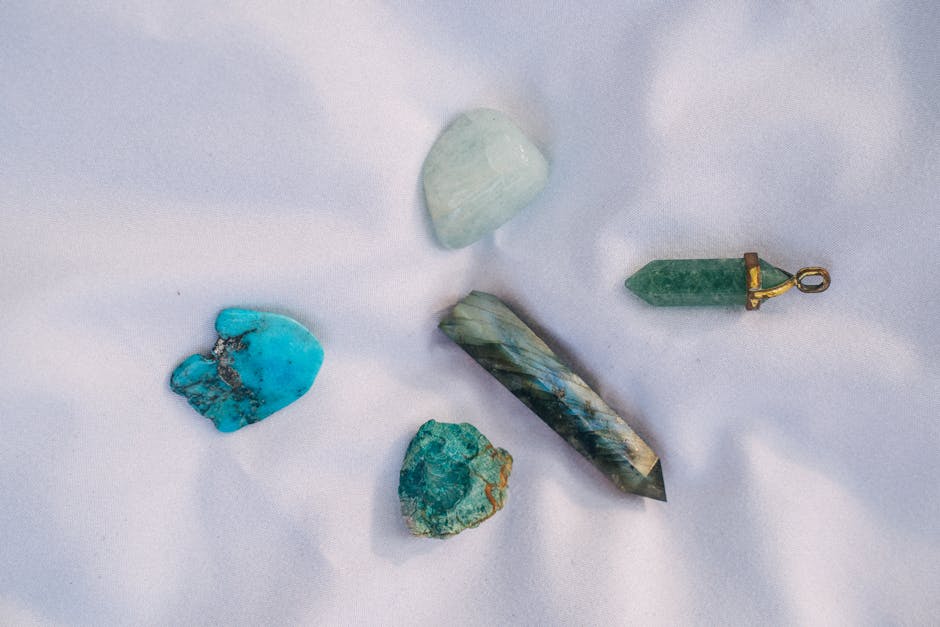
When you’re selecting aquamarine, trust your instincts first — the stone that catches your eye usually has something to tell you. That said, here’s what I look for: the color should feel alive. Whether it’s a delicate sky blue or a richer blue-green, there should be translucence and depth to it. Very pale, washed-out specimens tend to be lower quality. Deeply saturated stones that look almost teal have often been heat-treated to intensify the color. The most prized aquamarines come from Brazil — particularly the Minas Gerais region — and the USGS National Minerals Information Center identifies Brazil as one of the world’s primary aquamarine sources. Brazilian origin is generally a reliable indicator of quality.
Cleansing your aquamarine: This stone loves water — naturally. A quick rinse under cool running water for 30–60 seconds clears accumulated energy effectively. Moonlight is another excellent option: leave your stone on a windowsill or outside overnight during a full moon. One important note: avoid extended direct sunlight. UV exposure can gradually fade aquamarine’s beautiful color over time, so store it away from sunny windowsills when you’re not actively using it.
Setting your intention: Hold the stone in both hands, close your eyes, and state your intention clearly — out loud if you can. “I use this stone for calm and clear communication.” That’s it. No elaborate ceremony required. The clarity of intention matters far more than the complexity of any ritual around it.
A Gift of Calm Courage
Gift an Audible membership with audiobooks on crystal healing.
Frequently Asked Questions
What is aquamarine crystal good for?
Aquamarine crystal is best known for calming anxiety, sharpening mental clarity, and supporting honest communication. In healing practice, it’s most often reached for during periods of stress, emotional overwhelm, or when someone is navigating a difficult transition and needs steadiness more than anything else.
It’s also one of the most effective throat chakra stones available, making it particularly valuable for anyone who struggles to speak their truth, communicate clearly in tense conversations, or find the right words when it matters most.
Who should wear aquamarine?
Aquamarine is especially meaningful for Pisces (its traditional birthstone sign), along with Gemini and Aquarius, though it’s a gentle enough stone that almost anyone can benefit from it. It’s particularly well-suited for empaths, people dealing with anxiety or communication challenges, and anyone moving through a significant life change.
If you’re drawn to it, that’s usually reason enough. Your intuition about which crystals you need tends to be more accurate than most people expect — trust it.
How do you activate or charge aquamarine?
The simplest and most effective method is to hold your aquamarine in both hands, take a few slow breaths, and set a clear, specific intention for what you want the stone to help you with. Moonlight is another beautiful charging method — leave your aquamarine on a windowsill overnight during a full moon for a natural energetic reset.
You can also place it near (not submerged in) a bowl of sea salt to draw out stagnant energy before setting a fresh intention. Just keep it away from prolonged direct sunlight, which can gradually fade the stone’s color over time.
Can aquamarine go in water?
Yes — aquamarine is generally safe for brief water cleansing. It rates 7.5–8 on the Mohs hardness scale, which means it won’t dissolve or crack from a quick rinse under the tap the way softer stones like selenite or malachite might. A 30–60 second rinse under cool running water is perfectly fine.
That said, I’d avoid soaking it for extended periods, and definitely skip saltwater baths — prolonged salt exposure can gradually dull the surface polish on polished or tumbled pieces over time.
Where can I buy genuine aquamarine crystals?
Your best options are reputable metaphysical crystal shops, gem and mineral shows, and established online crystal retailers that clearly state their sourcing practices. Look for sellers who can tell you the country of origin — Brazil, Pakistan, and Madagascar are common sources for quality aquamarine — as transparency about sourcing is usually a reliable indicator of quality and ethics.
Gem and mineral shows are especially worth seeking out: you can often find beautiful, fairly priced aquamarine directly from collectors and small importers, and you get to examine the stone in person before you buy — which, honestly, is the best way to find the one that’s right for you.
5 Sources
We may earn a commission from links on this page at no extra cost to you. This helps us keep CrystalsAlchemy running.
This article was originally published on