Kunzite Meaning, Healing Properties & Spiritual Symbolism (2026)
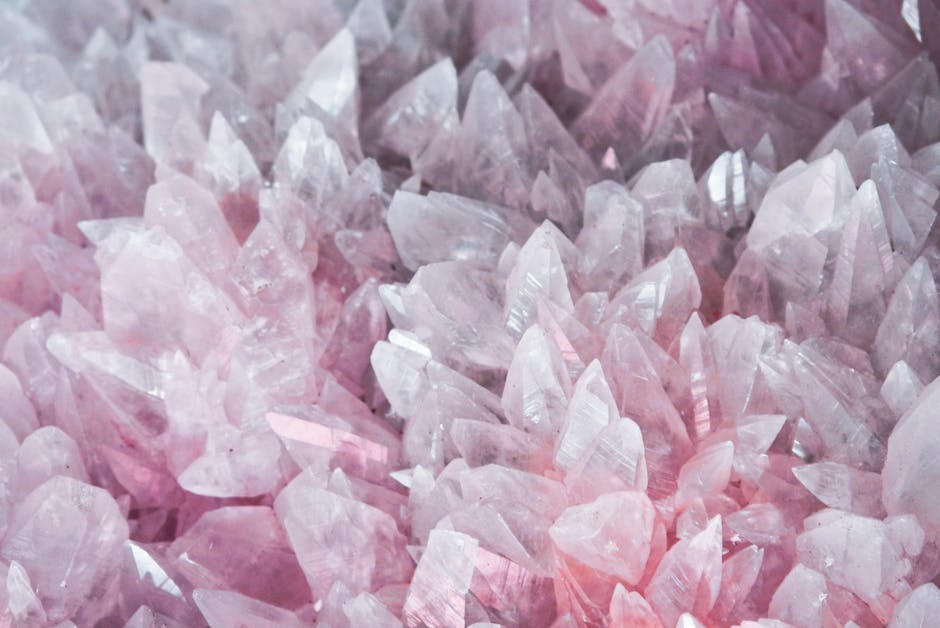
Most pink heart stones are old. Rose Quartz has been worked since the dynasties of Egypt. Rhodonite was named in 1819. Pink Tourmaline has carried a dozen different names across half as many centuries.
Kunzite isn’t old.
It was identified in late 1902. Formally named in 1903. And within twenty years it had been pulled into one of the most influential esoteric movements of the 20th century. That timeline is the part most kunzite articles miss.
The kunzite meaning you find on every crystal blog (the soft-pink “stone of divine love” framing) was assembled in a single human lifespan. Catalogued by a Tiffany & Co. mineralogist. Named by a chemistry professor. Then absorbed almost immediately into the Roerich-Agni Yoga lineage as a sacred heart stone. That’s fast for a crystal.
This post takes kunzite seriously on both sides. You’ll get the proper mineralogy (lithium aluminum silicate, the spodumene group, the cleavage warning your bracelet really does need) and the proper spiritual reading (heart, crown, Roerich, the “evening stone” nickname most posts skip). Plus a pink-heart comparison table and a care section that doesn’t lie to you about how fade-prone the stone really is.
No fluff, no copy-paste claims. Let’s start with what kunzite actually is.
What Is Kunzite? Spodumene Mineralogy and Origin
💗 Hero Pick from Energy Muse

Solid sterling-silver Kunzite ring with a hand-cut natural pink-violet stone. The hero piece for this post, daily-wear kunzite is rare because the stone fades, so an evening ring like this one is the canonical wearable form. Wear after sundown, store dark, and the color holds for years.
Shop at Energy Muse →
Kunzite is the pink to lilac-violet variety of spodumene, a lithium aluminum silicate (LiAl(SiO₃)₂) in the pyroxene mineral group. It rates 6.5 to 7 on the Mohs hardness scale, crystallizes in the monoclinic system, and gets its color from trace manganese. The stone was identified by Tiffany & Co. mineralogist George Frederick Kunz in 1902 and formally named “kunzite” in his honor by chemistry professor Charles Baskerville in 1903.
That definition is short on purpose. It belongs at the top of every kunzite article and rarely actually shows up. Now the longer version.
Kunzite Mineralogy at a Glance
| Property | Value |
|---|---|
| Mineral group | Spodumene (pyroxene) |
| Chemical formula | LiAl(SiO₃)₂ |
| Color | Pale pink to lilac-violet |
| Color cause | Manganese (Mn³⁺) |
| Mohs hardness | 6.5 to 7 |
| Crystal system | Monoclinic |
| Cleavage | Perfect in two directions |
| Type locality | Pala District, San Diego County, California |
| Year named | 1903 |
✨ Collector-Grade Specimen
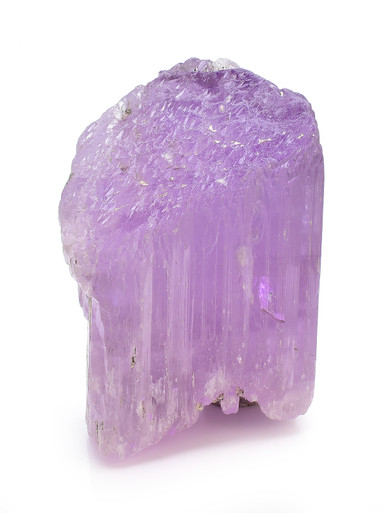
If you’re chasing a true California-pedigree pocket piece, this is the kind of kunzite that sits in serious collections. Pala-region material is harder to source every year. A specimen-grade hold for collectors and altar-builders.
View this collector kunzite →The spodumene group: kunzite, hiddenite, triphane
Spodumene itself is a lithium pyroxene. It comes in several gem varieties separated only by which trace element happens to be coloring it.
- Kunzite. The pink-to-lilac variety, colored by manganese.
- Hiddenite. The green variety, colored by chromium (and a rarer green-iron version).
- Triphane. The colorless-to-yellow variety. The original “burnt to ashes” stone that gave spodumene its Greek name.
If you’ve ever wondered why some collectors talk about kunzite and hiddenite in the same breath, that’s why. Same mineral, different chromophores.
Why kunzite is pink (and frequently irradiated)
Manganese in the Mn³⁺ oxidation state, sitting inside the spodumene crystal lattice, produces the pale pink to violet color that defines kunzite. The deeper the manganese, the deeper the color. In theory.
In practice, a lot of the kunzite on the open market has been irradiated to push that pink toward orchid or violet. This is normal industry practice. The GIA documents it openly. It matters for two reasons. Irradiated stones can fade faster than naturally-colored ones under sunlight, and you should know what you’re buying. A reputable seller will disclose treatment without being asked.
Pleochroism and the cut-perpendicular rule
Kunzite is one of the most strongly pleochroic gemstones in common circulation. Pleochroism just means the stone shows different colors when viewed from different angles. In kunzite’s case, the deepest violet-pink shows up when you look down the principal crystal axis (the c-axis).
Cutters know this. A well-cut kunzite has its table (the flat top facet) perpendicular to that c-axis, so the deepest color is what you see when the stone faces up. A poorly-oriented cut sacrifices half the color the stone could have shown.
If you’re shopping a higher-grade kunzite and the pink looks anemic, the cutter may have prioritized weight over color. Worth checking before you commit.
Cleavage: hardness vs toughness
The kunzite hardness number (Mohs 6.5 to 7) sounds reasonably durable on its own. It’s not the whole story.
Kunzite has perfect cleavage in two directions. Cleavage is the tendency of a mineral to split cleanly along specific atomic planes, and “perfect in two directions” means kunzite can chip or fracture along either of those planes if struck the wrong way, even though it scratches harder than glass.
Hardness is resistance to scratching. Toughness is resistance to breaking. Two different things. Kunzite is moderately hard and decidedly not tough.
What that means for you: don’t drop it. Don’t wear a kunzite ring for typing if you live at your keyboard. Skip the ultrasonic cleaner. Skip the steam bath. Treat it like the brittle gem it actually is, not the bulletproof one its hardness number suggests.
The discovery story: Pala, 1902
This is the part most kunzite articles skip or summarize in one sloppy line.
In late 1902, an unknown pink crystal was found at the White Queen mining claim on Hiriart Mountain (also spelled Heriart) in the Pala District of San Diego County, California. The miner who recovered it, F. M. Sickler, thought he was looking at pink tourmaline. He sent samples to George Frederick Kunz, the in-house gemologist at Tiffany & Co. in New York, in December 1902. Kunz tested them and identified the stone as a pink variety of spodumene.
A few months later, Charles Baskerville, a chemistry professor at the University of North Carolina (and later at the City College of New York), named the new variety in honor of Kunz. By that point Kunz was arguably the most influential gemologist in America. The name stuck. The Pala mines became the type locality.
There’s a sweet irony in all of this. The original misidentification (kunzite mistaken for pink tourmaline) is one reason this post compares the two later. They share the manganese chromophore. They share the same color band.
Sickler wasn’t wrong by far. He just wasn’t right.
That White Queen pocket eventually thinned out. Pala still produces, but most of the kunzite you’ll find in a 2026 jewelry case came out of a different continent.
Where is kunzite found today?
The Pala mines still produce some kunzite, but the world’s biggest commercial sources are elsewhere now.
- Afghanistan. Nuristan Province produces the largest faceted kunzites on the market.
- Pakistan. Skardu and Mansehra districts.
- Brazil. Minas Gerais, including the Urucum mine known for collector-grade specimens.
- Madagascar. Alakamisy Itenina deposits, often a softer pink.
- United States. Pala, San Diego County, California (the type locality).
One footnote that gets buried in most articles: spodumene crystals can grow up to twelve meters long in lithium-rich pegmatites. That’s not a typo. Some of the largest single mineral crystals ever recovered have been spodumene, and a few of the biggest yielded gem-grade kunzite at the core. Collectors notice this. So do museums.
Kunzite Meaning: The Stone of Divine Love
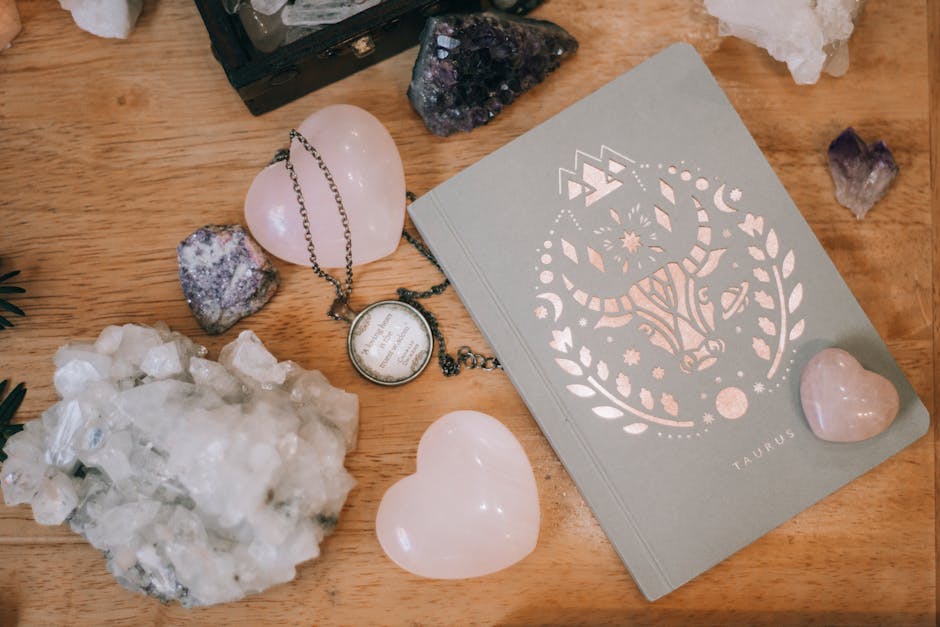
Open any crystal book and you’ll see kunzite called the “stone of divine love” or the “stone of emotion.” Both phrases trace back to early-20th-century esoteric writers, and both have stuck around because, honestly, they fit.
But the phrasing has gone so generic at this point that it doesn’t actually tell you anything useful anymore.
So here’s the kunzite meaning unpacked.
The stone works on the heart, but it works specifically. Rose Quartz radiates heart energy outward in every direction at low volume, like a soft pink mist that fills a room. Kunzite is the opposite shape. It looks for the precise place where the heart got closed (a memory, a person, a season of life) and it opens that single location.
That’s why kunzite shows up so often in grief work and post-breakup practice. You don’t need ambient pink love when you’re grieving. You need a stone that goes to the spot where the door slammed shut and starts working there.
The heart-mind bridge
Kunzite is described in older crystal literature as a “heart-mind bridge.” Translated out of crystal-blog speak: it’s a stone for people who live in their heads.
If you’re an analytical thinker, an over-thinker, a planner, someone whose default mode is to process feelings instead of feel them, kunzite tends to be the pink stone you reach for. Not Rose Quartz. Rose Quartz can feel too vague when you’re already swimming in vague.
Kunzite gives the heart-opening a specific location and a specific instruction.
The lithium coincidence
Worth noting, with care.
Kunzite is a lithium silicate. The lithium is structural, locked into the crystal lattice as Li⁺ in the spodumene framework. Pharmaceutical lithium (a different chemical form, taken under medical supervision) is one of the oldest mood-stabilizing drugs in use.
I’ll be honest about how I hold that overlap. The stone does not deliver therapeutic lithium. Don’t treat it as a substitute for anything medical. But the symbolic resonance (“the calming element lives inside this calming stone”) is the kind of small fact crystal practitioners notice and hold lightly. Some of us keep a kunzite point on the desk during deadline weeks for exactly that reason.
It’s poetic, not pharmacological. Hold it accordingly.
The Roerich-Agni Yoga lineage
Here’s the part most kunzite posts on the internet leave out entirely.
In the 1920s, only twenty years after Kunz had catalogued the stone, kunzite was being referenced in the Agni Yoga (Living Ethics) writings associated with Helena Roerich (1879 to 1955), the Russian theosophist and writer. Roerich and her husband Nicholas Roerich operated within the same Theosophical lineage as Helena Petrovna Blavatsky. Both were considered students of Master Morya. The Living Ethics teachings frame certain stones as carriers of subtle spiritual force.
The crystal community has long associated kunzite with this lineage as a “holy stone” of love.
Worth being careful here. The specific “holy stone” phrase attached to Roerich-and-kunzite shows up most often in secondary crystal-community sources. Primary-text confirmation in the published Living Ethics volumes (think Heart, 1932, or Brotherhood, 1937) is harder to pin down than the secondary sources usually acknowledge. So I’d phrase the connection like this: kunzite has, in crystal-practitioner tradition, been linked to the Roerich line as a sacred heart stone, and that association is part of why the divine-love framing has stuck around so persistently. Some of that association may go beyond what the primary texts strictly say. That’s fine. Folk traditions do that.
What it adds up to is this. Kunzite has a uniquely modern mystical biography. Most heart crystals carry centuries of layered correspondences. Kunzite went from American mining claim to esoteric heart stone in roughly twenty years. That’s fast.
Kunzite Healing Properties and Metaphysical Uses
The phrasing in this section is deliberately careful. Crystal practitioners have used kunzite for emotional, mental, and spiritual support for over a century. None of that constitutes medical treatment. With that caveat held, here’s what tradition and current practice describe.
Emotional support
Practitioners report that kunzite supports work around heart healing, especially the kind that involves protective walls built after old hurt. The stone is associated with self-love practice, gentle release of resentment, and grief integration after loss.
Many find it useful in the early stages of healing from breakups or estrangement, when the work is still too raw for general “love yourself” affirmations and needs something more located.
If you’re someone who tends toward overthinking when emotional (“I’ll just analyze why I feel this and that’ll fix it”), kunzite is one of the stones traditionally used to redirect that energy back to the heart instead of the head.
Mental support
The mind-heart bridge framing applies here too. Kunzite is associated with calming a racing analytical mind, settling pre-sleep mental loops, and reducing the kind of low-grade anxious chatter that keeps thoughtful people awake. Practitioners report it pairs well with bedtime meditation when held lightly over the heart for a few minutes.
It’s not the stone for sharper-edged anxieties (panic, acute stress) where you’d reach for something more grounding. It’s the stone for the soft persistent worry that lives behind the eyes.
Spiritual support
In the spiritual register, kunzite is associated with opening to unconditional love (toward self, others, and source), facilitating meditation around heart-centered intention, and acting as a companion stone for divine-love practice. Some practitioners use it during candle work or prayer specifically when the practice is heart-focused rather than mental or willful.
The crown-chakra side of kunzite (most visible in deeper-violet stones) is what gives it the heart-to-crown bridge framing that recurs in metaphysical literature. You’re working with the heart, and the stone is also reaching upward.
Energetic support
Kunzite is described as a high-vibration stone in metaphysical literature, which is shorthand for “carries an active, lifting energetic frequency.” Practitioners report it dissolves fear-energy, shifts low-grade resentment, and supports emotional clarity.
When kunzite over Rose Quartz
If I had to put it in one sentence: kunzite is what you reach for when Rose Quartz feels too soft or too general. When the heart-opening needs to be specific and located, not ambient and diffuse, kunzite is the more precise tool.
This is a real difference in practice, not just rhetoric. Rose Quartz sits beautifully on a windowsill in a shared space and holds the room. Kunzite is held in the hand, or worn near the heart, for a particular practice. Then it goes back in its pouch.
Kunzite Chakra and Spiritual Meaning
Kunzite is primarily a heart-chakra stone. It’s also one of the small handful of pink crystals that reaches credibly into the higher chakras, which is why metaphysical writers tend to discuss it as a multi-chakra stone rather than a single-point one.
Primary: Heart Chakra (Anahata)
The pink-pink stones (most of the lighter, blush-pink kunzites you’ll see) sit firmly in the heart chakra. They support love, compassion, and emotional balance. This is the dominant correspondence and the one that shows up in every reference text.
Secondary: Crown Chakra (Sahasrara)
Deeper kunzite tilts toward lilac and violet, and that color shift carries the stone’s energy upward into the crown chakra. Crown-leaning kunzite is associated with spiritual connection, divine alignment, and the kind of upward-flow meditation work that wants a softer entry point than amethyst or clear quartz.
Tertiary: Higher Heart (Thymus)
Some practitioners place kunzite on the higher heart or thymus chakra, the energetic point between the heart and throat. It’s used there to bridge heart-feeling with self-expression. Especially in practices that involve speaking from the heart or writing love letters (literal or metaphorical).
Element, planet, zodiac
| Correspondence | Association |
|---|---|
| Element | Water (emotional flow), with some traditions placing it in Air |
| Planets | Venus (love, beauty), Pluto (transformation through the heart) |
| Zodiac (non-traditional) | Scorpio, Taurus, Leo |
If you’ve ever wondered why kunzite shows up on Scorpio crystal lists despite being a soft pink stone (and Scorpio being anything but soft), it’s because the stone is traditionally used to soften Scorpio’s emotional armor without dimming the depth of feeling underneath. That’s a very kunzite move.
How to Use Kunzite Crystal in Daily Life
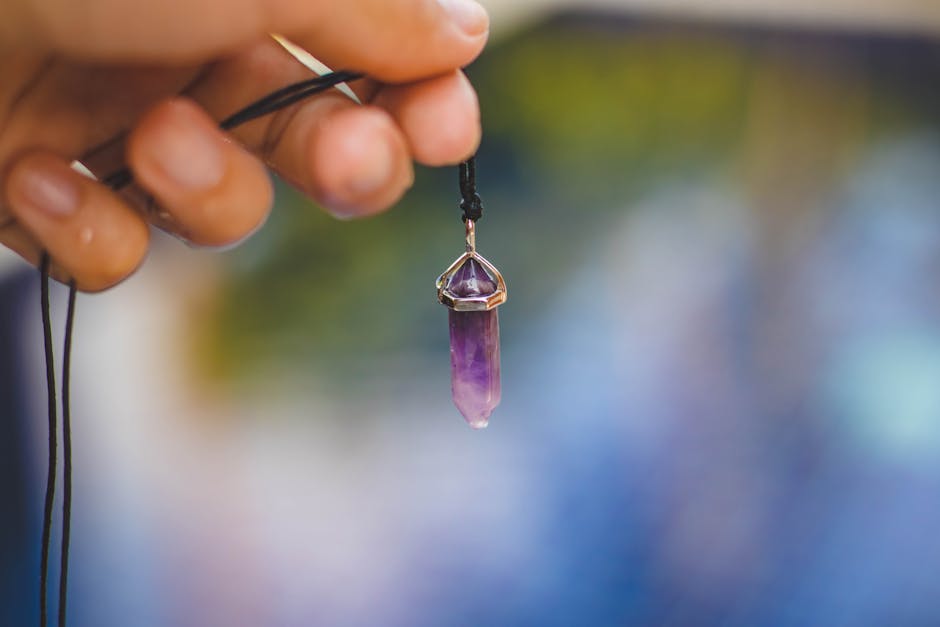
The practical section. How to actually work with the stone day to day.
Wearing kunzite
- Pendant near the heart. The canonical kunzite placement. Worn on a chain so the stone rests at or near the sternum, ideally cabochon or briolette cut so the manganese color shows.
- Ring, evening only. Kunzite rings are beautiful and fade-prone (the next section gets into why). Wear them out for dinner. Take them off before a sunny day on the patio.
- Bracelet, receiving (left) hand. Empath wearers often place crystal bracelets on the left wrist to receive energy. Kunzite suits this position when the practice is about opening to receive love rather than projecting it outward.
Meditation
The simplest practice: hold a tumbled kunzite or a small kunzite point gently over your heart for five to ten minutes, breathing slowly. Eyes closed. No agenda, no specific affirmation. Just attention.
The first time I sat with kunzite this way, I’d expected the soft pink “calming” sensation everyone writes about. What I actually got was the opposite at first: a kind of low, located heat right under the sternum that felt almost prickly for a minute or two before it softened. Past clients have described the same thing. The stone seems to find a closed spot before it relaxes one. It’s worth knowing that going in, so you don’t think you’re “doing it wrong” when the calm shows up after the noticing.
If you want to layer: pair the kunzite with a violet candle to bring the crown-chakra register online, or hold a piece of clear quartz in the other hand to amplify the energetic field.
Don’t overcomplicate it. The stone does most of the work.
Sleep work
Kunzite under the pillow is a traditional placement for grief support, nightmare-soothing, and pre-sleep heart-quieting. The one thing to watch: don’t put it under a brightly-lit bedside lamp. Direct lamp light over hours can fade kunzite. A drawer or a small velvet pouch is fine.
Pairings
Kunzite pairs well with several other stones depending on what you’re working with.
- Kunzite + Rose Quartz. Layered heart-opening. Specific (kunzite) plus ambient (rose quartz). Good for whole-room or whole-week heart practice.
- Kunzite + Smoky Quartz. Grief container with grounding. Smoky holds the weight; kunzite opens what needs to move.
- Kunzite + Amethyst. Heart-to-crown bridge. The combination Roerich-style spiritual heart practice tends to gravitate toward.
- Kunzite + Black Tourmaline. Empath shielding for highly sensitive wearers. The pink heart-stone opens; the black stone protects what’s been opened.
✨ Rose Quartz Pairing Pick

Rose quartz pairs with kunzite for layered heart work, broad ambient love from the rose, specific located opening from the kunzite. A polished heart sits flat against the chest for longer meditation holds.
Shop at Energy Muse →✨ Grounding Pairing for Grief Work
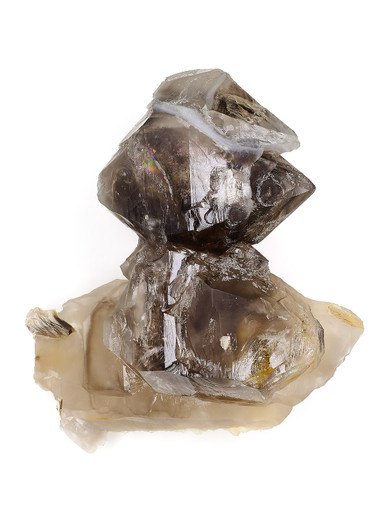
Smoky quartz holds the weight while kunzite opens what needs to move. An elestial smoky brings extra layered structure for slower, harder grief sessions where you need the grounding stone to feel substantial in the hand.
View the smoky elestial →✨ Amethyst Pairing Pick

Amethyst pairs with kunzite for the heart-to-crown bridge that the Roerich-Agni Yoga lineage tends to gravitate toward. Cluster on a copper stand sits well on a meditation altar without taking up much surface.
Shop at Energy Muse →✨ Empath Shielding Pairing

Wear black tourmaline on the receiving (left) wrist alongside a kunzite pendant if you’re a highly sensitive person opening the heart in public spaces. The pink stone opens, the black one protects what’s been opened.
Shop at Energy Muse →Affirmations
Three short kunzite-friendly affirmations to use during meditation or while wearing the stone:
- I open my heart to love that already lives in me.
- I release the walls I once needed.
- Love finds me where I am, not where I should be.
Pick one. Sit with it for a week before you try the next. The stone amplifies whatever you settle on, so settling matters more than collecting.
Kunzite vs Other Pink Heart Crystals

Kunzite is the newest stone in the pink-heart-crystal family by a wide margin. Here’s how it compares against the four other pinks crystal practitioners reach for most often.
| Crystal | Mineral / Mohs | Color cause | Heart-chakra style | Best for |
|---|---|---|---|---|
| Kunzite | Spodumene / 6.5 to 7 | Manganese | Specific, located heart-opening | Targeted grief work, divine-love meditation |
| Morganite | Beryl / 7.5 to 8 | Manganese (with cesium in some) | Gentle, adult heart-readiness | Mature love, soft commitment, post-divorce healing |
| Rose Quartz | Quartz / 7 | Titanium, manganese, dumortierite inclusions | Universal, ambient | Beginner self-love, daily diffuse love |
| Pink Tourmaline | Elbaite / 7 to 7.5 | Manganese | Active heart-strengthener | Confidence after heartbreak, return-to-life work |
| Rhodonite | Manganese silicate / 5.5 to 6.5 | Manganese | Grounded, root-anchored heart | Forgiveness work, embodied love |
✨ Morganite (Comparison Row)
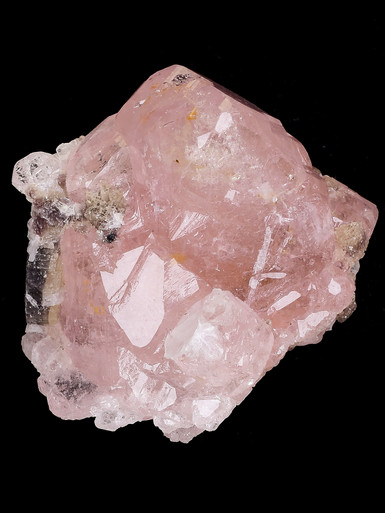
Morganite is the gentle adult-heart cousin in the pink-beryl family, softer in feel than kunzite and well-matched for mature love and quiet commitment work. This piece holds the matrix mica that collectors look for.
View the morganite specimen →✨ Pink Tourmaline (Comparison Row)
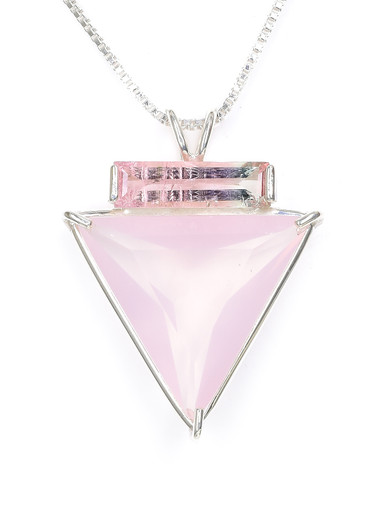
Pink tourmaline runs more active than kunzite, a heart-strengthener with a confidence edge. This rose quartz angelic star piece pairs the broad-love quartz host with pink tourmaline crystals for collectors who want both energies in a single specimen.
View the angelic star piece →✨ Rhodonite Mala (Comparison Row)

Rhodonite anchors heart work in the body where kunzite floats it upward. A 108-bead mala turns rhodonite into a forgiveness-and-embodied-love practice, one breath, one bead, with a wearable thread that lasts through daily use.
View the 108-bead mala →Three of the four sister stones in this table share kunzite’s coloring agent. Manganese is what the heart-chakra family of crystals tends to be made of. Different host minerals (spodumene, beryl, elbaite, manganese silicate, quartz with various inclusions) shape how the manganese expresses, but the underlying chromophore family is closely related.
A small piece of trivia worth keeping: when Sickler first found kunzite in 1902, he assumed he was looking at pink tourmaline. The two stones share the manganese chromophore and a similar pale-pink-to-violet color band. They’re separated by their crystal systems (kunzite is monoclinic spodumene; pink tourmaline is trigonal elbaite) and by their hardness, but the color overlap is real.
If you’re choosing between them, kunzite tends to feel softer and more emotionally specific. Pink tourmaline tends to feel more active and confidence-restoring. Both are heart stones. They just work different parts of the heart.
For deeper individual treatments, see the dedicated meaning posts on Rose Quartz, Rhodonite, Morganite, and Pink Tourmaline.
Choosing, Cleansing & Caring for Your Kunzite

Kunzite needs more care than most crystal-shop stones. If you’re going to wear or work with one daily, the rules below matter more than they would for, say, a tumbled obsidian.
The “Evening Stone” warning
Kunzite is sometimes called the evening stone because of how it behaves in sunlight.
Prolonged direct sunlight bleaches the pink out of kunzite. The mechanism is photobleaching of the manganese color centers in the crystal lattice. Sunlight provides enough UV and visible-light energy to break down the specific Mn³⁺ structure that produces the pink color, and once it’s gone, in most stones, it’s gone for good.
A note on tenebrescence (the reversible cousin of fade): true tenebrescence, where a stone’s color shifts back and forth under different light conditions, is documented in spodumene but rare. Most kunzite that fades does so irreversibly. If you read a crystal blog claiming “kunzite’s fade just reverses in the dark,” they’re conflating two different physical phenomena. Be conservative. Treat kunzite as fade-prone and protect it accordingly.
A personal note. I keep my kunzite ring in a closed jewelry box during the day and only wear it after sundown. It’s the one stone in my collection that actually changed how I wear jewelry. The soft-pink to colorless fade is real. The first time I saw it on someone else’s piece (a years-old kunzite bracelet that had been worn daily through summers), I stopped second-guessing the warning.
Cleavage and toughness
Perfect cleavage in two directions means kunzite chips. Even wearing-grade pieces can fracture along the cleavage planes if dropped on a hard surface or knocked sharply against a counter.
- Take kunzite rings off before manual work, gardening, or anything rough.
- Don’t store kunzite loose in a jewelry tray with harder stones (sapphire, ruby, diamond) that can scratch or chip the soft surfaces.
- Skip ultrasonic cleaners. Skip steam cleaners. Both transmit shock energy that can crack a cleavage plane.
Water and chemicals
Kunzite is generally safe to clean with lukewarm water and a mild soap. A soft toothbrush works for ring settings. Rinse and dry with a soft cloth.
What to avoid:
- Salt water. The porous edges of cabochon-cut kunzite (or any rough piece) can be damaged by salt water cleansing. Don’t dunk the stone in a salt bowl.
- Hot water. Thermal shock can stress cleavage planes.
- Harsh chemicals. Bleach, ammonia, jewelry-cleaner solutions with strong solvents.
For a quick energetic rinse, lukewarm tap water under a stream for 30 seconds is plenty.
Cleansing methods
✨ Care Pick from Energy Muse

Large hand-carved Selenite charging bowl. The most kunzite-friendly cleansing tool you can own: dry, contact-based, and never abrasive. Rest the kunzite on the selenite overnight and let the calcite-sulphate do its quiet work. No salt, no sun, no shock.
Shop at Energy Muse →The kunzite-friendly cleansing toolkit:
- Moonlight (full moon overnight, on a windowsill that doesn’t catch morning sun, or covered before dawn). Canonical for kunzite.
- Sound (singing bowl, tuning fork, chimes). Non-contact and safe.
- Dry sage or palo santo smoke. Pass the stone through smoke briefly.
- Selenite plate. Rest the kunzite on a selenite slab overnight.
What to skip: prolonged direct sunlight (fades the stone), salt (damages porous areas), and any heat-based cleansing.
Charging
Moonlight is the canonical kunzite charge. New moon for fresh-start intentions. Full moon for amplifying existing practice. A windowsill works fine if it doesn’t catch morning sun.
Treatment disclosure
Worth knowing as a buyer. Most commercial kunzite has been irradiated to deepen its color from a paler natural pink toward orchid or violet. This is a standard industry practice, and reputable sellers will disclose it without you asking. Irradiation doesn’t make a kunzite “fake,” but irradiated stones can fade somewhat faster than naturally-colored stones under sunlight.
If a seller can’t tell you whether their stones are treated, ask elsewhere.
How to tell if your kunzite is real
A quick authenticity checklist for buyers:
- Pleochroism. Rotate the stone in your fingers under good light. Real kunzite shifts color (pink to violet to nearly colorless) depending on the viewing angle. Glass and dyed substitutes don’t.
- Hardness scratch test. Real kunzite scratches glass (Mohs 5.5). A kitchen knife (Mohs 5) does not scratch real kunzite.
- Magnet check. Kunzite is not magnetic. If your stone is attracted to a magnet, it’s not kunzite.
- Birefringence under loupe. Look at the back facets through a 10x loupe. You should see slightly doubled edges. Glass shows none.
- Lab certification. For higher-value pieces, request a GIA or comparable lab report confirming both the species and the natural origin of the color.
Frequently Asked Questions About Kunzite
What is kunzite good for?
Kunzite is used in crystal practice for heart-chakra work, emotional healing, grief and post-breakup support, divine-love meditation, and calming an overactive analytical mind. It’s the stone many practitioners reach for when they need a heart-opening that’s specific and located rather than ambient. It also pairs well with crown-chakra practice through its lilac-violet variants.
What chakra is kunzite for?
Kunzite is primarily a heart chakra (Anahata) stone, with a secondary connection to the crown chakra (Sahasrara) through its violet end of the color range. Some practitioners also place it on the higher heart or thymus chakra to bridge heart-feeling with self-expression.
Does kunzite fade in sunlight?
Yes. Prolonged direct sunlight bleaches the pink from kunzite by breaking down the manganese color centers in the crystal lattice, and in most stones the fade is irreversible. This is why kunzite is sometimes called the “evening stone.” Store it out of direct sun and wear daily-wear pieces in the evening rather than at midday.
Can kunzite go in water?
Kunzite is generally safe in lukewarm water with mild soap for cleaning, but avoid salt water, hot water, ultrasonic cleaners, and steam baths. Salt damages the porous edges of cabochon and rough pieces, and thermal shock can stress the perfect cleavage planes. A 30-second rinse under cool tap water is fine for energetic cleansing.
How can you tell if kunzite is real?
Real kunzite is strongly pleochroic (color shifts when rotated), scratches glass but resists a kitchen knife, is not magnetic, and shows visible birefringence (doubled facet edges) under a 10x loupe. For higher-value pieces, request a GIA or comparable lab certification confirming both species and natural color origin.
What zodiac sign is kunzite for?
Kunzite is traditionally associated with three zodiac signs: Scorpio (for softening intensity), Taurus (for Venus-ruled devotional love), and Leo (for heart-led leadership). It’s not a primary birthstone in the modern AGTA list. Consider it a non-traditional or secondary support stone for these three signs.
What’s the difference between kunzite and rose quartz?
Both are pink heart-chakra crystals, but they work differently. Rose quartz radiates love outward in every direction at low volume (universal, ambient, daily). Kunzite goes to the specific spot where the heart got closed and opens that location (targeted, located, practice-based). Rose quartz is the room. Kunzite is the conversation.
Why is kunzite called the evening stone?
Kunzite earned the “evening stone” nickname because direct sunlight fades its pink color, often irreversibly. The fade comes from photobleaching of the manganese color centers in the spodumene lattice. Wearing kunzite jewelry during evening hours and storing it out of direct sun protects the color. True tenebrescence (reversible color shift) is rare in kunzite; most fade is permanent.
Sources & References
- “Kunzite.” Wikipedia, en.wikipedia.org. Accessed 2026.
- “Spodumene.” Wikipedia, en.wikipedia.org. Accessed 2026.
- “George Frederick Kunz.” Wikipedia, en.wikipedia.org. Accessed 2026.
- “Roerichism.” Wikipedia, en.wikipedia.org. Accessed 2026.
- “Kunzite: Mineral Information, Data and Localities.” Mindat.org. Accessed 2026.
- “Spodumene: Mineral Information, Data and Localities.” Mindat.org. Accessed 2026.
- “Kunzite History and Lore.” Gemological Institute of America, GIA.edu. Accessed 2026.
- “On Kunz & Kunzite.” Conklin, Lawrence H. Pala International. Accessed 2026.
- “Spodumene: Used as a Lithium Source Mineral and as a Gemstone.” Geology.com. Accessed 2026.
- “Composition, Tenebrescence and Luminescence of Spodumene Minerals.” Claffy, E. W. American Mineralogist, vol. 38, 1953.
- Hall, Judy. The Crystal Bible. (Volumes 1, 2, and 3). Walking Stick Press, 2003 to 2013.
- Simmons, Robert and Naisha Ahsian. The Book of Stones: Who They Are and What They Teach. Heaven and Earth Publishing, 2007.
- Eason, Cassandra. The Complete Crystal Handbook: Your Guide to More than 500 Crystals. Sterling, 2010.
- Melody. Love Is in the Earth: A Kaleidoscope of Crystals. Earth-Love Publishing House, 1995.
Last Updated on April 27, 2026
We may earn a commission from links on this page at no extra cost to you. This helps us keep CrystalsAlchemy running.
This article was originally published on